Can a Clogged Cabin Air Filter Affect Car AC Performance?
Yes. A severely clogged cabin air filter can restrict airflow, so less cool air reaches the vents and your car takes longer to cool down. The AC may still be producing cold air, but it cannot distribute enough of it through the cabin.
For Jacksonville drivers, that difference matters when a parked car feels hot inside. A dirty filter is worth checking when the vents feel weak, but it is not the explanation for every cooling problem. Strong airflow that stays warm points toward a different issue.
How a Clogged Filter Reduces Cooling
The cabin air filter catches dust, pollen, leaves, and other debris in air moving through the vehicle’s heating and cooling system. As material builds up across the filter, air has less room to pass through.
Think of cooling as two separate jobs: making the air cold and moving it around the cabin. A clogged filter mainly interferes with the second job. You might feel cool air when you hold your hand near a vent, yet notice that the rest of the car stays uncomfortable.
Does it make the AC work harder?
In practical terms, restricted airflow can mean using a higher fan setting or waiting longer to reach a comfortable temperature. Automatic climate control may also keep requesting more cooling because the cabin has not reached its set temperature.
That does not mean a clogged filter automatically damages the compressor or causes a predictable increase in fuel use. Its clearest effect is reduced airflow. Replacing a restricted filter addresses that restriction, not a separate refrigerant leak or cooling-system fault.
Signs That Point Toward the Cabin Filter
A filter inspection is especially useful when airflow has gradually weakened rather than stopped suddenly. Look for a combination of these clues:
- Weak airflow across several vents: Air still comes out, but the volume feels lower than it used to at the same fan setting.
- A louder fan without much more air: Increasing the speed produces more fan noise but little improvement at the vents.
- Cool air with slow cabin cooling: The air feels chilled nearby, but it does not circulate effectively.
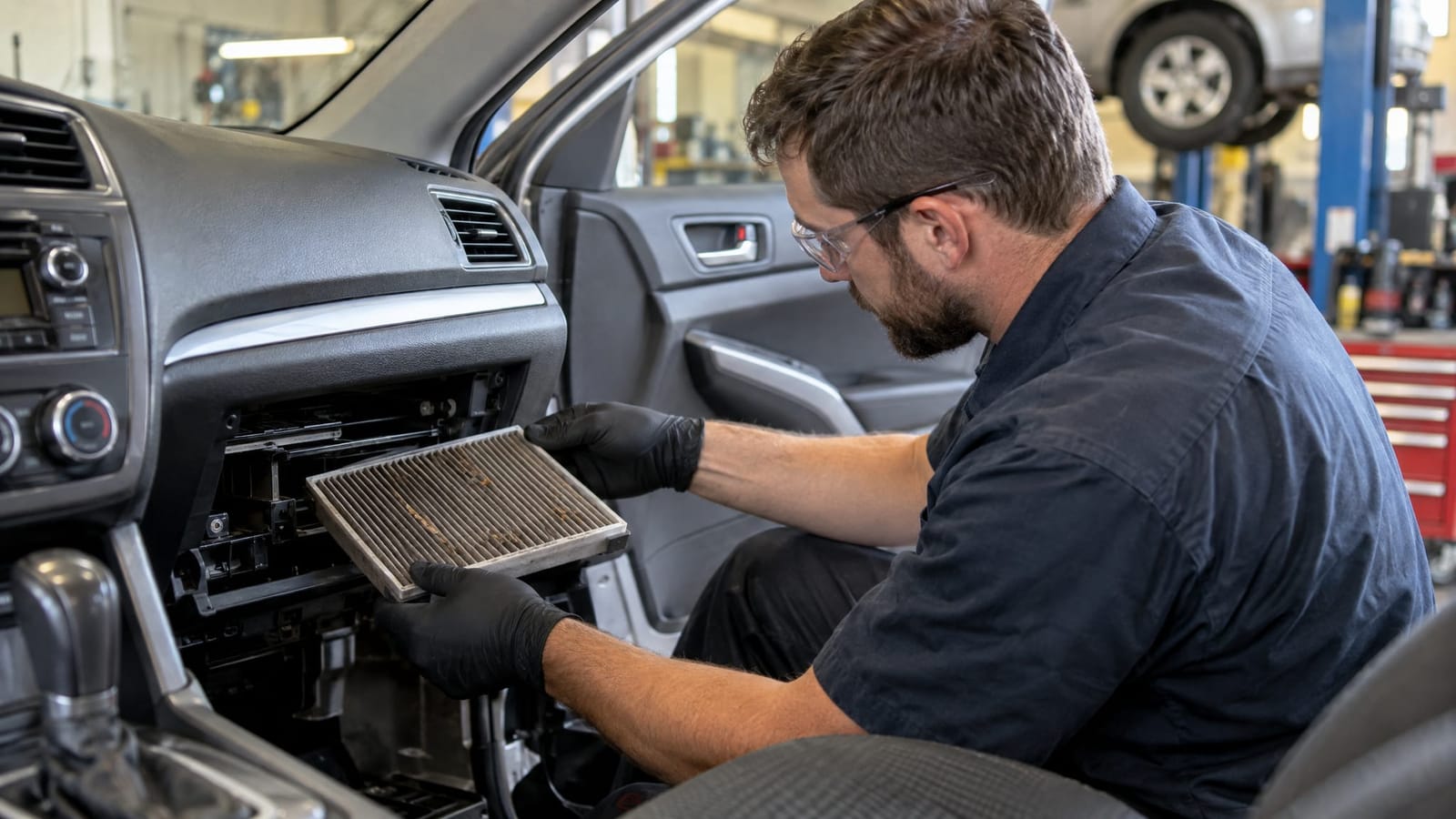
- Visible buildup on the filter: Packed dirt, leaves, or debris covering the pleats supports the need for replacement.
An unpleasant smell can accompany a dirty or damp filter, but odor alone does not identify the cause. Moisture and buildup elsewhere in the ventilation system can also create smells.
For example, cool but weak airflow from all the dashboard vents makes the filter a sensible early check. If airflow is strong but warm, replacing the filter is unlikely to solve the main complaint.
How Often to Replace It in Jacksonville
Start with the cabin-filter replacement schedule in your vehicle’s owner’s manual. There is no single mileage interval that fits every vehicle and every driving routine. Follow any earlier inspection guidance the manufacturer gives for dusty conditions.
In Jacksonville, let your actual exposure to pollen, dust, and debris guide additional checks. An earlier inspection makes sense if you regularly:
- Drive through construction areas or along dusty roads.
- Park beneath trees where leaves collect near the windshield.
- Notice heavy pollen collecting on the vehicle.
- Use the ventilation system extensively and notice declining airflow.
A filter check during routine maintenance provides a useful opportunity to compare its condition with the recommended schedule. Check sooner if the airflow changes, rather than waiting for the next scheduled replacement.
A light coating of dust does not necessarily mean the filter is severely restricted. Packed pleats, heavy debris, damage, or moisture are more meaningful findings than a slight color change. If the filter is wet, replacing it without addressing the moisture can leave the underlying problem in place.
What a Filter Check and Replacement Involve
Many cabin filters sit behind the glove box, although location and access vary by vehicle. The owner’s manual or vehicle-specific instructions can show whether this is a straightforward maintenance task.
- Check the existing airflow. Note the fan speed, temperature setting, and which vents feel weak. This gives you a useful comparison afterward.
- Turn off the vehicle and blower before opening the housing. Follow the access instructions rather than forcing trim panels or clips.
- Inspect the filter and its fit. Look for packed debris, folded edges, moisture, or a filter that is not seated properly. Note its orientation before removal.
- Use the correct replacement. Match the vehicle application and follow the filter’s orientation markings. An airflow arrow indicates airflow direction, not necessarily which side faces up.
- Close the housing and compare airflow. Use the same settings as before. An improvement helps show how much the filter restriction contributed.
If access requires extensive disassembly, having the filter checked during maintenance can be the simpler option.
When a New Filter Does Not Solve the Problem
Continued weak airflow can involve the blower fan, its electrical controls, an obstruction, or doors inside the ventilation system that direct air. If only certain vents are affected, checking air distribution becomes more useful than repeatedly replacing the filter.
Strong airflow that remains warm calls for checking the cooling side of the AC system. A cabin filter cannot correct a refrigerant leak, compressor problem, or temperature-control fault.
At Jordan Auto Repairs and Tires Plus LLC in Jacksonville, we offer AC repair and vehicle electrical system diagnostics. We focus on honest service, dependable repairs, and efficient work. Separating an airflow problem from a cooling problem helps keep diagnosis focused.
Frequently Asked Questions
Is the cabin air filter the same as the engine air filter?
No. The cabin filter serves the passenger ventilation system. The engine air filter cleans air entering the engine. Replacing one does not replace the other, and an engine-filter change does not address a clogged cabin filter.
Can I wash or vacuum a cabin air filter instead of replacing it?
Standard disposable cabin filters are intended for replacement, not washing. Removing loose leaves does not clear material trapped within the filter. Follow the filter manufacturer’s instructions for any product specifically designed to be reusable.
Will an activated-carbon filter make the AC colder?
Activated carbon helps reduce certain odors; it does not increase the AC system’s cooling capacity. Correct fit and unrestricted airflow matter more for air delivery. Choose a filter intended for your vehicle rather than assuming an upgraded filter will produce colder air.
The Practical Takeaway
A clogged cabin filter belongs near the start of a weak-airflow check, not at the end of a parts-replacement list. Use the vehicle’s maintenance schedule, the filter’s condition, and any change in vent output to guide replacement. If airflow stays weak or the air remains warm afterward, the next step is diagnosis of the remaining symptom.