Why Does My Car AC Smell Bad When I Turn It On?
A musty smell when your car’s AC starts often comes from moisture and dirt inside the ventilation system. Damp evaporator surfaces, a dirty cabin air filter, and trapped leaves are common places to look. The odor alone does not prove there is mold or a refrigerant leak.
Jacksonville’s humid weather makes moisture worth paying attention to. For a mild, stale odor, checking the filter and clearing accessible debris are reasonable first steps. A recurring smell, wet carpeting, or a chemical odor calls for a closer inspection rather than another air freshener.
Common causes of bad car AC odors
Moisture and buildup on the evaporator
The evaporator is the cold part inside the dashboard that cools passing air. Moisture collects on its surface during AC operation, much like water collecting on a cold glass. That water normally drains underneath the vehicle.
Dust and organic material on damp surfaces provide conditions for bacteria, mold, and mildew to grow. When the blower starts, it carries odors from those surfaces into the cabin. This can explain an initial burst of mustiness.
A restricted drain can also leave water where it does not belong. A damp passenger-side floor deserves attention, although rainwater leaks can cause wet carpeting too.
A dirty or damp cabin air filter
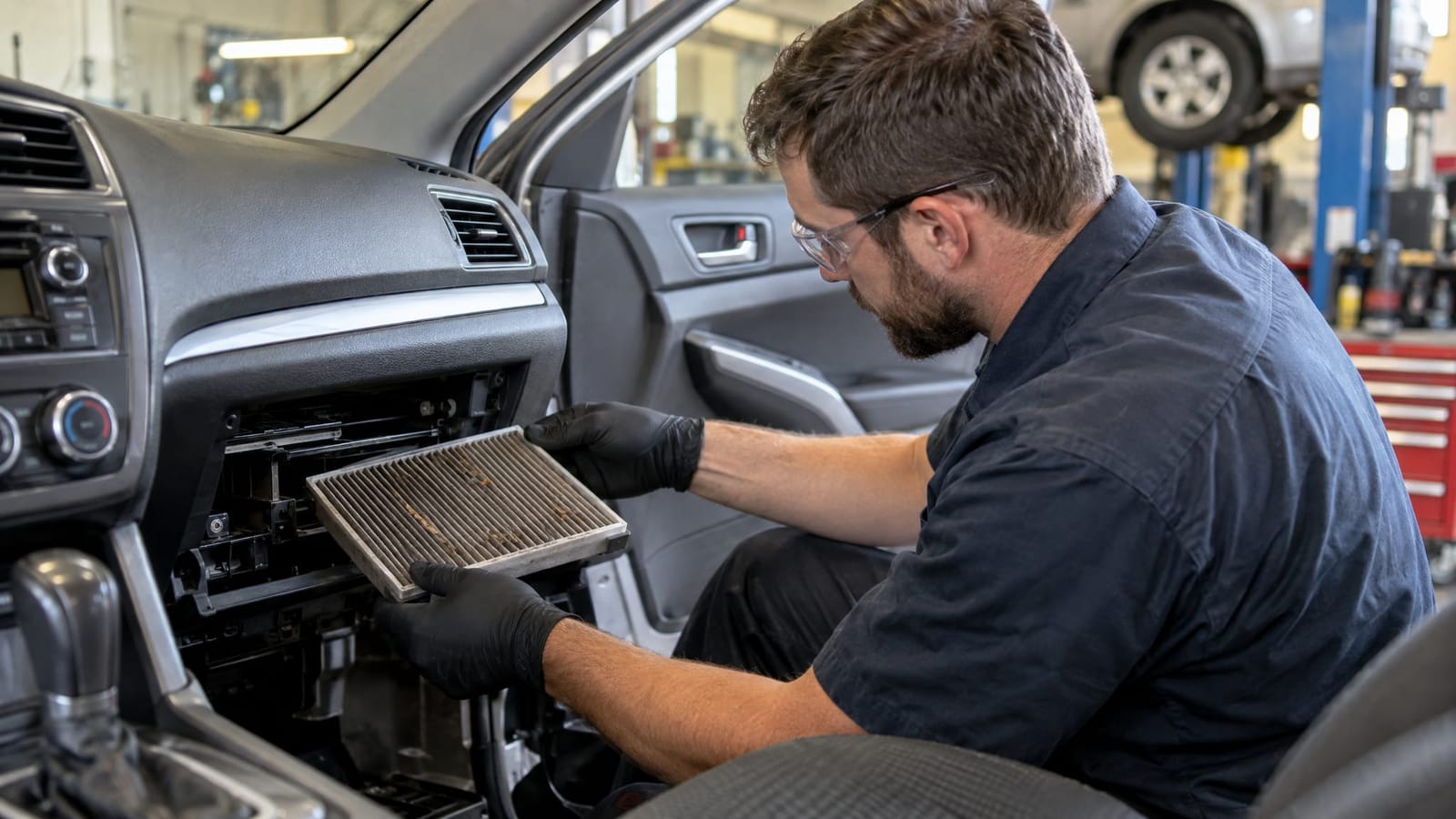
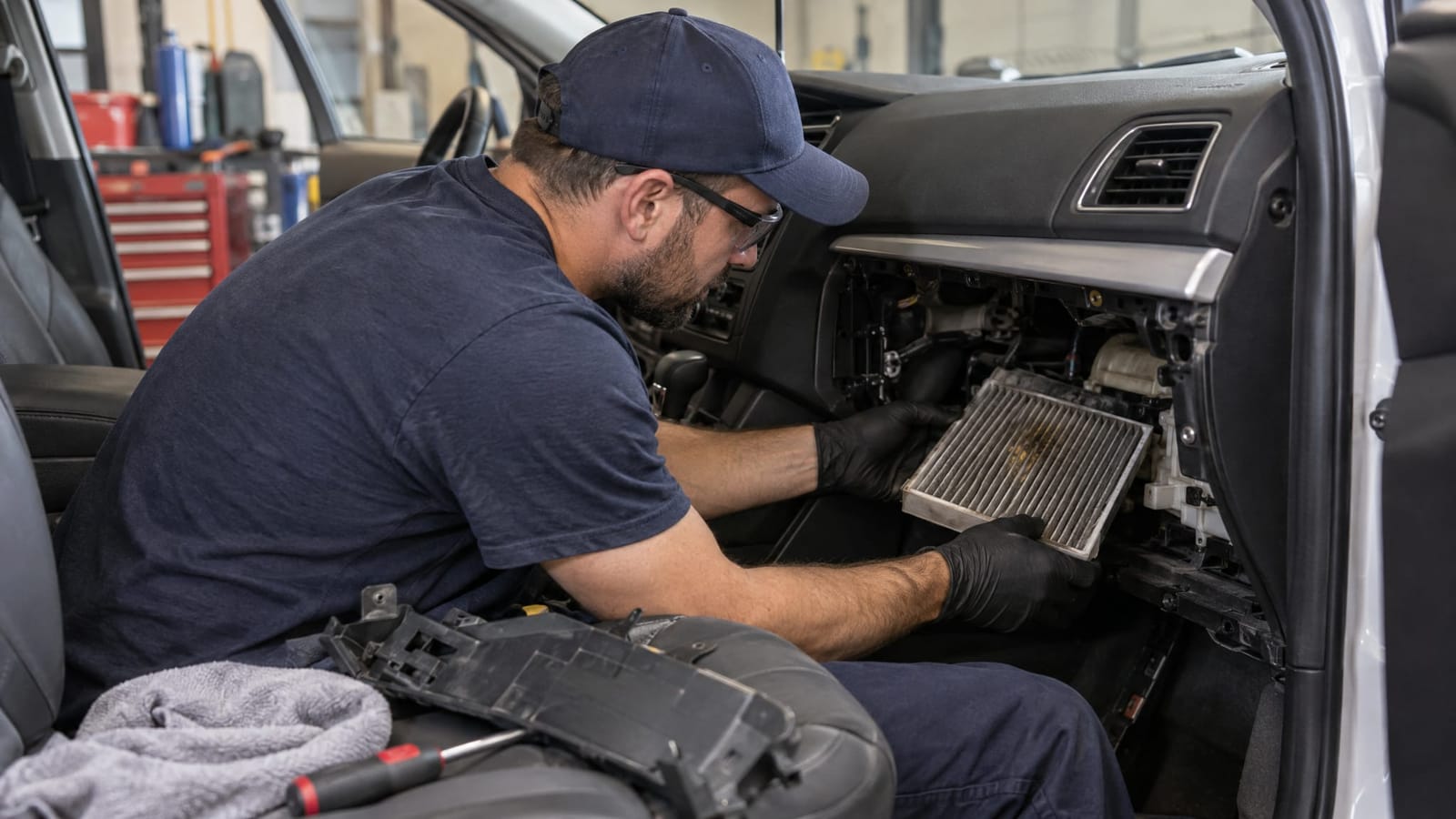
The cabin air filter catches particles before they circulate through the interior. Over time, trapped dust, pollen, and leaves can contribute to stale odors. A heavily loaded filter can also reduce airflow.
The cabin filter is different from the engine air filter under the hood. Its location and replacement procedure vary by vehicle, so the owner’s manual is the useful starting point. Replacing a dirty filter addresses buildup there, but it does not clean the evaporator farther inside the system.
Leaves or other debris near the air intake
Many vehicles draw outside air through an intake near the base of the windshield. Leaves and other debris can collect around that area, hold moisture, and create odors as they break down.
A strong decaying smell may come from nesting material or animal remains rather than ordinary mildew. Loose leaves on an accessible exterior surface are a simple cleanup task. Debris inside ducts or around the blower needs a different approach.
A chemical or sweet smell
A refrigerant leak cannot be reliably diagnosed by smell. Refrigerant circulates through a sealed system, and leak testing is needed to identify where it is escaping. Poor cooling may accompany a leak, but poor cooling has other causes too.
A sweet odor can come from engine coolant leaking in a cabin heating component. It is not proof of a refrigerant problem. Adding refrigerant does not treat musty buildup, a dirty filter, or a coolant leak.
Simple checks for a mild musty smell
These checks are useful when the odor is mild and there are no chemical or burning smells:
-
Notice the pattern.
Record whether the smell appears only at startup, continues throughout the drive, or changes between fresh-air and recirculation settings. Note any weak airflow, poor cooling, or damp carpeting. These details help narrow the inspection.
-
Check the cabin air filter.
Follow the vehicle’s instructions for access and replacement. Fit the correct filter with its airflow arrow oriented as directed. If access requires more disassembly than you are comfortable with, leave that part to the shop.
-
Remove accessible leaves.
With the vehicle off, clear loose debris from the exterior intake area near the windshield. Keep debris out of openings rather than pushing it farther inside.
-
Dry out cabin moisture.
Remove wet floor mats and let them dry outside the car. Clean up spills. If the carpet becomes wet again without a spill, the water’s entry point needs attention.
-
Reduce lingering evaporator moisture.
When comfort allows, switching the AC cooling off while leaving the fan running near the end of a drive can help dry the evaporator. This is a moisture-management habit, not a cure for established buildup or a blocked drain.
Avoid pouring liquid into vents or spraying household cleaners into the system. An automotive evaporator cleaner needs to match the vehicle’s access method and the product’s directions. A vent spray does not necessarily reach the surface causing the odor.
When professional service makes more sense
Professional inspection is the more useful next step when the smell returns after basic cleaning, the filter keeps getting damp, or water collects inside the cabin. Persistent odors can require checking the evaporator drain, inspecting hidden areas, and cleaning the affected surfaces.
A clean filter with a recurring musty smell is a reason to look farther into the system, not simply replace another filter. If cooling is weak too, the odor and cooling complaint need separate checks before assuming one repair will solve both.
Strong chemical, burning, or fuel-like odors need professional assessment rather than continued DIY odor treatments.
At Jordan Auto Repairs and Tires Plus LLC, we provide AC repair in Jacksonville with honest explanations and efficient service. Identifying the cause helps distinguish a straightforward filter issue from a drainage, cleaning, or cooling-system repair.
Frequently asked questions
Why does the smell fade after the AC has been running?
Moving air can dilute and carry away an initial concentration of odor. That does not necessarily mean the underlying buildup has disappeared. Whether the smell returns at the next startup is a useful detail to note.
Why does my car smell even with the AC button off?
The fan still moves air through ventilation passages when cooling is switched off. An odor from the filter, ducts, or damp surfaces can therefore remain. Wet carpet or another interior source can also smell unrelated to AC operation.
Does recirculation help with bad odors?
Recirculation can reduce some odors entering from outside, but it does not clean the ventilation system. If switching modes changes the smell noticeably, that helps distinguish an outside-air issue from something inside the vehicle.
Fix the cause, not just the smell
For mild mustiness, start with the cabin filter, accessible leaves, and interior moisture. If the odor persists or comes with other symptoms, inspection is more useful than repeatedly covering it with fragrance.