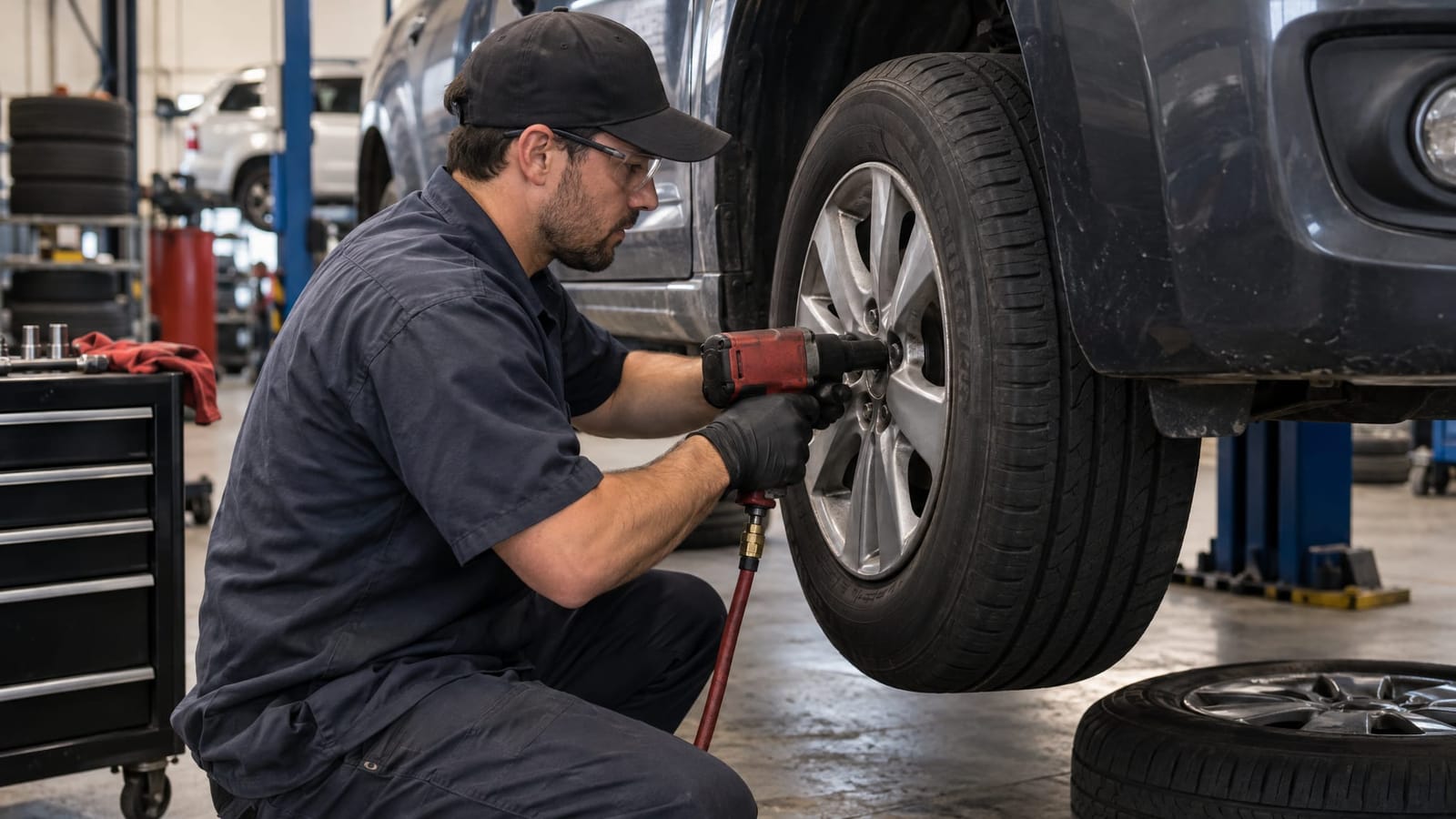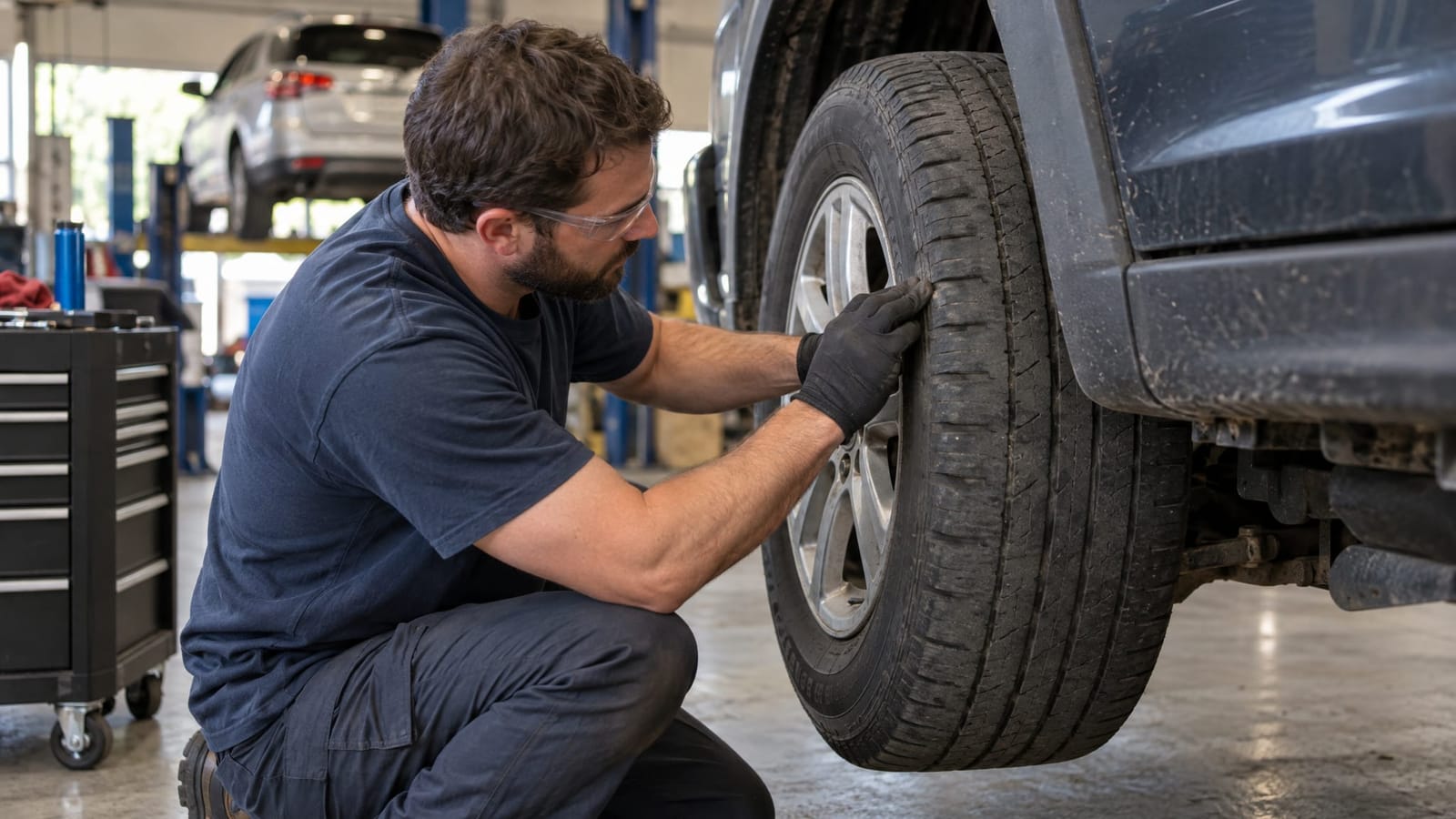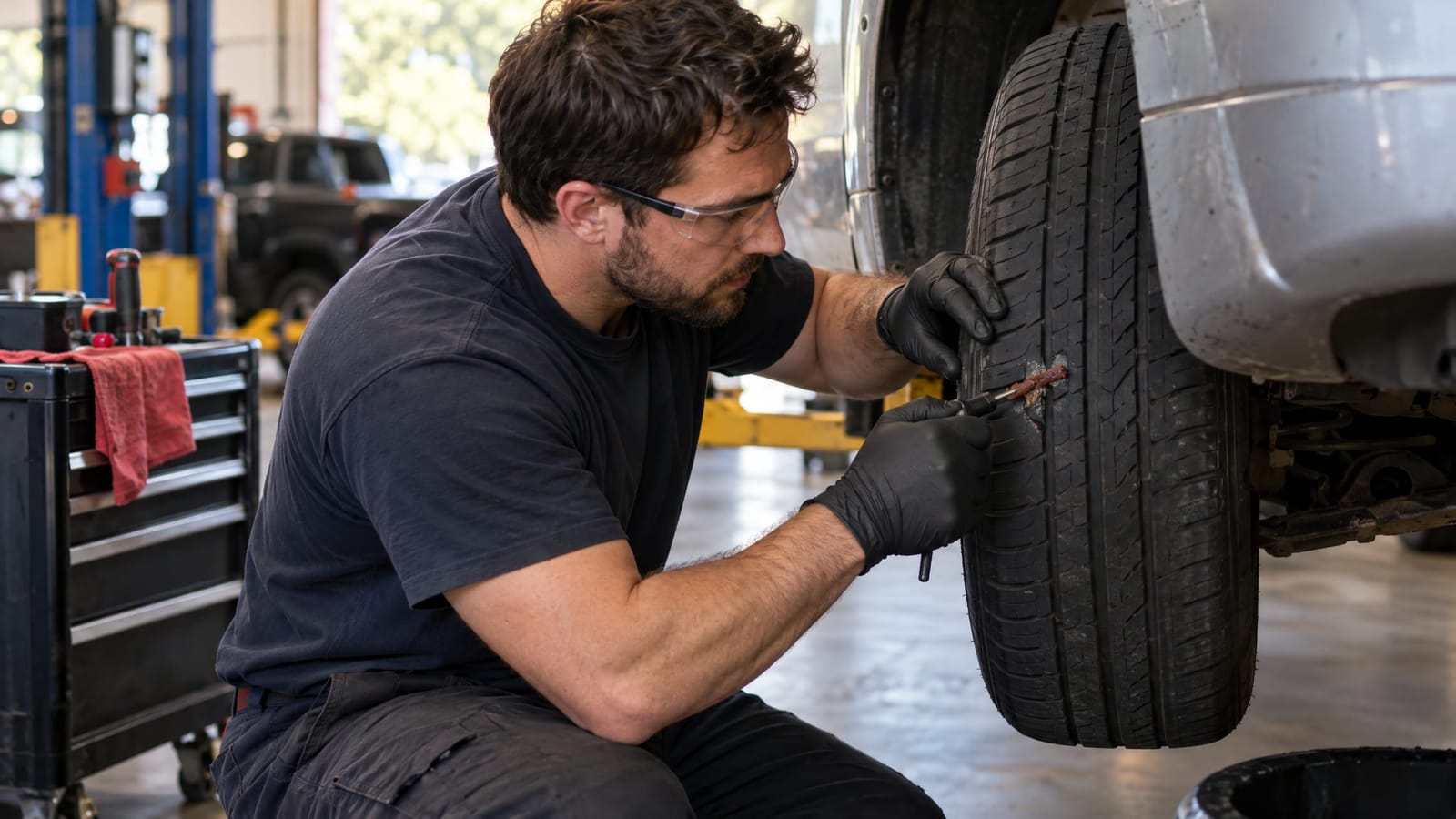
Can a Tire with a Nail in the Sidewall Be Repaired?
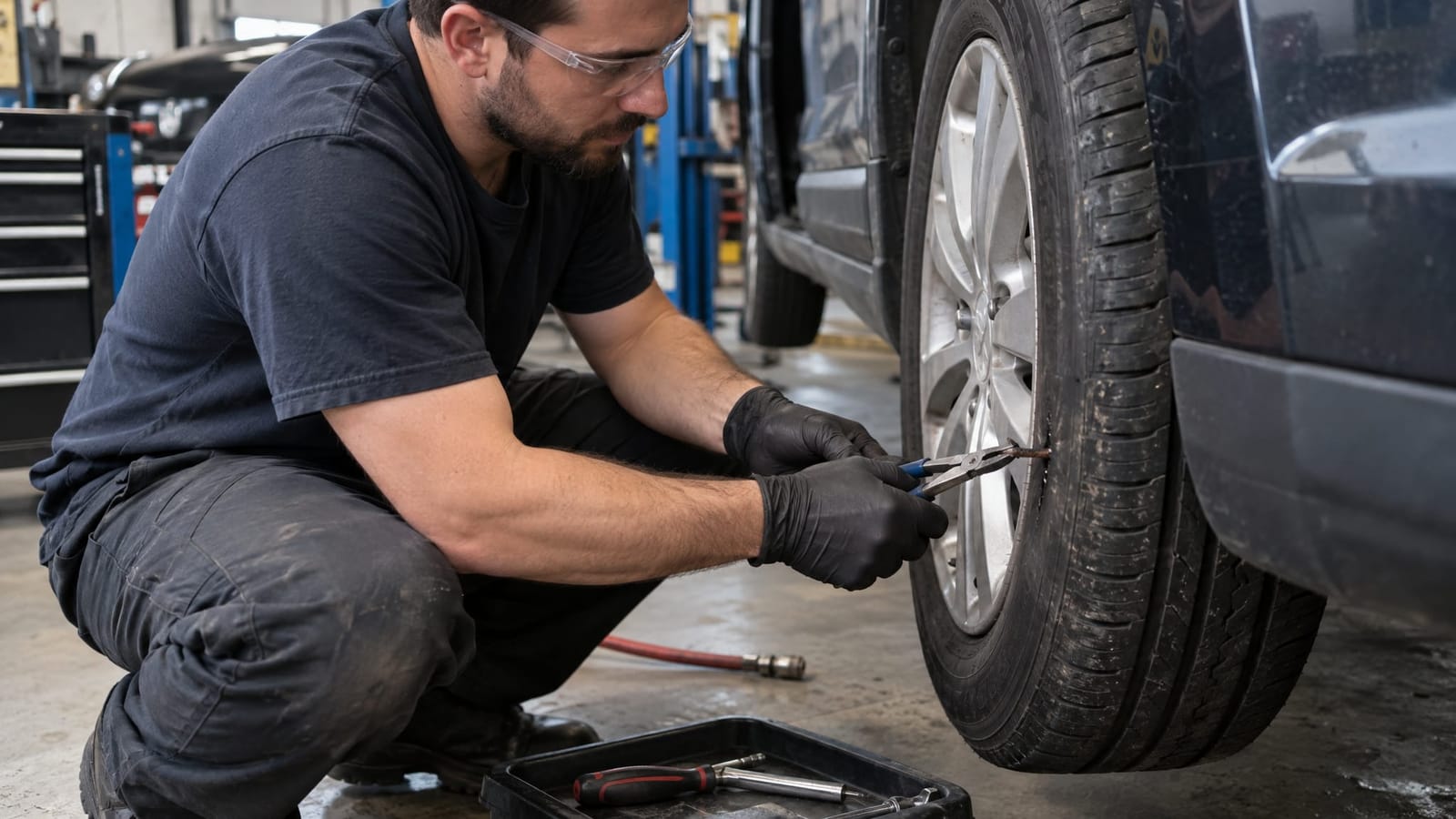
No. A nail that punctures a tire’s sidewall means the tire needs replacement. Sidewall punctures cannot be safely repaired, even when the hole looks small or the tire still holds air. A plug, patch, or sealant cannot restore the tire’s damaged structure.
The important distinction is where the nail entered. A puncture in the central tread may qualify for repair after inspection. A puncture in the sidewall or the curved shoulder near the tread edge does not. Holding air is not proof that a damaged tire is safe to drive on.
Why a Sidewall Puncture Cannot Be Safely Patched
The sidewall is the side of the tire, between the tread and the wheel. It flexes repeatedly as the tire rolls and carries the vehicle’s load. Reinforcing cords inside the rubber help the tire maintain its strength and shape.
The tread area has a different construction, with belts beneath it that provide support. Certain small punctures in that area can be repaired, provided the tire meets the other repair criteria.
A sidewall repair faces two problems:
- Repeated flexing: The sidewall bends under load, making a repair unreliable in that area.
- Structural damage: A nail can damage reinforcing cords. Sealing the air leak does not restore those cords.
That is why stopping a leak alone does not make a sidewall repair safe. The concern is not simply another slow leak, but the possibility of sudden air loss while driving.
Is the Nail in the Sidewall, Shoulder, or Tread?
A nail near the tire’s outer edge can be difficult to classify while the tire is on the vehicle. These distinctions help explain the repair decision:
- Sidewall: The side surface where the tire size and brand lettering appear. A puncture here requires replacement.
- Shoulder: The curved transition between the main tread surface and the sidewall. A puncture here is also outside the repairable area.
- Central tread: The main road-contact area away from the shoulders. Some punctures here can be repaired, depending on their size, angle, and the tire’s overall condition.
For example, a nail through an outer tread block may look like an ordinary tread puncture but extend into the shoulder. A nail closer to the center may be repairable, unless driving with low pressure has damaged the tire internally.
A qualified inspection by our Jacksonville tire team can determine the appropriate next step for your particular tire. For a tire that may qualify for repair, the assessment includes removing it from the wheel to inspect the inside, not just checking the visible nail.
What to Do When You Find a Nail in the Sidewall
A suspected sidewall puncture is a reason to arrange help rather than drive to see whether the tire loses air. Roadside assistance or towing avoids putting the damaged tire back under driving loads.
Pulling out the nail can make air escape faster. Leaving it in place until inspection avoids disturbing the puncture, but it does not make the tire safe to drive on.
If the vehicle has a usable spare, professional roadside installation can provide an alternative to towing. Temporary spares have speed and distance limits listed on the spare or in the owner’s manual. They are not substitutes for a permanent replacement.
Sealant and external plug kits do not make sidewall damage repairable. Adding air also does not restore the tire’s strength.
What Replacement Costs Depend On
Once a sidewall puncture is confirmed, the useful comparison is between suitable replacement tires, not between replacement and a cheaper sidewall patch. The main cost factors are tire size, construction, performance category, and how many tires need replacement.
Start with tires that meet the vehicle’s size, load, and performance requirements. Comparing suitable options makes an estimate more meaningful than comparing brand names alone.
Compare the Complete Installed Cost
A clear estimate separates the tire from the work and materials needed to install it. Relevant items include:
- The replacement tire’s make, model, and size.
- Mounting and balancing.
- Valve or tire-pressure sensor service, when needed.
- Disposal charges and applicable taxes.
Comparing the same items across estimates helps explain why a tire-only price differs from the final installed cost. If an estimate includes additional work, the explanation should identify the condition that makes it necessary.
For Jacksonville driving, wet-road performance is a useful comparison point alongside price, ride comfort, and expected tread life. A lower purchase price is only one part of choosing a tire for frequent rain and everyday commuting.
Will One Tire Be Enough?
One damaged tire does not automatically mean replacing all four. A single replacement may be suitable when it matches the other tires closely and meets the vehicle manufacturer’s requirements.
Tread wear can change that decision. Some all-wheel-drive vehicles have strict limits on differences in tire circumference. Depending on the vehicle and the remaining tread, replacing more than one tire may be necessary.
The practical questions are:
- Which tire specifications need to match?
- How much tread remains on the other tires?
- What replacement requirements does the vehicle manufacturer specify?
Those details help explain whether one replacement is enough or whether additional tires are needed. The recommendation depends on the vehicle and its tires, not simply on the fact that a nail caused the damage.
At Jordan Auto Repairs and Tires Plus LLC, we offer tire repair and replacement in Jacksonville. We focus on honest explanations, dependable work, and prompt service. Understanding why a replacement fits the vehicle is part of making an informed choice.
Frequently Asked Questions
Can a run-flat tire with a sidewall puncture be repaired?
No. Run-flat construction does not make a sidewall puncture repairable. A confirmed puncture in that area still requires replacement.
Will the tire-pressure warning light detect sidewall damage?
Not necessarily. The system monitors tire pressure, not the condition of the tire’s reinforcing structure. Sidewall damage can be present without triggering a warning, so an unlit warning light is not proof that the tire is safe.
Does replacing a punctured tire require a wheel alignment?
Not automatically. A nail puncture by itself is not evidence of an alignment problem. Uneven wear, pulling, or a recent pothole or curb impact may provide a separate reason to check alignment. Those signs can have other causes, so an inspection helps determine what work is appropriate.
The Bottom Line
A confirmed sidewall puncture requires replacement, even if the tire still holds air. When a nail is near the tread edge, identifying the exact location is the first decision. From there, a clear estimate and a check of the remaining tires help explain which replacement option fits the vehicle without adding unnecessary work.