What Does Cupping on Tires Mean and How Do You Fix It?
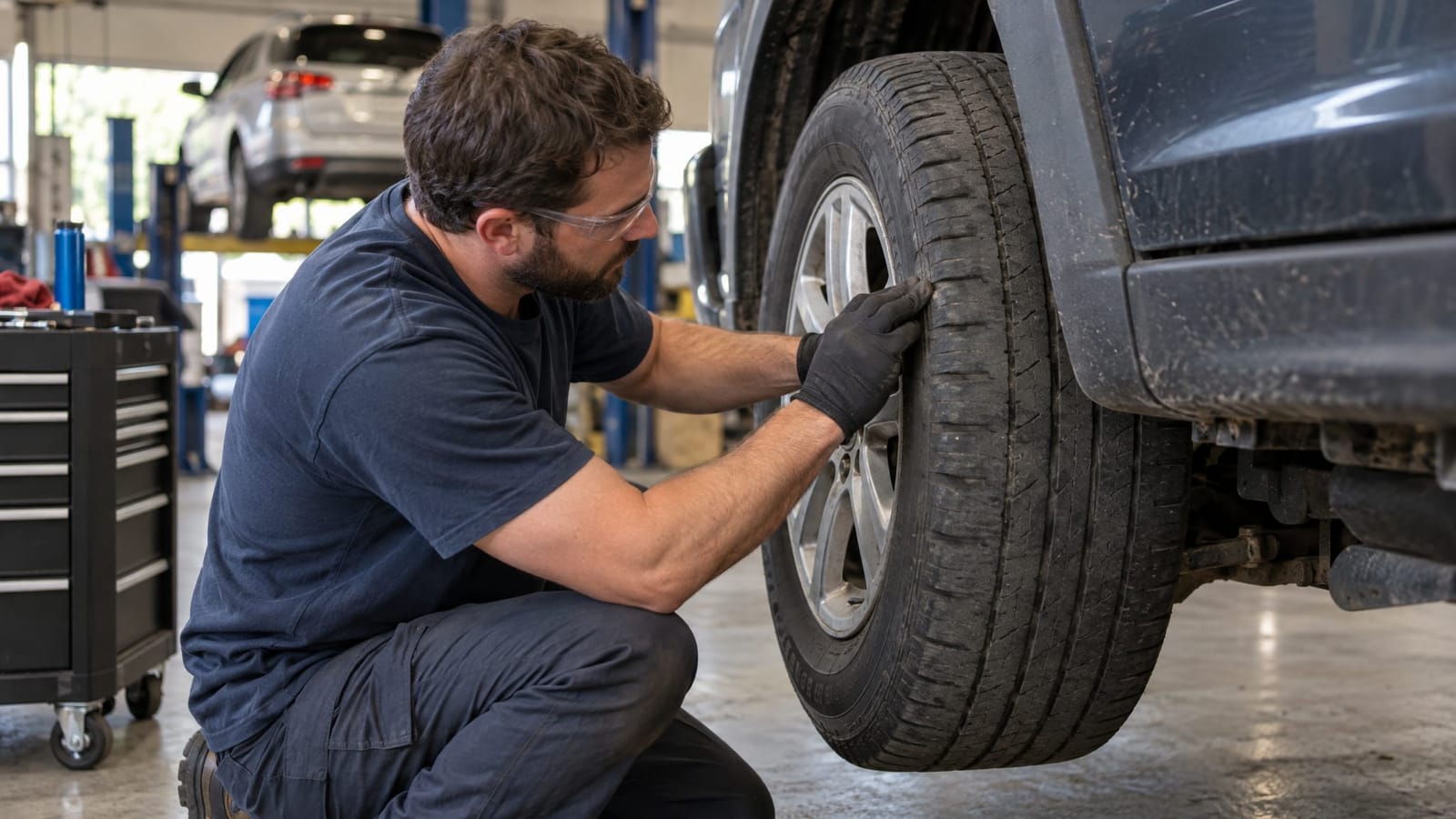
Tire cupping means the tread has worn into alternating high and low patches, often called scalloping. Instead of wearing evenly, sections around the tire develop shallow, scooped-out areas. You may notice a rhythmic rumble, vibration, or uneven tread before recognizing the pattern.
The fix is to identify what is causing the uneven wear, correct that problem, and decide whether the affected tires need replacement. Worn shocks or struts, wheel imbalance, and alignment or suspension problems can contribute. An alignment alone cannot fix every case, and no repair can put worn rubber back.
How to Recognize Tire Cupping
On a parked vehicle, look at the accessible tread for repeated dips or patches that sit lower than neighboring sections. The tread may have a wavy appearance, with raised areas between the worn spots. Cupping can affect part of the tread width rather than the entire surface.
Other clues include:
- Sound: A humming, rumbling, or repetitive thumping noise that changes with road speed.
- Feel while driving: Vibration through the steering wheel, seat, or floor.
- Tread texture: Alternating high and low areas around the tire, rather than an even surface.
These clues do not identify the cause by themselves. Wheel bearings, tire damage, and other problems can produce similar noise or vibration.
Cupping also differs from some other wear patterns. One worn shoulder suggests a different pattern from repeated scalloped patches. Feathering describes tread edges that feel smoother in one direction and sharper in the other. More than one pattern can appear on the same tire.
Common Tire Cupping Causes
Worn shocks, struts, or suspension parts
Shocks and struts control wheel movement after bumps. When they no longer control that movement properly, the tire can bounce and load unevenly against the road. Over time, that uneven contact can wear patches into the tread.
Loose or worn suspension parts can also let the wheel move out of its intended position. Cupping is a reason to inspect these components, not proof that every shock or strut needs replacement.
Wheel and tire imbalance
An unbalanced wheel-and-tire assembly has uneven weight distribution. As it spins, it can vibrate and contribute to uneven wear. A bent wheel or a tire that no longer rolls evenly can create related problems that balancing alone will not resolve.
Alignment problems
Alignment describes the angles at which the wheels meet the road and point relative to each other. Incorrect angles can drag tread across the pavement and contribute to irregular wear, sometimes alongside cupping.
Balancing and alignment are different services: balancing addresses weight distribution, while alignment adjusts wheel angles. One does not replace the other.
Inflation and maintenance issues
Incorrect tire pressure changes how the tread contacts the road and can add to uneven wear. Missed rotations can allow position-related wear to become more pronounced. Neither condition makes a cupping diagnosis certain, but both belong in the inspection.
What Repairs Actually Fix Tire Cupping?
A useful repair plan addresses both the cause and the tire's remaining condition. Replacing tires without correcting the underlying problem can allow the same pattern to develop again.
Inspect before choosing parts
The inspection typically includes tread condition across each tire, inflation pressure, wheel damage, balance, and suspension condition. Alignment measurements help determine whether wheel angles need correction.
Useful details to share include when the noise started, whether it followed a pothole impact or tire installation, and whether vibration was already present before the visible wear.
Correct the cause before final adjustments
Worn or damaged components need attention before a final alignment, because loose parts can prevent the wheels from holding the correct angles. A balance problem calls for checking the wheel-and-tire assembly, not automatically replacing suspension parts.
For example, cupping accompanied by a worn strut calls for a different repair plan than uneven wear associated with an otherwise sound but unbalanced wheel. The wear pattern starts the investigation; it does not finish it.
Decide whether the tires can remain in service
The decision depends on the depth of the uneven wear, remaining tread, physical damage, and effects on ride and handling. Severe cupping may require replacement even when some raised portions still have substantial tread.
Rotation cannot restore the missing rubber. Noise may also remain after the original cause is corrected because the tire still has an uneven surface.
At Jordan Auto Repairs and Tires Plus LLC, we offer tire repair and replacement, wheel alignment, and general automotive maintenance in Jacksonville. We focus on quick, dependable service. Separating tire work from any additional mechanical repairs makes the scope and expected timing easier to understand.
Can You Keep Driving on Cupped Tires?
Cupping ranges from mild irregular wear to a tire condition that affects road contact and handling. Noise alone cannot establish whether continued driving is appropriate. Our team can inspect your tires and explain the findings for your vehicle. Severe vibration, a visible bulge, exposed cords, or sudden handling changes call for stopping safely and arranging roadside assistance.
Jacksonville's heavy rain makes tread condition especially relevant. Looking only at the deepest remaining grooves can overlook the low, heavily worn patches.
How to Reduce the Chance of Cupping Returning
- Check inflation regularly. Use the vehicle's tire-information label or owner's manual for the recommended cold pressure, rather than the maximum pressure molded onto the tire.
- Follow the appropriate rotation schedule. Timing and rotation patterns depend on the vehicle, tire arrangement, and manufacturer guidance.
- Address new vibration promptly. Waiting for visible wear can allow an imbalance or mechanical problem to affect more tread.
- Watch for changes after impacts. New vibration or pulling after a pothole strike warrants an inspection, rather than assuming an alignment is the only answer.
Frequently Asked Questions
Can new tires develop cupping?
Yes. New tires can develop irregular wear if an existing balance, wheel, or suspension problem remains. Tire age alone does not identify the cause.
Does cupping mean replacing all four tires?
Not automatically. Replacement decisions depend on each tire's condition, tread differences, and the vehicle manufacturer's tire-matching requirements, particularly for some all-wheel-drive vehicles.
Is cupping the same as a flat spot?
No. Cupping usually involves repeated worn patches around the tire. A flat spot is a more localized area. An inspection can distinguish these patterns and check for overlapping problems.
The Key to a Lasting Fix
Tire cupping is a wear pattern, not a diagnosis. The useful repair is the one that explains why the tire wore unevenly, corrects that cause, and addresses any tire damage that remains.