Is It Safe to Drive on a Patched Tire Long-Term?
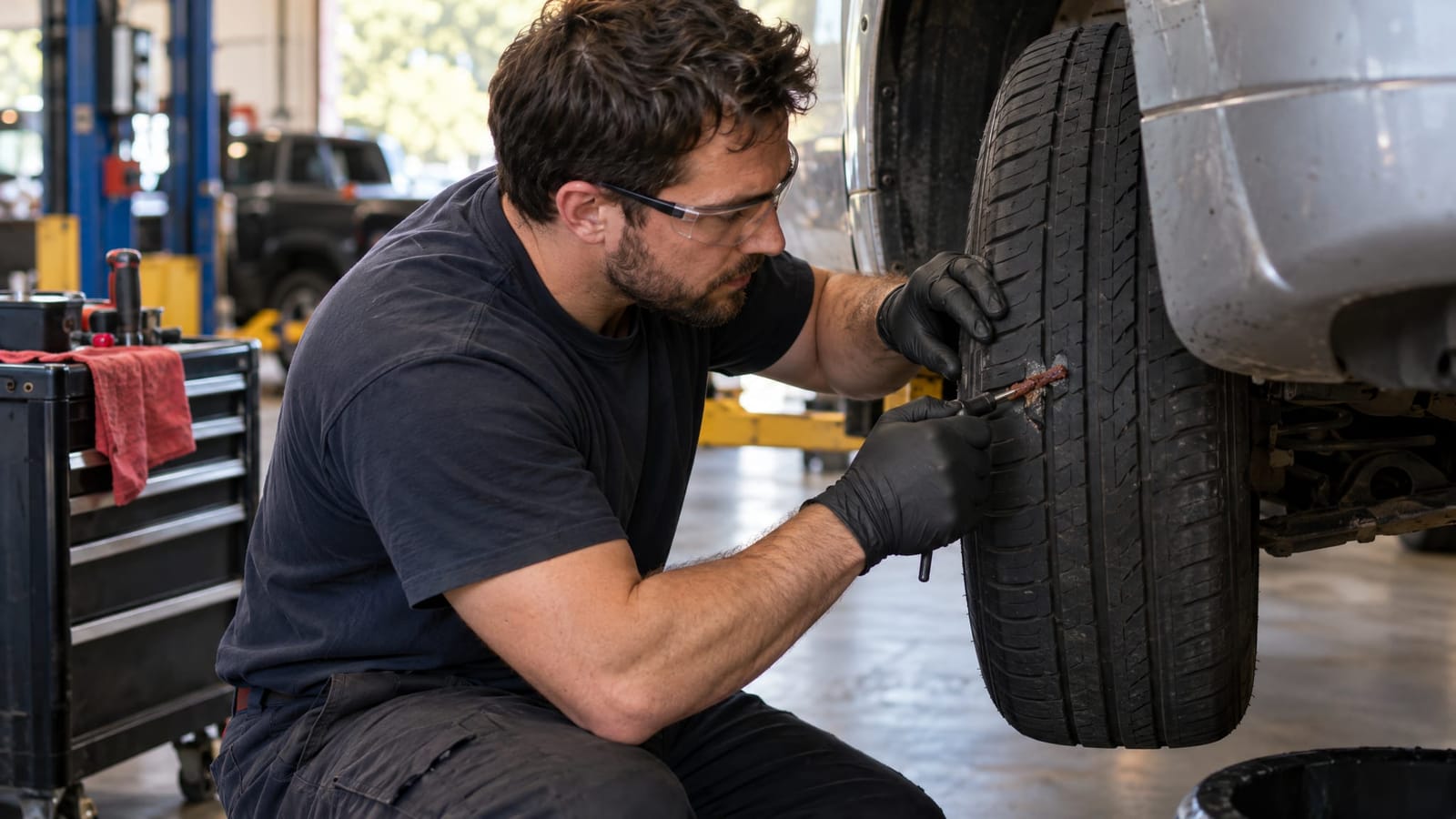
Yes, a properly repaired tire can be safe for long-term driving. The puncture needs to be in a repairable part of the tread, the tire must be free of damage that makes repair unsuitable, and the repair needs to follow the tire manufacturer’s guidance. The word “patched” alone does not tell you whether those conditions were met.
The important distinction is between a complete repair performed from inside the tire and a plug pushed into the puncture from outside. Holding air today is not enough to establish that a tire is suitable for continued use.
What Makes a Tire Repair Permanent?
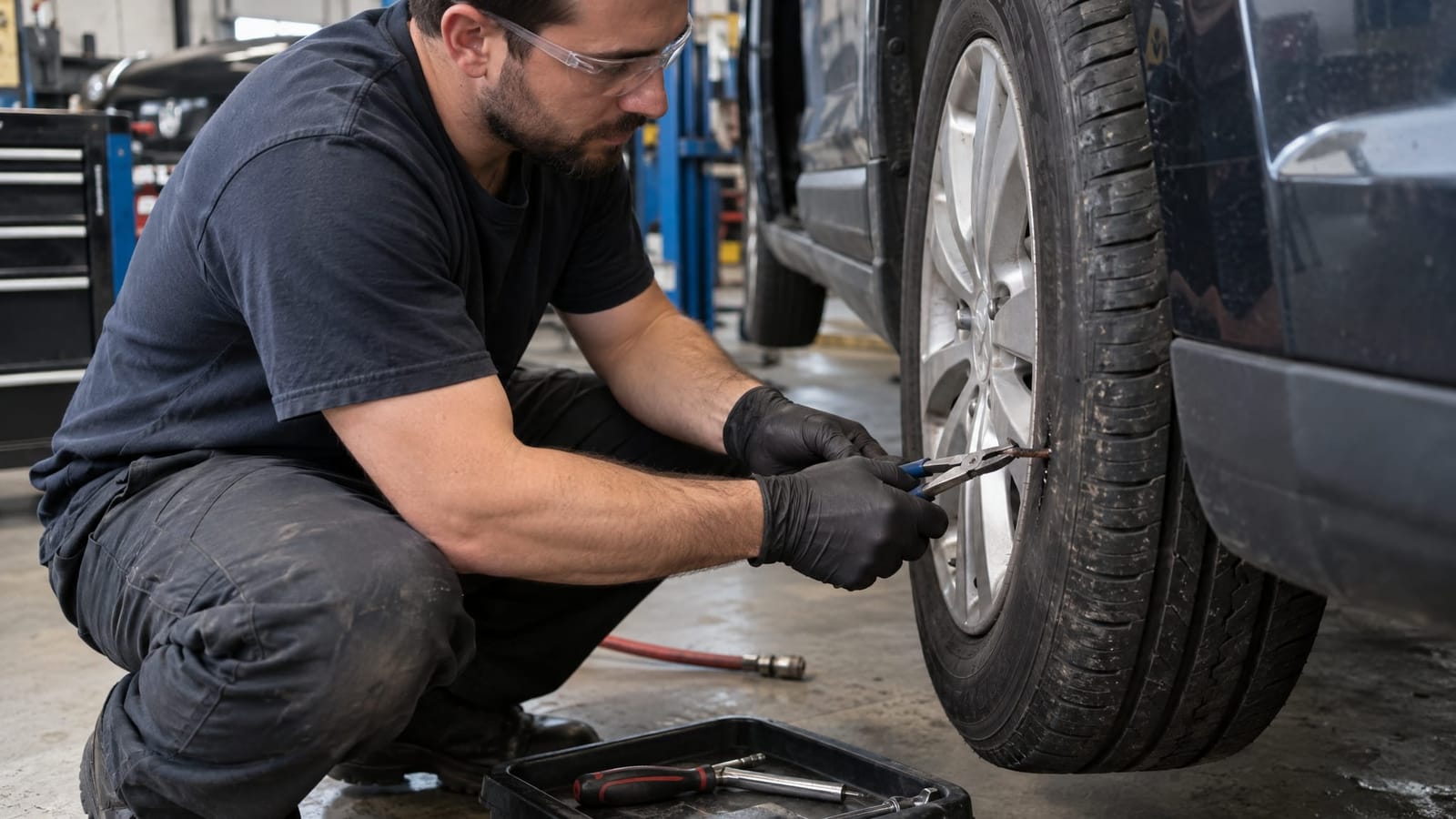
A complete puncture repair addresses both the hole through the tire and the inner lining that holds air. That is why a patch and a plug serve different purposes:
- A plug fills the puncture channel. An outside plug alone does not repair the inner lining or allow inspection inside the tire.
- A patch seals the inner lining. A patch alone leaves the puncture channel unfilled.
- A combination repair does both. It fills the injury and seals the tire from inside.
NHTSA’s tire safety guidance describes proper puncture repair as using both a plug and an internal patch. It also explains that the tire needs to come off the wheel for an internal inspection before repair.
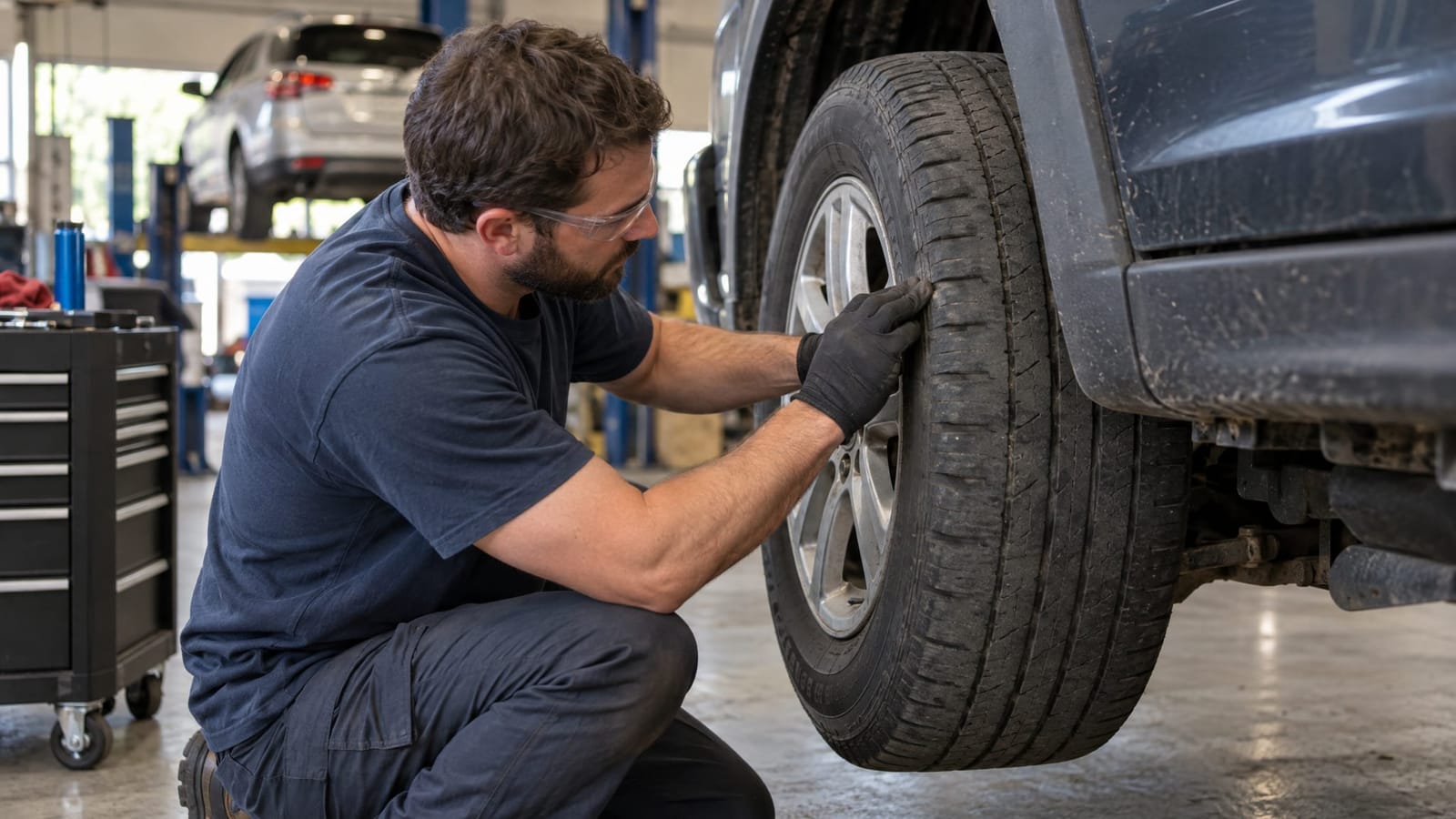
This inspection matters because a tire can look acceptable outside while having damage inside, particularly after being driven with too little air. A repair seals a puncture; it does not reverse damage caused by running flat.
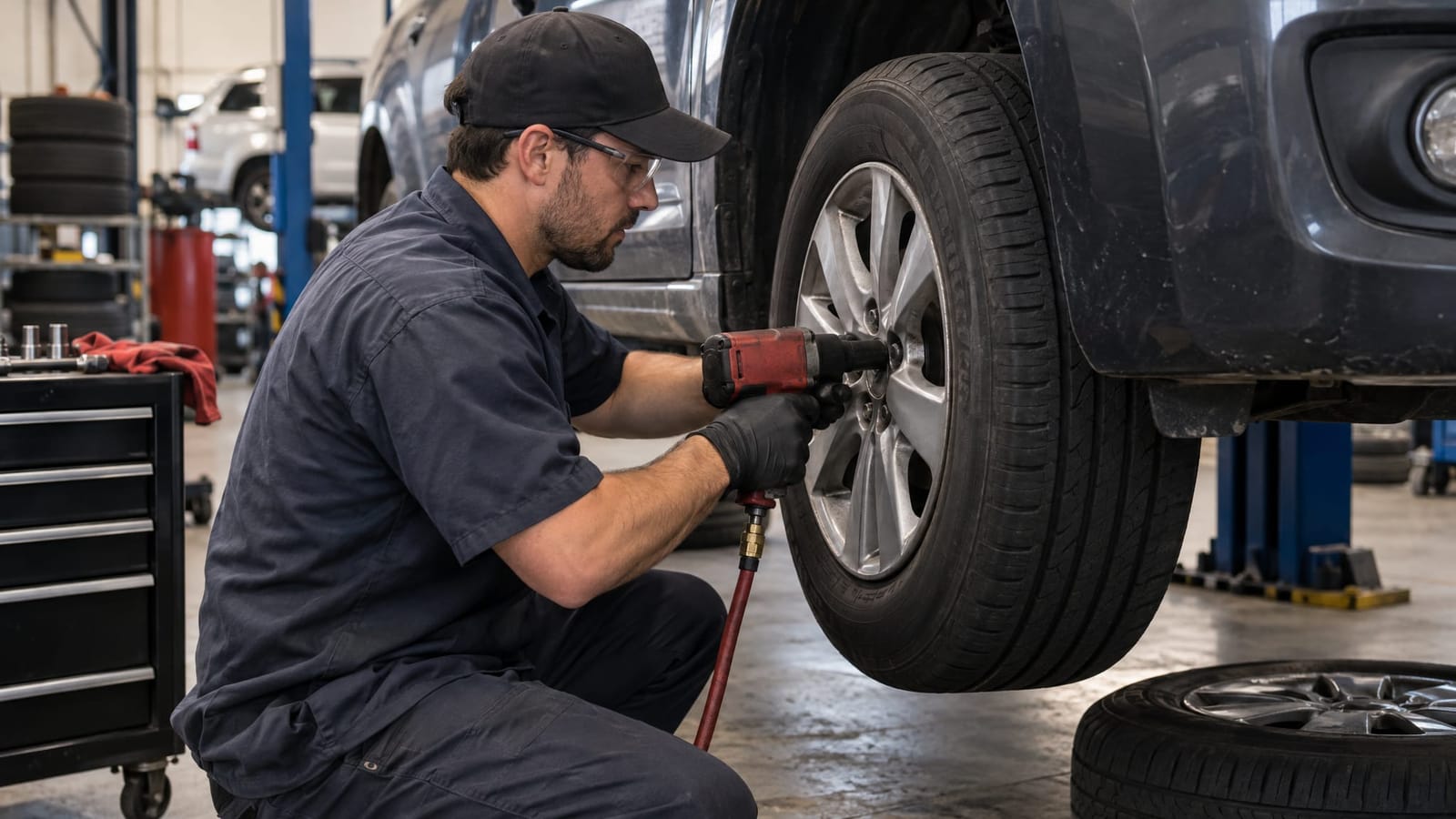
Your tire’s suitability for repair depends on an in-person inspection. Our team at Jordan Auto Repairs and Tires Plus LLC in Jacksonville provides tire repair and replacement, helping distinguish a repairable puncture from damage that calls for replacement.
When Can a Patched Tire Remain in Service?
A permanent repair is appropriate only when the tire itself qualifies. The main considerations are:
- Puncture location: Repairable punctures are within the permitted tread area, away from the shoulder and sidewall.
- Injury size and shape: The damage needs to fall within the applicable repair limits. A torn opening is not equivalent to a small, clean puncture.
- Internal condition: Inspection needs to rule out damage from driving flat or severely underinflated.
- Remaining tire condition: Worn-out tread, exposed cords, bulges or significant cracking can make replacement necessary regardless of the puncture.
- Manufacturer guidance: Repair restrictions depend on the tire’s design and manufacturer.
For example, a small nail puncture well within the tread may qualify for repair after inspection. Similar-looking damage near the shoulder may not. The size of the object sticking out of the tire does not settle the question.
“Permanent” means the repair is intended for continued service rather than temporary use. It does not give the tire a new lifespan or remove normal replacement considerations such as tread wear and deterioration.
How Fast and How Far Can You Drive After Repair?
After a complete, approved repair
There is no single speed limit or mileage allowance that applies to every repaired tire. A tire that qualifies for permanent repair may return to ordinary road use, subject to its manufacturer’s restrictions and its overall condition.
A repair does not automatically preserve the tire’s original speed rating. The tire manufacturer’s repair policy determines how that rating applies afterward. Treating the speed rating printed on the sidewall as proof of repaired-tire capability overlooks that distinction.
Distance works the same way. A properly completed permanent repair is not simply permission to drive a fixed number of miles before replacement. Continued use depends on the tire retaining pressure and remaining serviceable.
After a plug-only repair
A plug-only repair is not equivalent to a complete internal repair. There is no universal “safe for this many miles” or “safe below this speed” rule that makes an uninspected tire roadworthy. Driving slowly does not resolve hidden internal damage.
If an outside plug is already installed, an inspection is still needed before relying on it for routine commuting or highway travel. A suitable spare, used within its stated restrictions, or roadside assistance avoids relying on an unassessed repair.
What Deserves Attention After a Tire Repair?
A repaired tire needs the same routine care as the others, with attention to whether it continues holding pressure. Useful warning signs include:
- Repeated pressure loss or a returning tire-pressure warning.
- A new bulge, visible separation or exposed cords.
- New vibration, thumping or a noticeable change in handling.
These signs do not identify one particular fault. Pressure loss, for instance, can come from another puncture, the valve or the seal between the tire and wheel. An inspection separates those possibilities from a problem with the repair.
Rapid air loss, a bulge or strong new vibration calls for stopping somewhere safe and arranging roadside assistance rather than testing the tire at highway speed.
For Jacksonville drivers, a repaired tire still needs adequate tread for heavy rain and correct pressure for everyday driving. A sound patch cannot compensate for worn tread or underinflation.
Frequently Asked Questions
Can the same tire be repaired more than once?
Sometimes. The location and condition of existing repairs matter, along with the tire manufacturer’s limits. Repairs cannot overlap, and another repair does not become appropriate simply because the previous one held air. The new injury and the whole tire need assessment.
Can a run-flat tire receive a permanent repair?
That depends on the tire manufacturer’s policy and the tire’s condition. Run-flat capability does not mean driving after pressure loss leaves the tire undamaged. The distance and conditions of that driving are relevant to the repair decision.
Does a repaired tire need extra air pressure?
No. A repair does not create a different inflation requirement. The vehicle’s tire-pressure label, usually in the driver’s door opening, or the owner’s manual gives the recommended cold pressure. The maximum pressure printed on the tire sidewall is not the vehicle’s everyday inflation target.
The Bottom Line
A complete, appropriate puncture repair can be a reliable long-term fix. The deciding factors are the damage location, the tire’s internal condition, the repair method and manufacturer guidance, not simply whether it holds air. A proper inspection is what separates a dependable repair from a temporary seal.