
Car AC Repair in Jacksonville, FL: Signs, Costs, and What to Expect
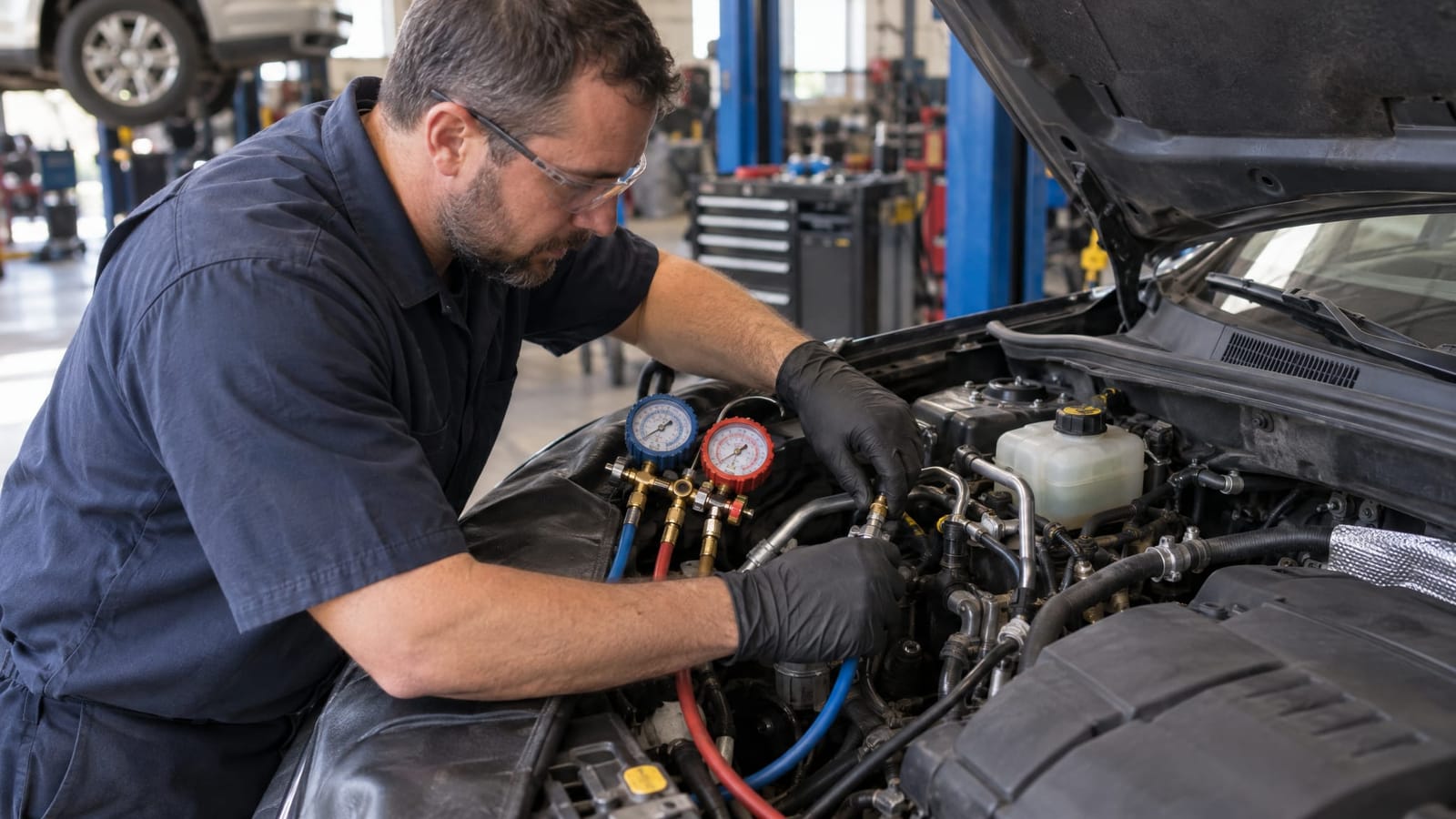
If your car’s AC is blowing warm air, cooling only while you drive, or barely moving air through the vents, the first step is finding the cause. A refrigerant recharge helps when the charge is low, but it will not fix a leak, an electrical problem, or a failed component. The repair cost depends on which problem is present and what it takes to reach and repair it.
Jacksonville’s hot, humid weather makes reliable cooling an everyday concern. An AC system that seems adequate on a mild morning may struggle after the car sits in the afternoon sun.
At Jordan Auto Repairs and Tires Plus LLC, we provide AC repair and vehicle electrical system diagnostics here in Jacksonville. This guide explains what common symptoms mean, how diagnosis works, what affects the bill, and how to compare repair options without paying for guesswork.
How Your Car’s AC Cools the Cabin
Your AC does not simply blow cold air into the car. It moves heat out of the cabin. Refrigerant circulates through a closed system, absorbing heat inside the vehicle and releasing it outside.
These are the main parts involved:
- Compressor: Circulates refrigerant through the system.
- Condenser: Sits near the front of the vehicle and releases heat to the outside air.
- Expansion valve or other metering device: Controls refrigerant flow into the cooling section of the system.
- Evaporator: Absorbs heat from cabin air as that air passes across it.
- Blower motor: Pushes air through the vents.
- Fans, sensors, and electrical controls: Help the system operate under changing conditions.
- Air doors inside the dashboard: Direct airflow and control how much warm and cool air mixes.
The system also removes moisture from the air. That moisture normally drains beneath the vehicle, which explains why a clear-water puddle after running the AC is often normal.
The distinction between cooling and airflow matters. Strong air that feels warm points toward a different set of checks than cold air that barely reaches the seats. Adding refrigerant will not clear a blocked cabin filter or repair a blower motor.
Common AC Warning Signs and What They Can Mean
A symptom gives the technician a starting point, not a final diagnosis. Several faults can feel similar from the driver’s seat.
Air blows strongly but stays warm
Possible causes include a low refrigerant charge, a compressor that is not operating properly, an electrical control problem, or an air door that is allowing heated air into the vents. The important question is whether the system cannot produce cooling or is failing to deliver that cooling into the cabin.
Airflow is weak, even at the highest fan setting
A restricted cabin air filter, a blower problem, or an obstruction in the airflow path can reduce the amount of air reaching you. If airflow starts normally and gradually fades during a drive, evaporator icing is another possibility. That pattern is worth mentioning during diagnosis.
The AC cools while driving but warms up at a stop
Air moves across the condenser as the vehicle travels. At lower speeds, the vehicle’s fans help provide that airflow. Cooling that improves on the road can point toward a fan or heat-removal problem, although refrigerant and compressor issues can produce similar symptoms.
Cooling comes and goes
Intermittent problems can involve electrical connections, controls, sensors, or components that behave differently as they warm up. Record whether cooling returns after restarting the car, whether the blower keeps running, and how long the AC works before changing. Those details help narrow the search.
One side of the cabin is warmer than the other
First, compare the temperature settings if your vehicle has separate driver and passenger controls. If the settings match, uneven cooling can involve an air-door problem or the refrigeration system. It does not automatically mean the compressor needs replacement.
There is a new noise, odor, or damp carpet
A noise that changes with blower speed may come from the cabin fan or debris near it. A noise that begins when AC cooling engages may involve a different component. Describing when the sound occurs is more useful than trying to name the failed part.
A musty odor can develop around a damp evaporator or dirty filter. Water inside the cabin can involve a blocked AC drain, but rainwater leaks can also wet the carpet. Neither symptom automatically calls for a refrigerant recharge.
Why Jacksonville Heat Makes AC Problems More Noticeable
A parked car absorbs heat through its windows and body. When you start driving, the AC has to cool the air along with heat stored in the seats, dashboard, and other interior surfaces. Humidity adds moisture that the system also needs to remove.
That helps explain why cooling is not instant after a long afternoon parking stop. It also explains why a marginal system may feel acceptable early in the day but disappointing later.
Stop-and-go driving adds another useful diagnostic clue. The AC depends on effective heat release at the condenser, including fan-assisted airflow when the car is not moving quickly. A problem that appears mainly in traffic deserves attention to that operating condition.
Florida weather does not create a special replacement schedule for every AC component. Maintenance still depends on the vehicle’s requirements and condition. The practical approach is to notice changes in cooling or airflow rather than treating an annual recharge as routine maintenance.
Common Failure Points: Why the AC Stops Working
Refrigerant leaks
Refrigerant is not fuel and is not normally consumed during operation. A low charge calls for checking for leakage or a previous service issue. Leaks can occur at seals, hose connections, service ports, the condenser, or the evaporator.
Location makes a major difference to the repair. An accessible connection and an evaporator buried inside the dashboard involve very different amounts of labor, even though both can cause warm air.
Compressor problems
The compressor can develop mechanical problems, but a compressor that does not run is not automatically defective. Its electrical supply, control signals, and operating conditions need evaluation first.
If internal damage has spread debris through the system, the repair may involve more than replacing the compressor alone. The repair plan depends on the damage and the vehicle’s service requirements.
Condenser damage or poor airflow
The condenser’s position near the front of the car exposes it to road debris. Damage can create a leak, while debris buildup or a fan problem can interfere with heat release. These are different faults with different repairs.
Blower, filter, and dashboard control problems
A dirty cabin filter can restrict airflow without causing a refrigerant leak. A failed blower control can affect available fan speeds. An air-door actuator, the small motor that moves a dashboard air door, can prevent the selected temperature from reaching the vents.
This is why replacing parts based only on “the AC is not cold” can miss the actual problem.
Refrigerant Recharge vs. AC Repair
A recharge restores the specified amount of refrigerant. A repair addresses the fault that caused poor performance. Sometimes a complete job includes both.
When a recharge is part of the right solution
After a leaking component is repaired or replaced, the system needs to be prepared and charged with the correct refrigerant amount. Professional service generally involves recovering refrigerant, removing air and moisture with appropriate equipment, and filling the system according to the vehicle’s specification.
The refrigerant type also matters. Different vehicles use different refrigerants, and they are not interchangeable.
When adding refrigerant misses the problem
A recharge does not repair a leaking hose, restore a failed cooling fan, fix a dashboard air door, or resolve an electrical fault. If refrigerant continues escaping, improved cooling after a recharge can be temporary.
For example, an AC system with strong airflow and a confirmed leak needs a different plan from one with cold air but a weak blower. Both drivers may describe the cabin as “not cooling,” but only one problem involves refrigerant loss.
Why refill cans are not a diagnosis
A refill can does not establish the cause of poor cooling or measure the total amount of refrigerant already in the system. Adding refrigerant to a system that already has the correct charge can make performance worse. Products containing sealant can also complicate later service.
Refrigerant is pressurized and requires proper handling equipment. For your vehicle’s refrigerant service needs, our team can evaluate the system and explain the appropriate repair rather than relying on a trial-and-error refill.
What to Expect During AC Diagnosis and Repair
A useful diagnosis connects your complaint to a tested fault. The exact checks vary by vehicle and symptom, but the process generally follows these stages.
-
Understand when the problem occurs. The technician needs to know whether cooling is always weak, changes in traffic, stops after a certain amount of driving, or affects only certain vents. Mention any previous recharge, recent repair, or front-end damage.
-
Check basic operation. This includes evaluating airflow, temperature controls, fan operation, and accessible components. A filter or blower issue may need attention before cooling performance can be assessed properly.
-
Test the refrigeration and electrical systems as needed. Pressure readings, temperature checks, electrical testing, and vehicle diagnostic information help distinguish possible causes. No single pressure reading explains every AC fault.
-
Look for leakage when the findings call for it. Leak detection may involve inspection, an electronic detector, or dye. The method depends on the vehicle and suspected leak location. Small or intermittent leaks can take more investigation than an obvious damaged component.
-
Explain the repair scope before replacement work. A clear estimate identifies the fault, the proposed repair, and any related refrigerant service or supporting work. It separates confirmed findings from maintenance recommendations.
-
Recheck operation after the repair. A completed repair needs an operating check. When practical, that check includes the conditions that originally produced the complaint, such as cooling at idle or after the system has been running.
At Jordan Auto Repairs and Tires Plus LLC, we offer both AC repair and vehicle electrical system diagnostics. That combination is relevant because an AC complaint can come from the cooling components, their electrical controls, or both.
What Affects Car AC Repair Costs in Jacksonville?
The most useful price comparison is between estimates for the same diagnosed problem. A recharge price and a compressor replacement price describe different jobs. Even two vehicles needing the same part can have different labor requirements.
The main cost factors
- Diagnostic work: An intermittent electrical fault may require more testing than an easily located leak.
- The failed component: A filter, connection, fan, compressor, and evaporator each involve a different repair scope.
- Access: Parts behind the dashboard can require substantial removal and reassembly work.
- Refrigerant type and quantity: The vehicle’s specified refrigerant affects the service requirements.
- Related damage: Contamination or additional leaks can expand the work beyond a single replacement part.
- Vehicle configuration: Rear AC, separate temperature zones, and different system designs can change the diagnostic and repair process.
An accessible seal repair is generally a smaller job than replacing an evaporator behind the dashboard. A compressor repair involving internal contamination is more involved than correcting an electrical connection. These distinctions explain more about the likely bill than a single advertised AC service price.
What a clear estimate includes
A useful written estimate makes it easy to distinguish diagnostic charges, parts, labor, refrigerant service, and any additional fees. It also explains why related parts or procedures belong in the repair.
At our Jacksonville shop, the diagnostic is free if you approve the repair in our shop. If you do not have the repair performed here, a diagnostic fee applies and we provide a printed repair statement.
When comparing options, useful questions include:
- What finding supports this repair?
- Does the estimate address the cause or only restore the refrigerant charge?
- Does the quoted work include the necessary refrigerant service?
- Is any recommended work separate from the current AC problem?
- What does the repair warranty cover?
For a larger repair, consider the vehicle’s overall condition and other known maintenance needs alongside the AC estimate. The goal is a clear decision about the car, not simply the lowest initial service charge.
How Long Does AC Repair Take?
Repair time depends on the fault, access to the component, parts availability, and the checks needed afterward. An accessible connection repair is a different scheduling task from dashboard removal for an evaporator.
Intermittent symptoms also affect timing. If the AC stops cooling only after a long drive, reproducing the problem may take longer than inspecting a system that fails immediately.
It helps to separate three parts of the timeline: diagnosis, obtaining any needed parts, and completing and checking the repair. A useful time estimate accounts for all three rather than describing only the time spent installing a component.
We focus on fast, dependable service at Jordan Auto Repairs and Tires Plus LLC. A quick turnaround still depends on identifying the problem accurately, rather than replacing the most obvious part and hoping it solves the complaint.
Warranty coverage belongs in the repair decision
We provide a one-year warranty on our repair work. Keep the repair statement with your vehicle records so the repair date and work performed are easy to reference. When comparing estimates, compare the scope of the repair and the warranty terms along with the price.
Simple Checks and Maintenance That Help
You do not need to open the refrigerant system to collect useful information. A few observations can make the service visit more productive.
Before the visit
- Check the settings. Confirm that AC cooling is selected and compare separate temperature-zone settings.
- Try each blower speed. Note whether airflow changes normally or certain speeds do not work.
- Compare parked and moving performance. Record whether cooling improves once the vehicle is moving.
- Notice the timing. Distinguish an initially hot cabin from cooling that never becomes comfortable.
- Describe sounds and smells. Note whether they change with blower speed or when cooling switches on.
- Gather service records. Previous leak repairs, recharges, or electrical work can help explain the current complaint.
During everyday use
Briefly releasing trapped hot air before relying on recirculation can help with the initial cabin cooldown. Recirculation then reduces the amount of hot outside air entering the system. These settings can improve comfort, but they do not correct a mechanical fault.
Follow the vehicle’s maintenance guidance for the cabin air filter. A dirty filter can reduce airflow, while replacing a clean filter will not solve a refrigeration problem. Keeping the exterior air intake area clear of leaves also helps limit debris entering the ventilation system.
Routine maintenance does not mean replacing AC parts on a calendar or adding refrigerant every summer. Pay attention to a gradual loss of cooling, changing airflow, or repeated need for refrigerant. Those changes give a more useful reason for inspection.
A Closer Look at Five AC Repair Topics
Once the general problem is clear, these areas help narrow the repair decision:
- Warm air and weak airflow: Separating temperature from air volume helps identify whether the investigation belongs on the refrigeration side, the ventilation side, or both.
- Refrigerant leaks and recharge service: The key distinction is between restoring the charge and correcting the reason it became low. Previous recharge history matters here.
- Compressor and electrical diagnosis: A component that is not operating may lack the correct electrical command rather than needing replacement. Testing helps distinguish those possibilities.
- Repair estimates and timelines: Access, related damage, and vehicle design explain why similar symptoms can lead to very different jobs.
- AC maintenance in Jacksonville weather: Filter care, useful operating observations, and attention to changing performance help separate normal hot-weather cooldown from an emerging fault.
A Clear Diagnosis Makes the Repair Decision Easier
The important distinction is between restoring cool air temporarily and correcting the cause of the problem. A sound AC repair decision rests on a diagnosed fault, an understandable estimate, a realistic timeline, and clear warranty coverage. With those details in hand, you can judge the proposed work on what it actually fixes, not just the name or price of the service.