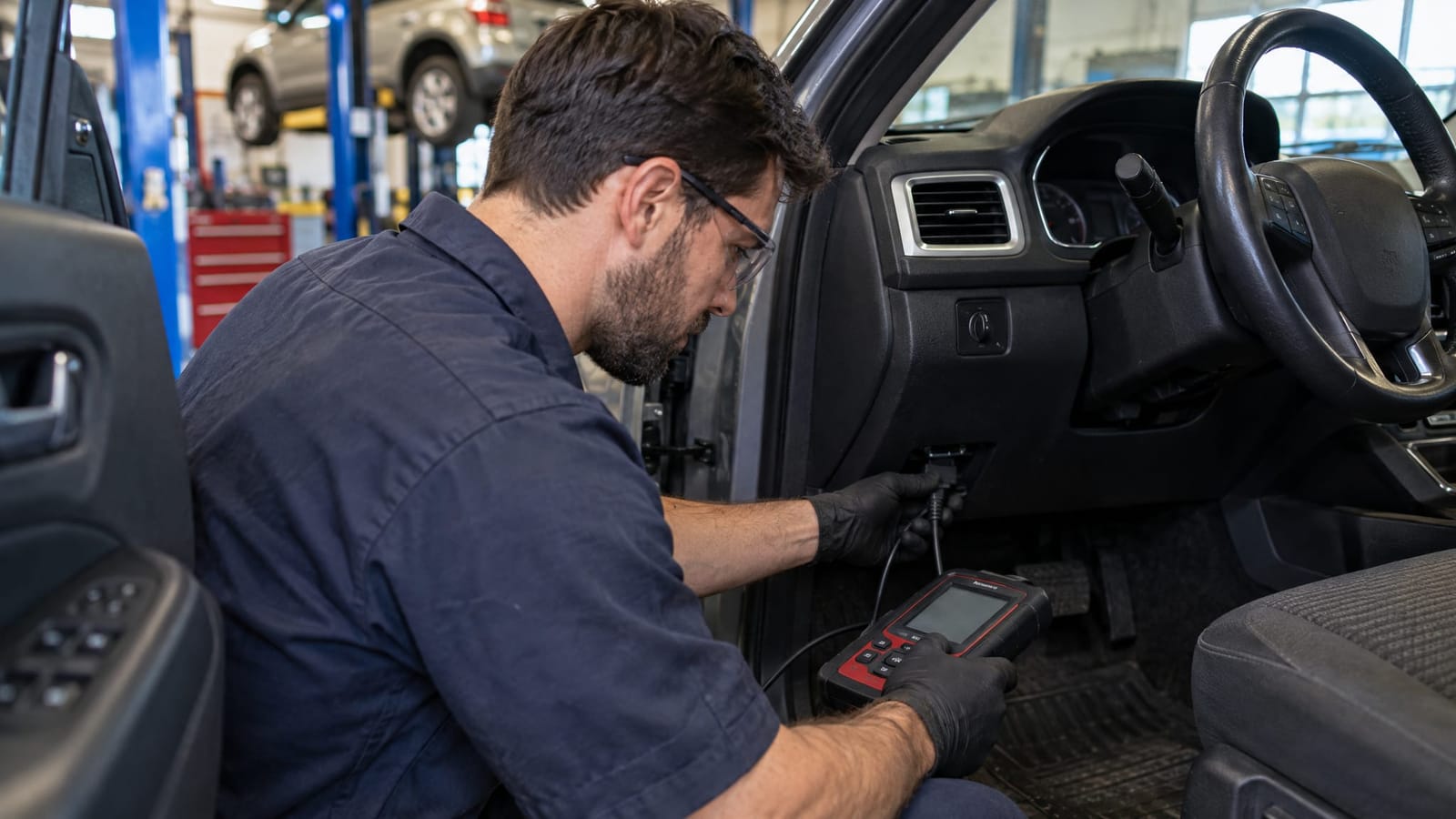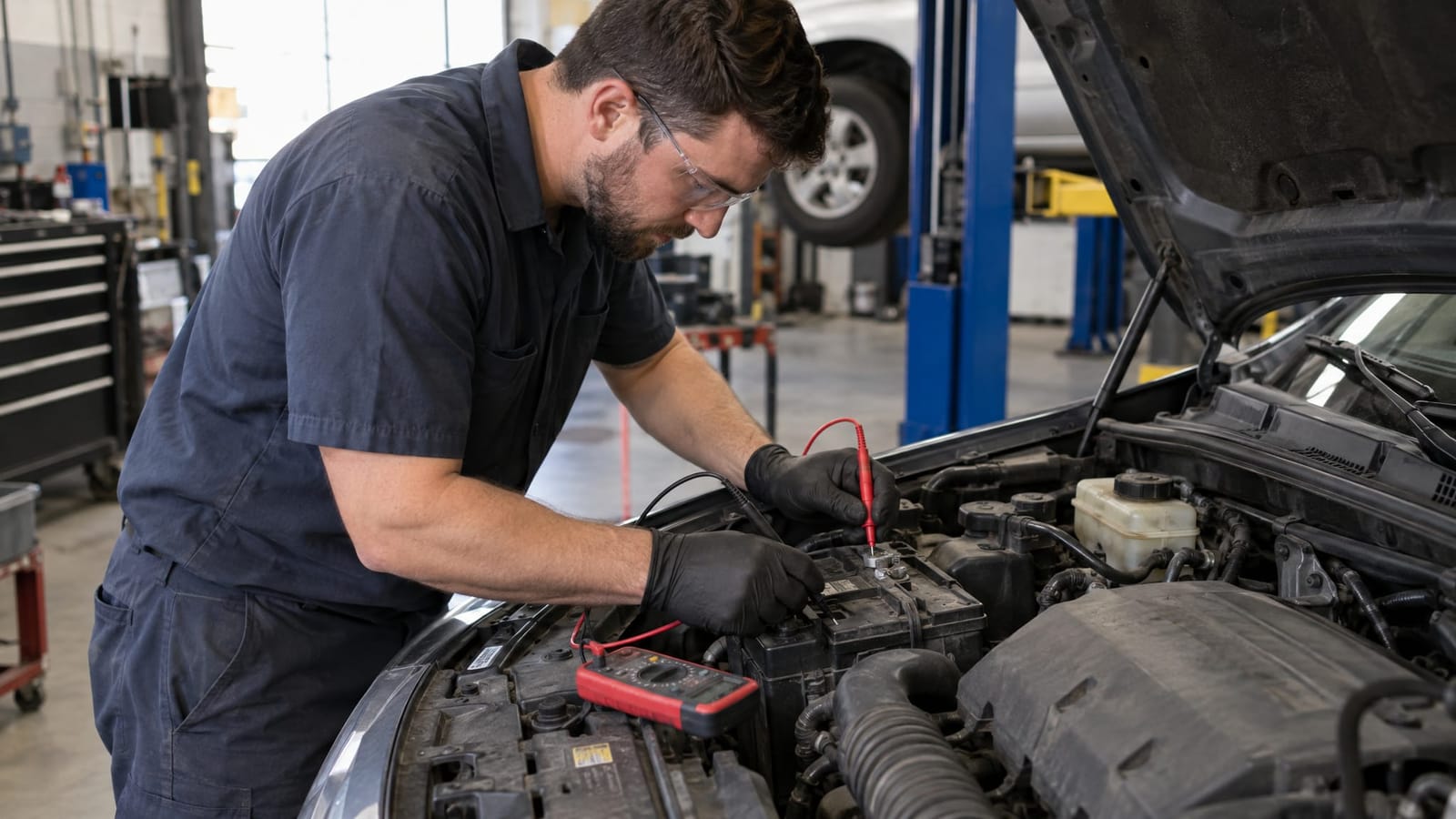
Car Battery and Electrical System Diagnostics in Jacksonville, FL

Your car clicks instead of starting, the dashboard lights flicker, or the battery goes dead again after a jump-start. Does it need a battery, an alternator, or something else?
Symptoms alone rarely identify the failed part. A weak battery, a charging problem, a worn starter, and a poor electrical connection can cause similar trouble. Battery and electrical diagnostics help separate these possibilities before a repair decision is made.
For Jacksonville drivers, heat, short trips, and time spent parked all matter when evaluating battery condition. The useful question is not simply whether the battery has power, but whether it can start the engine reliably, receive a proper charge, and hold that charge between trips.
This guide explains how those systems work together, what common symptoms mean, how testing helps, and what affects repair costs and turnaround time.
How the Battery and Electrical System Work Together
In a conventional gasoline-powered vehicle, starting and running the car involves several connected components. A fault in one can make another appear responsible.
The battery supplies stored electrical power
The battery provides the burst of power needed to start the engine. It also powers electrical equipment when the engine is off and helps support the vehicle’s electrical system during operation.
A battery can be discharged without being worn out. Leaving a light on, for example, can drain an otherwise usable battery. A deteriorated battery is different: it may no longer store or deliver enough power reliably, even after charging. Testing helps distinguish those conditions.
The starter turns the engine
The starter uses battery power to turn the engine so it can begin running. It needs both enough electrical power and sound connections. A starting problem can therefore involve the starter itself, the battery, cables, connections, or the controls that allow starting.
The alternator supports the electrical system while the engine runs
The alternator supplies electrical power and replenishes the battery while the engine is running. If charging is inadequate, the vehicle can gradually use up its stored battery power.
That does not make every charging problem an alternator failure. Wiring, connections, the drive belt, and charging controls can also affect operation. Some vehicles actively vary charging output, so a single voltage reading does not tell the whole story.
Wiring and controls connect everything
Cables, fuses, switches, sensors, and electronic control units distribute and manage electrical power. Ground connections provide the return path for current. A loose or damaged connection can interrupt that path even when the battery and alternator are working.
Hybrids and electric vehicles use different arrangements for starting and charging. Their low-voltage electrical systems still matter, but conventional alternator and starter explanations do not apply to every model.
Battery, Alternator, or Starter: What Symptoms Can Tell You
Symptoms help narrow the testing process. They do not reliably identify a replacement part on their own.
| What you notice | Possible explanations | What testing helps establish |
|---|---|---|
| The engine turns over slowly | A discharged or deteriorated battery, poor cable connections, or a starter problem | Battery starting ability and whether power reaches the starter properly |
| Clicking, but the engine does not turn | Insufficient battery power, a connection problem, or a fault in the starting system | Whether the problem involves available power, its delivery, or starter operation |
| The engine turns normally but does not start | A problem beyond the battery, including engine control, fuel, ignition, or security-system operation | Why the engine is not beginning to run despite turning over |
| The battery-shaped warning light stays on while driving | A charging-system problem involving the alternator, belt, wiring, connections, or controls | Whether the charging system is operating correctly |
| The battery repeatedly goes dead while parked | Battery deterioration, incomplete charging, or an electrical device drawing power after shutdown | Whether the battery holds a charge and whether parked electrical use is excessive |
| One window, light, or accessory stops working | A local problem involving a fuse, switch, motor, wiring, or control | Whether the fault is limited to that circuit or part of a wider electrical issue |
A successful jump-start is another clue, not a final diagnosis. It shows that additional electrical power helped the vehicle start at that moment. It does not establish why the battery was low or prove that the charging system is healthy.
The distinction matters when deciding what to replace. A new battery may restore starting temporarily, but an unresolved charging problem or unwanted electrical draw can discharge it again.
What Dashboard Warning Lights Actually Mean
A battery light usually points to charging-system trouble
The battery symbol is easy to interpret as “replace the battery.” On most conventional vehicles, however, a light that remains on while the engine runs indicates a charging-system concern. The battery may be affected without being the original cause.
Warning lights commonly illuminate briefly during startup as part of a system check. A light that remains on, returns while driving, or appears with other symptoms needs a different interpretation. The owner’s manual explains the indicators for the specific vehicle.
A check engine light is not a battery diagnosis
The check engine light concerns monitored engine and emissions-related operation. An electrical fault can trigger it, but so can problems unrelated to the battery or charging system.
A diagnostic trouble code identifies a condition the vehicle detected. It does not automatically name the part that needs replacement. Low system voltage can also produce several warnings, making it important to understand which conditions are connected.
When the safer response is to stop
A persistent charging warning while driving can lead to a stall as battery power runs down. Smoke, a burning electrical smell, a swollen or leaking battery, severe overheating, or a flashing check engine light accompanied by severe shaking also call for caution. The safer response is to stop in a safe location and arrange roadside assistance or towing rather than continue driving or attempt electrical repairs. These situations need a qualified vehicle inspection; our team can assess battery and electrical concerns through vehicle-specific testing.
How Professional Battery and Electrical Diagnostics Work
A useful diagnostic process follows the evidence rather than beginning with a replacement part. The exact checks depend on the vehicle, its symptoms, and what earlier tests reveal.
-
Establish when and how the problem happens. Does the car fail to start after sitting overnight, after several days parked, or immediately after a short stop? Does the engine turn slowly, click, or turn normally without starting? Those differences help direct testing.
-
Inspect the battery and visible connections. Battery condition, cable security, corrosion, and visible wiring damage can affect electrical performance. Accessible charging-system components may also be inspected. A poor connection can imitate a failed component.
-
Evaluate battery charge and starting ability. A battery assessment considers both its present charge and its ability to supply starting power. A discharged battery may need charging before its condition can be judged accurately. Low charge and permanent deterioration are not the same finding.
-
Check the charging system. Testing examines whether the system supports electrical demand and replenishes the battery as intended. Results need to be interpreted against the vehicle’s charging design, operating conditions, and specifications.
-
Evaluate power delivery and starter operation. When starting trouble remains, testing can check whether enough power reaches the starter. Measuring electrical losses through cables and connections helps separate a delivery problem from a starter fault.
-
Investigate unwanted electrical use when parked. If the battery and charging system test properly but the battery repeatedly drains, further checks may look for an excessive draw after shutdown. Vehicles normally use some power while parked, and electronic systems can take time to settle into their low-power state.
-
Use scan information and targeted circuit testing. Stored codes and operating information can guide the investigation. Tests of the relevant wiring, controls, or components help establish the cause. After repair, checking the original concern helps assess whether the identified fault has been addressed.
Not every concern requires every test. A visibly damaged connection may lead to a focused repair, while an intermittent drain may require observation over time. That difference helps explain why a basic battery assessment and a complex electrical investigation can involve different amounts of labor.
Battery Life in Jacksonville’s Heat
There is no single replacement age that fits every vehicle. Battery condition depends on temperature exposure, battery design, charging performance, driving patterns, and time spent discharged. Age adds context, but testing provides more useful evidence for a replacement decision.
Heat affects the battery internally
High temperatures can accelerate the chemical deterioration inside a battery. A battery can therefore lose starting ability even when its case looks normal and the terminals appear clean.
Jacksonville’s hot weather makes battery condition worth including in routine maintenance discussions, particularly when starting behavior changes. A familiar battery that worked well earlier in the year can still develop trouble as its condition deteriorates.
Short trips and parking habits affect charge
Starting the engine uses stored energy. Repeated short trips may not give the charging system enough opportunity to restore that energy, especially when the battery begins partly discharged.
Extended parking creates a different challenge. Security systems and other electronics continue to use some power after shutdown. Aftermarket accessories can add to that demand. A vehicle driven infrequently may have a charging or storage concern rather than a simple age-related battery failure.
Weather-related patterns can help identify electrical faults
A problem that appears after heavy rain is useful information. Moisture can affect damaged wiring or compromised connections, although rain alone does not identify the failed component.
For example, a window that stops working after rainfall calls for a different investigation than an engine that turns slowly every morning. Recording the pattern helps keep the diagnosis focused.
What Affects Battery Replacement and Electrical Repair Costs?
There is no single price category for “an electrical problem.” Replacing a worn battery is a different job from locating an intermittent wiring fault. A useful estimate separates diagnosis, parts, installation, and any additional work supported by the findings.
Battery replacement involves more than physical size
Replacement cost depends on the battery specification required by the vehicle, its location, installation access, and any vehicle-specific setup procedure.
Some vehicles require an absorbent glass mat battery, often called AGM, or another specified battery design. Certain vehicles also require a registration or reset procedure when the battery is replaced so the charging controls can account for the new battery.
Two batteries that fit in the same space are not necessarily interchangeable. Comparing estimates is more useful when they cover the same required battery type and installation work.
Electrical repair cost depends on the fault and access
Repairing an accessible connection differs from tracing damaged wiring behind interior panels. A fault that is present during testing may be easier to locate than one that appears only after hours of parking or under specific weather conditions.
Useful estimate details include:
- What testing is included in the diagnostic charge.
- What finding supports the proposed repair.
- Which parts and labor are included.
- Whether additional diagnostic work needs separate authorization.
- How the original concern will be checked after repair.
Turnaround time follows the work involved
A straightforward battery replacement and an intermittent electrical investigation do not require the same schedule. Battery charging, reproducing a symptom, accessing wiring, and obtaining the correct part can affect completion time.
When planning transportation, it helps to distinguish time for the initial diagnosis from time for the repair. A clear explanation of that difference is more useful than a completion promise made before the fault is identified.
What Jordan Auto’s Diagnostic Service Covers
At Jordan Auto Repairs and Tires Plus LLC, we offer battery diagnostics and vehicle electrical system diagnostics in Jacksonville. Our experienced local repair team provides honest service and quality work, with a focus on quick turnaround and dependable results.
Battery diagnostics address concerns about stored power and starting ability. Vehicle electrical system diagnostics provide a broader way to investigate concerns involving electrical operation. The appropriate testing depends on the symptoms and the vehicle, rather than treating every no-start or warning light as a battery replacement.
We offer a free diagnostic when you approve the repair in our shop. If you decide not to have the repair completed here, we provide a printed repair statement with the diagnostic fee.
Understanding what failed and why it needs attention is central to making an informed repair decision. That is especially important when a vehicle has already received a new battery but the original concern keeps returning.
What to Record Before an Electrical Diagnostic Visit
A clear symptom description can be more useful than a guess about the failed part. Notes taken while safely parked can help explain a problem that does not happen every time.
- Starting behavior: Silence, a click, repeated clicking, slow engine movement, or normal turning without starting.
- Timing: First start of the morning, after a short stop, or after several days parked.
- Warning lights: Which symbols appear and whether they remain on after startup.
- Recent changes: Battery replacement, electrical work, accessory installation, or a recent jump-start.
- Weather: Whether the concern follows heavy rain or occurs when the engine compartment is hot.
- Accessories: Plug-in cameras, chargers, alarms, or other added equipment.
- Battery history: Approximate installation date and any previous charging or test results.
“It clicked after sitting all weekend, then started with assistance” gives a technician more direction than “the alternator is bad.” The first describes evidence; the second assumes the conclusion.
Practical Habits That Support Battery Reliability
Battery care works best when it matches the vehicle and how it is used. A frequently driven commuter car has different needs from a vehicle parked for long stretches.
- Limit accessory use with the engine off. Lights, audio equipment, and other devices use stored battery energy.
- Include battery condition in routine maintenance. Age, changed starting behavior, and previous discharge events provide useful context for testing.
- Account for infrequent driving. The owner’s manual provides vehicle-specific storage and battery-care guidance.
- Keep replacement records. Installation dates and previous test findings help distinguish a recurring problem from normal battery deterioration.
- Use the correct replacement specification. Vehicle requirements matter more than choosing a battery solely because it fits.
Maintenance schedules, test procedures, and repair requirements vary by make, model, year, equipment, driving conditions, and manufacturer specifications. A universal replacement calendar cannot account for all of those differences.
Frequently Asked Questions
Why do the radio and lights work when the car will not start?
The starter needs much more power than many smaller accessories. A weak battery or poor connection may still allow the radio and dashboard lights to operate while failing to deliver enough power for starting. Working lights therefore do not rule out a battery or cable problem.
Can a battery show voltage and still be worn out?
Yes. A voltage reading indicates electrical potential, but it does not fully measure the battery’s ability to deliver starting power. That is why an assessment of battery condition involves more than checking whether a meter displays voltage across the terminals.
Why has the automatic stop-start feature stopped working?
Automatic stop-start depends on several operating conditions. Battery charge and condition can affect it, but so can temperature and cabin comfort demands. The feature staying inactive does not by itself prove that the battery needs replacement. Vehicle-specific checks help distinguish normal operation from a fault.
Can a hybrid or electric vehicle have a low-voltage battery problem?
Yes. Many hybrids and electric vehicles use a separate low-voltage battery to support controls and other electrical functions. A charged propulsion battery does not automatically establish that this smaller battery is healthy. Testing procedures differ from those used on a conventional gasoline vehicle.
Will disconnecting the battery fix a check engine light?
Removing power may reset some information, but it does not repair the underlying cause. It can also erase diagnostic clues and affect vehicle settings. A light disappearing after a reset is not evidence that the original fault has been resolved.
Deep Dive Topics: Battery and Electrical Questions
These related articles explore individual concerns in more detail:
-
How long car batteries last in Florida focuses on battery age, Jacksonville driving conditions, and the factors that influence replacement decisions.
-
Signs your car battery is dying in Florida explores changes in starting and electrical behavior that make battery condition worth assessing.
-
Battery vs. alternator vs. starter problems takes a closer look at these connected systems and why their symptoms can overlap.
-
Car electrical problems and diagnosis in Jacksonville covers common electrical concerns and the role of professional testing in identifying their causes.
-
Check engine light diagnostics in Jacksonville, FL explains what the warning means and how diagnostic information helps guide an investigation.
Make the Repair Decision From the Test Results
A starting problem is not automatically a battery problem, and a dashboard warning does not automatically identify a failed part. The soundest repair decision connects the symptom to a test finding and a clear explanation of the proposed work.
For Jacksonville drivers, battery age, heat exposure, parking habits, and charging performance all provide useful context. Accurate diagnosis brings those details together, helping separate a battery that needs replacement from a vehicle with a different electrical fault.