Signs Your Car Battery Is Dying: What to Watch For in Florida's Heat

Slow engine cranking, dim or flickering lights, and repeated jump-starts are common signs of a weak car battery. Corrosion around the terminals, a swollen battery case, and an older battery also deserve attention. But these clues do not all mean the same thing: a dashboard battery light, for example, usually points to a charging-system problem rather than simply an old battery.
For Jacksonville drivers, Florida’s heat adds another factor. High temperatures accelerate battery wear, even when the car still starts normally. Knowing which symptoms to notice, and what testing can tell you, helps separate a battery replacement from a connection, starter, or charging-system repair.
Why Florida’s heat is hard on car batteries
Cold weather often gets blamed for battery trouble because it makes an engine harder to crank. Heat causes a different problem: it speeds up the chemical reactions and internal deterioration that age a battery. High temperatures also contribute to fluid loss in conventional lead-acid batteries.
That means a Florida battery can develop wear long before an obvious starting problem appears. Hot weather does not protect a battery just because the engine avoids freezing mornings.
Driving habits matter, too. Repeated short trips may not give the charging system enough time to replace the energy used during starting. Long periods parked allow the vehicle’s normal electrical demands to gradually reduce its charge. Heat-related aging and a low charge can occur together, but they are not the same condition. A discharged battery may recover; a worn-out battery may no longer deliver reliable starting power after charging.
Seven signs worth paying attention to
The most useful clue is often a change from how your own vehicle normally behaves.
1. The engine cranks more slowly than usual
A healthy starting system turns the engine over with a familiar, steady sound. When that sound becomes slower or labored, the battery may not be supplying enough power to the starter.
Notice whether the slow cranking happens after the car sits overnight, after several days parked, or even after a recent drive. That pattern helps narrow the possibilities.
Rapid clicking instead of cranking can also indicate inadequate power, but a loose or corroded connection can produce similar symptoms. A single click may involve the starter or another part of its electrical circuit. If the engine turns over at its normal speed but does not start, the diagnosis needs to look beyond battery condition alone.
2. Lights dim, flicker, or behave differently
Headlights, interior lights, and dashboard displays can provide clues about electrical power. Unusual dimming during a starting attempt, a clock that resets, or a display that shuts off may accompany a weak battery or poor connection.
A brief change in brightness while starting is not, by itself, proof of failure. Look for a new or worsening pattern.
Flickering while the engine is running broadens the diagnosis to include the charging system, wiring, and connections. Likewise, one slow power window does not automatically mean the battery is failing. A problem limited to one window may involve its motor or mechanism rather than the vehicle’s overall power supply.
3. The car needs repeated jump-starts
A jump-start provides outside power to help crank the engine. It does not establish why the vehicle would not start or whether the battery can hold a useful charge afterward.
One incident after leaving a light on is different from repeated no-starts with no clear explanation. Recurring trouble can involve a worn battery, inadequate charging, an electrical drain while parked, or a poor connection.
For example, a car that starts after a jump but struggles again the following morning needs more investigation than another jump-start. Replacing the battery without checking the cause may leave the original problem in place.
4. The battery case looks swollen or distorted
A bulging battery case is different from an ordinary low-charge condition. Overheating, overcharging, or internal damage can distort the housing. Florida’s weather alone is not a reason to dismiss a visibly swollen case as normal.
A swollen, cracked, or leaking battery needs professional handling because batteries contain acid and can release flammable gas. DIY jump-starting, charging, or cleaning is not appropriate for a battery in that condition; our team can assess the battery and charging system.
A replacement decision also needs to account for the cause. If a charging-system fault contributed to the damage, replacing only the battery would leave that fault unresolved.
5. There is corrosion around the terminals
White, blue, or greenish buildup around the battery terminals can interfere with electrical contact. The battery may have charge available, but a poor connection can limit how effectively that power reaches the starter.
Corrosion does not automatically mean the battery itself has failed. It does mean the connections deserve attention, especially when buildup appears alongside slow cranking or intermittent starting.
A useful inspection looks at the terminals, cable condition, and connections as well as the battery. Testing helps distinguish a connection problem from internal battery wear, rather than treating visible residue as a replacement verdict.
6. The battery is more than three years old
Age is context, not a symptom. A battery does not become defective on its third birthday, and a newer battery is not immune to trouble.
Once a battery is more than three years old, its age becomes a useful part of the conversation about testing, particularly in Florida’s heat. Driving patterns, battery type, charging-system condition, and time spent parked all affect its performance.
An installation receipt can help establish its age. Battery date labels may indicate manufacturing rather than installation, so those dates do not always tell the whole story. Test results are more useful than age alone when deciding whether replacement makes sense.
7. The dashboard battery light stays on
The battery-shaped dashboard light is generally a charging-system warning, not a battery-health gauge. It commonly appears with the ignition on before the engine starts, then goes out once the engine is running.
If it stays illuminated or comes on while driving, possible causes include an alternator problem, a belt issue, or a wiring or connection fault. The battery may then be supplying power without receiving the charge it needs.
A new battery does not correct an alternator or wiring problem. The warning needs a charging-system assessment, and the vehicle’s owner’s manual explains the meaning of its specific indicator or message.
What a battery diagnostic can tell you
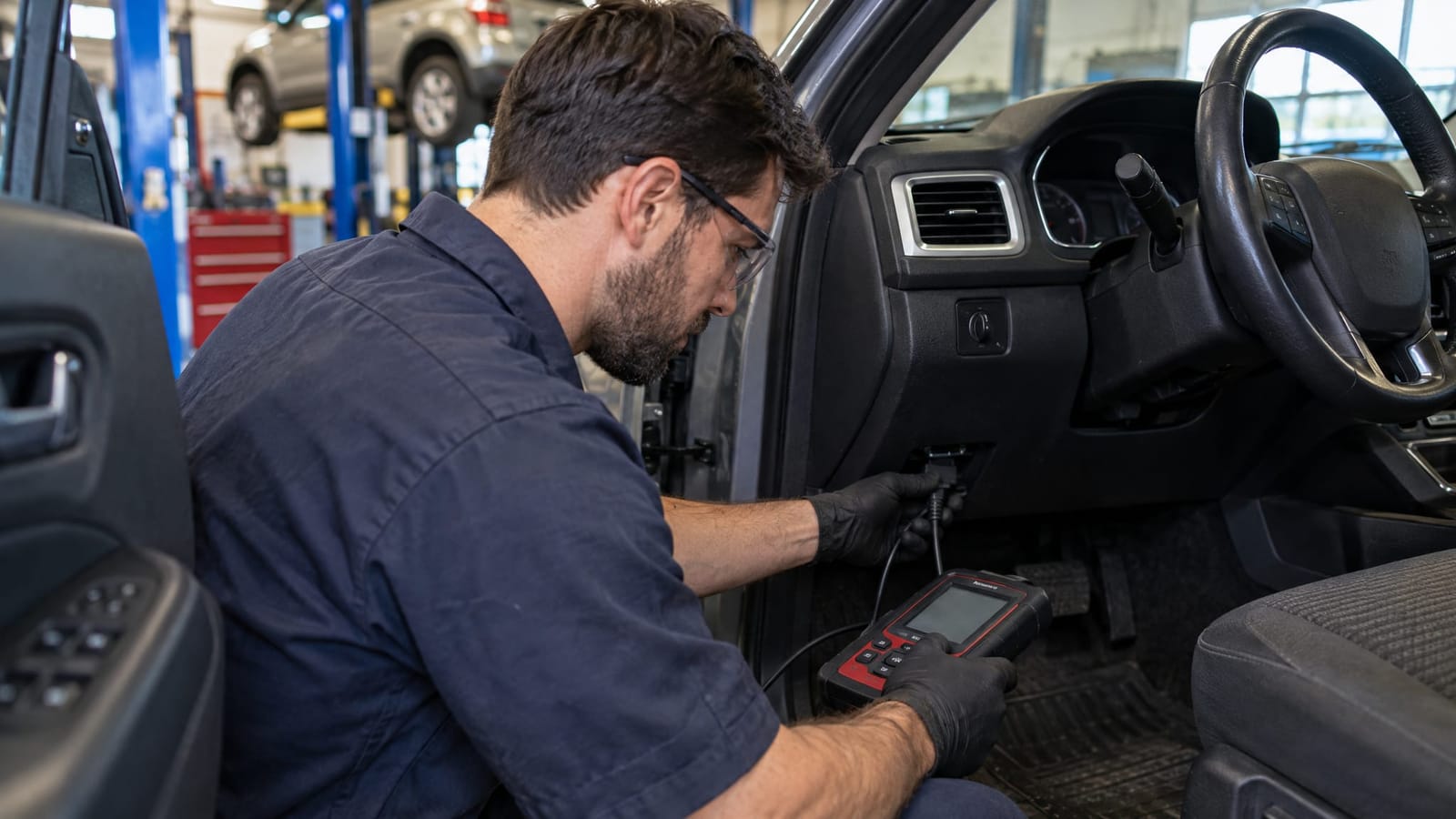
At Jordan Auto Repairs and Tires Plus LLC, we offer battery diagnostics and vehicle electrical system diagnostics in Jacksonville. Our focus is honest explanations and efficient, dependable service, with attention to the cause rather than assuming every starting problem needs a new battery.
A useful assessment separates several questions:
- Is the battery charged? A low state of charge describes its current condition, but does not explain why it became low.
- Can it deliver starting power? A battery can show voltage while resting yet struggle when the starter places a heavy demand on it.
- Are the connections carrying power properly? Loose connections, corrosion, and damaged cables can mimic battery failure.
- Is the charging system working? The alternator and its connections affect whether the battery receives adequate charge while the engine runs.
- Is something drawing excess power while parked? Recurring discharge may call for further electrical testing.
A heavily discharged battery may need charging before its condition can be assessed accurately. That distinction matters: “low on charge” and “needs replacement” are not interchangeable findings.
Testing time also depends on the problem. Evaluating battery condition is a different task from tracking an intermittent electrical drain that does not occur every time the vehicle is checked.
Details that help explain an intermittent problem
A clear description of the symptoms can make the diagnostic process more focused. Useful notes include:
- How long the vehicle sat before the starting problem appeared.
- Whether the engine cranked slowly, clicked, or did not respond.
- Whether a jump-start helped and how soon the problem returned.
- Whether lights flickered before starting or while the engine was running.
- Any recent battery replacement, electrical repair, or accessory installation.
- Whether the problem happens consistently or only occasionally.
For example, “It cranks slowly after sitting for two days, but restarts normally after errands” gives more direction than “The battery seems bad.” A photo of a dashboard message can also preserve the exact wording.
Related questions: overnight drain and replacement cost
What if the battery dies only while parked?
Vehicles use a small amount of electricity while parked to support features such as security systems and memory settings. Excessive draw, however, can discharge a battery. An accessory that stays powered or a component that fails to switch off may be involved.
If your car battery keeps dying overnight, the important distinction is whether the battery cannot hold charge, is not receiving enough charge, or is losing charge to an electrical drain.
What affects the cost if replacement is needed?
Battery selection depends on the vehicle’s requirements, not simply which battery fits the space. Battery type, electrical capacity, access for installation, and any vehicle-specific setup affect the work involved.
Understanding car battery replacement cost in Jacksonville starts with identifying the correct battery and separating replacement work from any additional connection or charging-system repair.
The key distinction: a symptom is not a diagnosis
Florida’s heat makes battery condition worth watching, but slow cranking, flickering lights, corrosion, and warning lights do not all point to the same repair. Age and symptoms provide clues. Testing separates a discharged battery from a worn battery, a poor connection, or a charging problem, giving you a clearer basis for the repair decision.