Battery vs. Alternator vs. Starter: How to Tell Which Is Causing Your Car Problem

A weak battery usually shows up when you try to start the engine. An alternator problem affects charging while the engine runs and can leave the battery drained. A starter problem prevents the engine from turning over even when enough battery power is available.
Those differences are useful clues, but they are not a diagnosis. Loose connections, damaged cables, and electrical drains can imitate a failed part. The clearest way to sort out a battery vs. alternator vs. starter problem is to combine what happens at the key with battery and electrical testing.
Here is how to compare the symptoms, understand what a jump-start actually tells you, and avoid replacing a part that is not causing the trouble.
Battery vs. Alternator vs. Starter: What Each Part Does
In a conventional gasoline or diesel vehicle, these three components work together, but each has a different job:
- The battery stores electrical energy. It supplies the large burst of power needed to start the engine and powers electrical equipment when the engine is off.
- The alternator produces electricity while the engine runs. It supplies the vehicle’s electrical needs and replenishes the battery.
- The starter turns the engine over. It uses battery power to get the engine moving so combustion can begin. After the engine starts, the starter’s job is finished.
That relationship explains why the part showing the symptom is not always the part causing it. A discharged battery may be the result of a charging problem, rather than a battery that needs replacement.
| What happens | What it points toward | What else needs checking |
|---|---|---|
| The engine turns over slowly | Low battery charge or reduced battery starting capacity | Battery connections, cables, and starter operation |
| You hear rapid clicking, but the engine does not turn | Not enough electrical power reaching the starter | Battery condition and cable connections |
| You hear one click, but the engine does not turn | Starter or starter-circuit trouble | Battery power and cable condition before condemning the starter |
| The battery-shaped warning light stays on while driving | A charging-system problem | Alternator output, belt, wiring, and charging controls |
| The engine starts with a jump but later needs another | A battery, charging, or parked electrical-drain problem | Testing across all three possibilities |
| The engine turns over normally but will not start | A problem beyond the starter, such as fuel delivery or ignition | Engine diagnostics rather than automatic battery replacement |
Battery Problems: Trouble Supplying Starting Power
Slow cranking and repeated clicking are useful clues
“Cranking” means the engine turns over before it starts running. If that familiar sound becomes noticeably slower, the starting system is struggling to deliver or use power.
A weak battery is a common explanation. Rapid clicking happens when the starter’s switching mechanism engages but available voltage drops too far to keep it engaged. A poor battery connection can produce the same pattern.
Dashboard lights do not settle the question. A battery can have enough power to illuminate the dash or operate the radio but still lack the capacity to turn the engine.
A discharged battery is not necessarily a failed battery
Leaving lights on can discharge an otherwise serviceable battery. Repeated short trips can also leave too little time to replace the energy used during starting. A battery that has lost starting capacity, however, may need replacement even after it has been charged.
The important distinction is between how charged the battery is now and how well it can perform under demand. A resting voltage measurement alone does not answer both questions.
Jacksonville’s heat also makes battery condition worth watching because high temperatures accelerate battery aging. Our explanation of signs your car battery is dying in Florida’s heat covers the changes that deserve attention before a no-start.
Alternator Problems: Trouble Replenishing Battery Power
Symptoms can appear while the engine is running
Unlike a starter problem, a charging problem can affect the vehicle after it has started. Clues include a charging warning light, changing headlight brightness, or electrical accessories behaving irregularly while the engine runs.
The battery-shaped dashboard light is especially easy to misread. It generally warns about the charging system, not simply that the battery is old. A brief appearance during the normal startup bulb check is different from a light that remains on after the engine starts.
If the charging system stops supplying enough electricity, the vehicle draws on stored battery energy. It can continue running for a time and then stop as that energy runs down. Stalling alone, however, does not identify an alternator failure.
The alternator is only one part of the charging system
A belt problem, damaged wiring, poor connection, or charging-control fault can interfere with charging. Replacing the alternator without checking these items can leave the original problem unresolved.
A charging fault can also leave the battery too depleted to pass a meaningful condition test until it has been charged. Both components need evaluation, rather than assuming only one can be involved.
For a closer look at charging-related symptoms, see how to tell if your alternator is bad.
Starter Problems: Power Is Available, but the Engine Will Not Turn
A click or silence requires more than a sound-based diagnosis
A single solid click with no engine movement can point toward the starter. Silence can indicate that the starter never received the command to operate. Neither symptom proves the starter itself has failed.
The starting circuit also includes cables, switches, relays, and controls that allow starting only under the right conditions. For example, a transmission range switch that does not recognize Park or Neutral can prevent a start without any failure inside the starter motor.
The deciding question is whether the starter receives adequate power and the proper start signal. That is something electrical testing can establish.
Normal cranking points away from the starter
If the engine turns over at its usual speed but never catches, the starter is doing its main job. That pattern generally calls for checks of fuel delivery, ignition, or engine controls instead.
Describing the problem as “it cranks but won’t start” is much more useful than “it won’t start.” Likewise, a starter fault does not normally explain an engine that shuts off while driving, because the starter is no longer operating.
What a Jump-Start Can and Cannot Tell You
A successful jump-start shows that added electrical support helped the engine start. It does not prove the battery needs replacement or that the alternator is working correctly.
- It starts and keeps running: The battery may have been discharged, but battery condition, charging performance, and a possible parked drain still need consideration.
- It starts and then stalls: Charging trouble is one possibility, but other engine faults can also cause stalling.
- It still will not crank: Poor jumper contact, inadequate electrical support, cable problems, or starter-circuit trouble can all explain the result.
The owner’s manual provides the correct jump points and procedure for the vehicle. Disconnecting a battery cable while the engine runs is not a reliable alternator test and can damage vehicle electronics.
How Professional Testing Separates the Three Problems
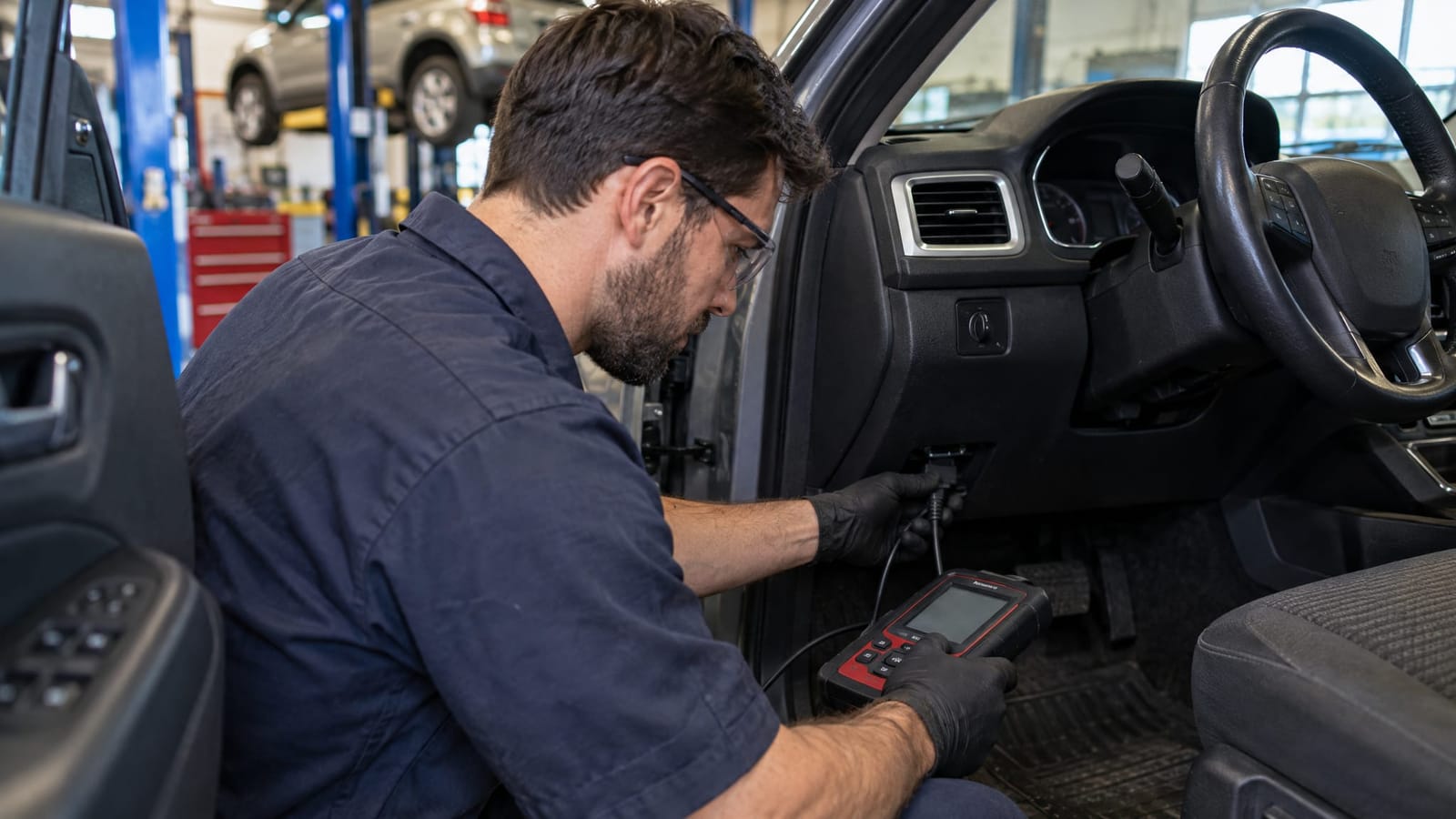
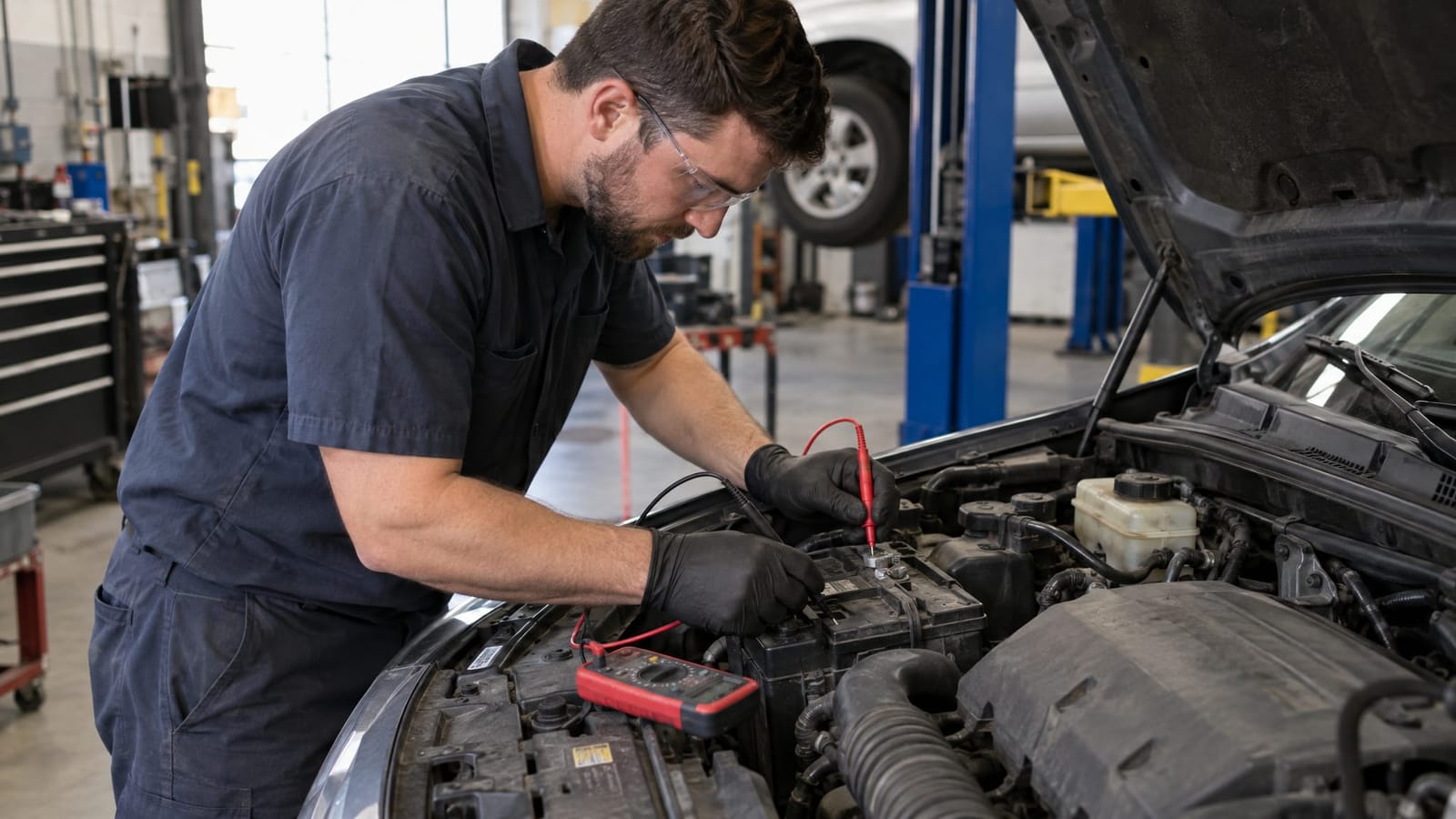
At Jordan Auto Repairs and Tires Plus LLC in Jacksonville, we offer battery diagnostics and vehicle electrical system diagnostics. Our experienced local team focuses on honest explanations and prompt, dependable service. Testing helps separate a failed component from a problem elsewhere in the system.
Battery testing checks charge and starting ability
A useful evaluation includes battery condition, terminal connections, charge level, and starting performance. A load test checks how the battery’s voltage holds up under substantial demand. Electronic battery testers use electrical measurements to assess starting condition.
Results need to be interpreted against the battery’s rating and charge level. A heavily discharged battery may need charging and retesting before a replacement decision makes sense.
Charging tests check performance while the engine runs
Charging-system testing checks whether the system supplies electricity appropriately as operating conditions and electrical demand change. Inspection of the belt, wiring, and connections helps distinguish an alternator failure from a supporting-system problem.
Modern charging systems can deliberately vary their output. One voltage reading, taken without considering how that vehicle manages charging, can be misleading.
Starter-circuit tests check where power stops
Starter testing checks the start command, power delivery, and current used during cranking. A voltage-drop test measures how much voltage is lost along a cable or connection while the circuit is working.
That matters because a connection can look acceptable but perform poorly under starting demand. If adequate power and the proper command reach the starter but it does not operate correctly, the evidence points more directly toward the starter itself.
A recurring dead battery may need a parked-drain test
If the battery and charging system test well but the battery repeatedly goes flat while parked, an electrical drain becomes important to investigate. A light or module that stays active after shutdown can consume stored energy.
Replacing the battery alone would not correct that cause. This is why the timing of the problem matters as much as the sound it makes.
The Most Useful Details to Bring to a Diagnostic
A short description of the pattern helps narrow the testing:
- Does the engine turn slowly, click, stay silent, or crank normally?
- Does it happen after sitting overnight, after several days, or after a short stop?
- Do warning lights appear only before starting or remain on while driving?
- Did a jump-start help, and did the problem return?
- Were lights left on, accessories added, or electrical repairs performed recently?
The key distinction is simple: the battery stores starting energy, the alternator replenishes it, and the starter uses it to turn the engine. Symptoms help identify where testing begins. Checking the full electrical path is what supports a repair decision without unnecessary part replacement.