What Happens If You Ignore the Check Engine Light?
Ignoring the check engine light can lead to reduced fuel economy, worsening performance, and a larger repair if the original problem affects other parts. A misfiring engine, for example, can damage the catalytic converter. An illuminated light can also cause an emissions-test failure where testing is required.
But not every check engine light means a major repair. A loose fuel cap can trigger it, too. The important distinction is whether the light is steady or flashing, how the car is running, and what a diagnosis reveals.
A Steady Light and a Flashing Light Mean Different Things
The check engine light comes on when the vehicle’s computer detects a problem related to engine operation or emissions controls. It identifies a condition that needs attention, not the repair itself.
- Steady light, normal driving: Diagnosis soon is generally appropriate. Normal acceleration and a smooth idle do not rule out a problem, but a steady light alone does not establish that the engine is failing.
- Steady light with symptoms: Rough running, stalling, hesitation, or reduced power give the problem greater urgency. Those symptoms are also useful diagnostic clues.
- Flashing light while the engine is running: This commonly indicates a misfire severe enough to threaten the catalytic converter. Continued driving can add damage.
A flashing light accompanied by shaking or loss of power calls for a safe stop rather than finishing the trip. Roadside assistance offers an alternative to driving farther. Whether further driving is appropriate requires a vehicle-specific assessment; our team can evaluate the underlying fault.
What Can Happen When the Problem Goes Unchecked?
A Limited Repair Can Become a Larger One
Some faults remain confined to one system. Others place extra strain on surrounding components. An ignition problem that prevents fuel from burning properly can affect both engine performance and the exhaust system.
That does not mean every small problem inevitably becomes expensive. A loose fuel cap is not the same as an active engine misfire. The value of early diagnosis is finding out which situation applies before deciding that the light can wait.
A Misfire Can Damage the Catalytic Converter
A misfire happens when a cylinder does not burn its fuel properly. Unburned fuel can enter the exhaust and overheat the catalytic converter, the component that helps reduce harmful exhaust emissions.
If that continues, the converter can suffer internal damage. The repair may then involve both the original misfire and the damaged converter. Replacing the converter alone would leave the cause unresolved.
This is why a flashing check engine light deserves a different response from a steady light with no noticeable symptoms. The concern is a specific chain of damage, not simply the presence of a dashboard warning.
Fuel Economy and Performance Can Decline
Problems affecting the mixture of air and fuel, ignition, or engine sensor readings can make the engine run less efficiently. More frequent fuel stops, uneven idling, hesitation, or weaker acceleration may follow.
Not every check engine fault increases fuel use. An evaporative-emissions leak, such as one caused by a loose fuel cap, may produce no noticeable change in how the car drives. That difference is another reason to diagnose the fault rather than judge it only by feel.
The Vehicle Can Fail an Emissions Inspection
Where emissions testing is required, an active check engine light can prevent a vehicle from passing an inspection that checks its onboard diagnostic system.
Clearing the light immediately before testing is not a reliable workaround. Clearing codes can reset the system’s readiness monitors, which track whether its self-checks have completed. Incomplete monitors can prevent completion of the inspection even when the light is off.
Why a Code Scan Is Only the Starting Point
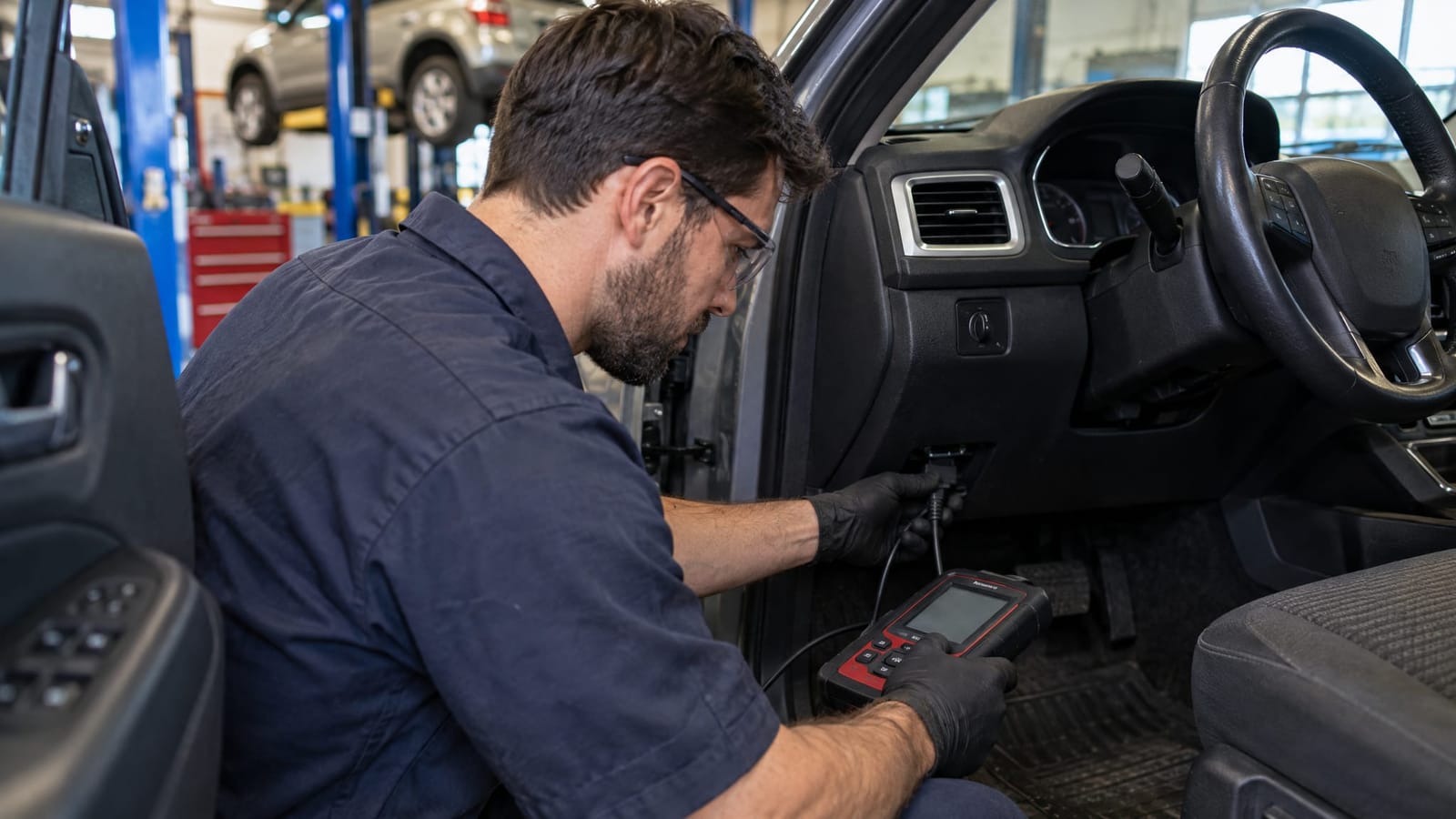
A scan retrieves stored trouble codes. Those codes point toward a system or condition, but they do not always identify the failed part. For example, an oxygen-sensor-related code can involve the sensor, its wiring, or another problem affecting the exhaust reading.
Diagnosis connects the code to the symptoms and test results. Depending on the fault, that can involve checking electrical connections, looking for leaks, or testing how a component operates. Replacing the part named in a code without those checks can leave the original problem in place.
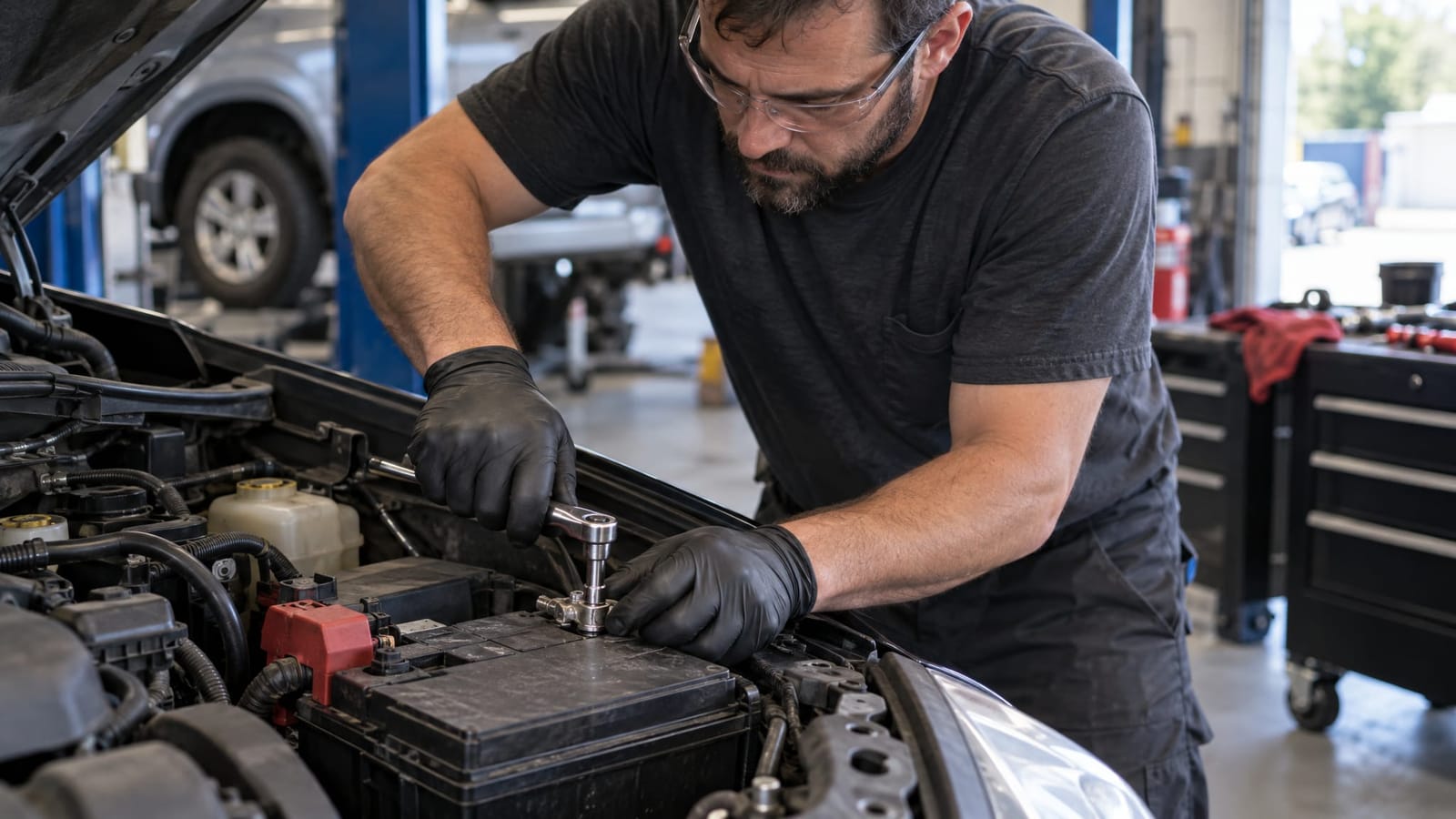
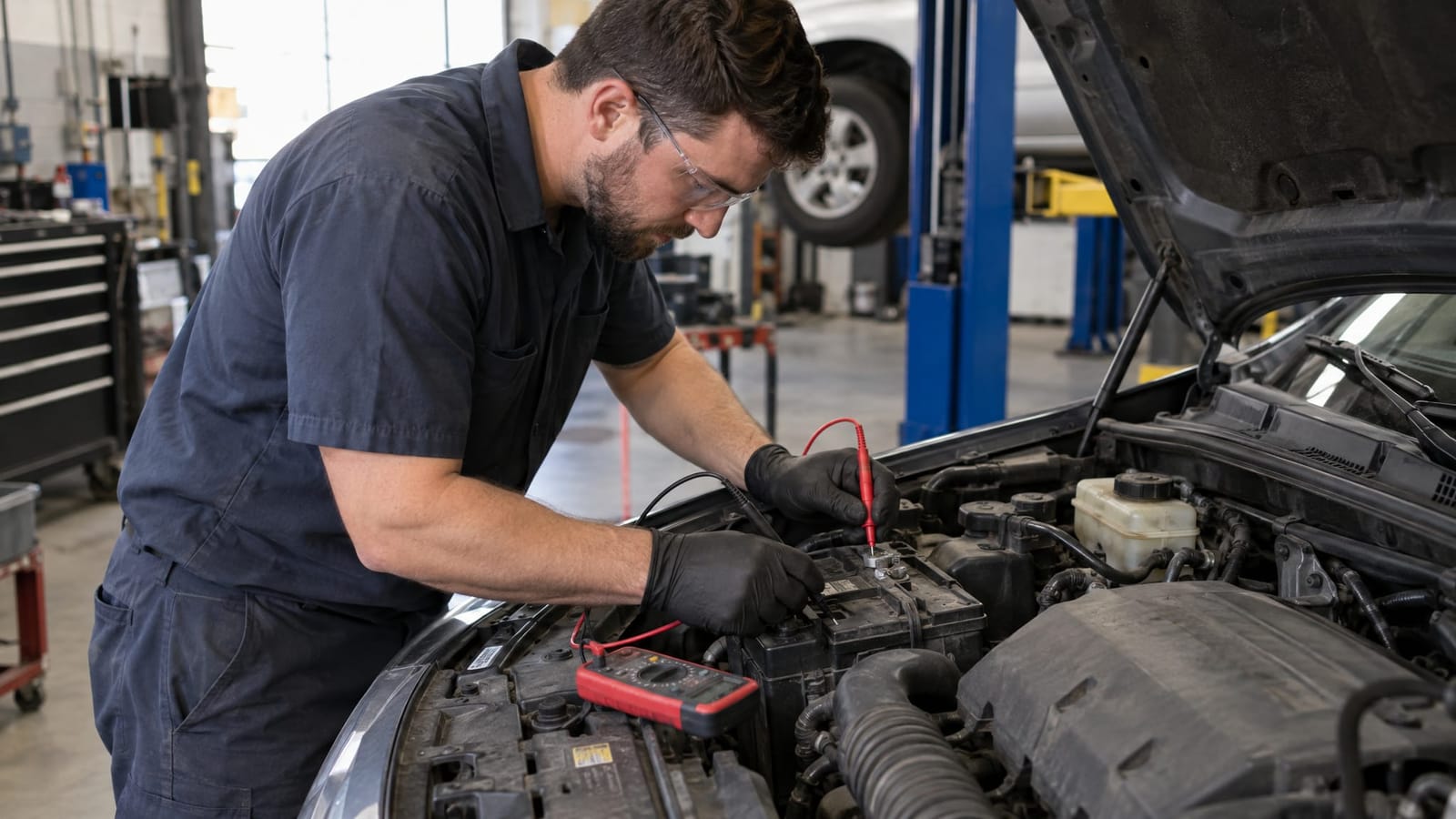
At Jordan Auto Repairs and Tires Plus LLC in Jacksonville, we offer battery diagnostics and vehicle electrical system diagnostics. We focus on prompt, dependable service, while recognizing that an intermittent electrical fault can take longer to trace than a readily visible problem.
Useful details to record before an inspection include:
- Whether the light stays on or flashes.
- Whether it appeared after refueling, a difficult start, or recent work.
- Whether the car shakes, hesitates, stalls, or loses power.
- Whether the symptoms happen during startup, at idle, or while accelerating.
Common Questions About the Check Engine Light
What if the light turns off by itself?
The computer can turn the light off after the fault stops occurring and its checks pass. That does not always mean an intermittent problem has disappeared permanently. Stored information may still help explain what happened, especially if symptoms return.
Can a loose gas cap cause the light?
Yes, on vehicles with a fuel cap, a loose or damaged cap can allow an evaporative-emissions leak. Checking that the cap is properly seated is a reasonable first check after refueling. The light may take several driving cycles to go out, and the cap is only one possible cause.
Is the check engine light the same as the battery light?
No. The check engine light concerns engine management and emissions-related faults. A battery-shaped warning generally points to a charging-system problem, not necessarily a bad battery. Electrical faults can affect engine operation, but the warning symbols are not interchangeable.
The Practical Takeaway
The check engine light is a reason to investigate, not a diagnosis by itself. A steady light with normal operation and a flashing light with rough running call for different responses. Finding the cause makes it possible to distinguish a limited issue from one that could damage other components.