Why Does My Car Battery Keep Dying Overnight?
If your car battery keeps dying overnight, the cause usually falls into one of three groups: something keeps using electricity after the car is off, the battery cannot hold enough charge, or the charging system is not replenishing it properly. An unwanted electrical draw while parked is called a parasitic drain.
Replacing the battery may help if the battery has failed, but it will not fix a light, accessory, or electrical component that keeps draining it. The useful first step is separating a battery problem from a charging problem or an unwanted draw.
What Is a Parasitic Battery Drain?
Your car does not stop using electricity completely when you turn it off. The clock, security system, and other electronics need a small amount of power. Some systems also stay awake briefly before entering a low-power “sleep” mode.
A parasitic drain happens when electricity use remains higher than it should after those systems settle down. A large enough draw can leave too little charge to start the engine by morning. A smaller draw may take several days. The battery’s condition and starting charge also affect how quickly trouble appears.
Common Things That Drain a Battery While Parked
- Interior lights left on: A reading light or dome light can stay illuminated because of its switch setting or a door that is not fully closed.
- A trunk or glove-box light that stays on: A faulty switch or latch can leave a hidden bulb burning even when the compartment looks closed.
- A stuck relay: A relay is an electrically controlled switch. If it sticks closed, it can keep supplying power to a component after the ignition is off.
- Aftermarket accessories: Dash cameras, stereos, alarms, amplifiers, and tracking devices can draw power while parked. Incorrect wiring or parking-mode settings can contribute to excessive use.
- An electronic module that will not sleep: A vehicle’s control units normally reduce their power use after shutdown. A fault or repeated wake-up signal can prevent that.
- An alternator fault: Certain internal alternator failures can allow battery current to drain backward through it while the engine is off.
The timing offers useful clues. If the problem began after a stereo installation, that equipment deserves attention. It is a starting point for testing, not proof that the accessory caused the problem.
Not Every Overnight No-Start Is a Parasitic Drain
A worn battery may accept some charge but no longer store enough energy reliably. Repeated deep discharges can also damage a battery, so an electrical drain and a weak battery can exist together.
Insufficient charging can leave the battery partly depleted before you park. Frequent short trips may not replace the energy used during starting, especially with electrical accessories running. A charging-system fault can produce a similar pattern.
Poor battery connections can interfere with starting or charging without actually consuming stored electricity. A click or slow crank does not, by itself, prove the battery discharged overnight.
These distinctions matter because a battery replacement, charging-system repair, and parasitic-drain repair solve different problems.
Useful Checks and Notes Before Diagnosis
A few simple observations can help narrow the search without taking electrical circuits apart:
- Check whether cabin lights remain on after the doors are closed.
- Note whether the dashboard shows a door or trunk open when everything appears shut.
- Unplug removable accessories from power outlets before parking, and note whether the pattern changes.
- Record whether the car fails after one night, a weekend, or several days.
- Note recent accessory installations, electrical repairs, jump-starts, and changes in driving habits.
- Describe the starting symptom: silence, clicking, slow cranking, or normal cranking without starting.
For example, a problem that appears only when a dash camera remains plugged in points toward a different testing path than one that happens with every removable accessory disconnected.
How a Technician Traces the Electrical Draw
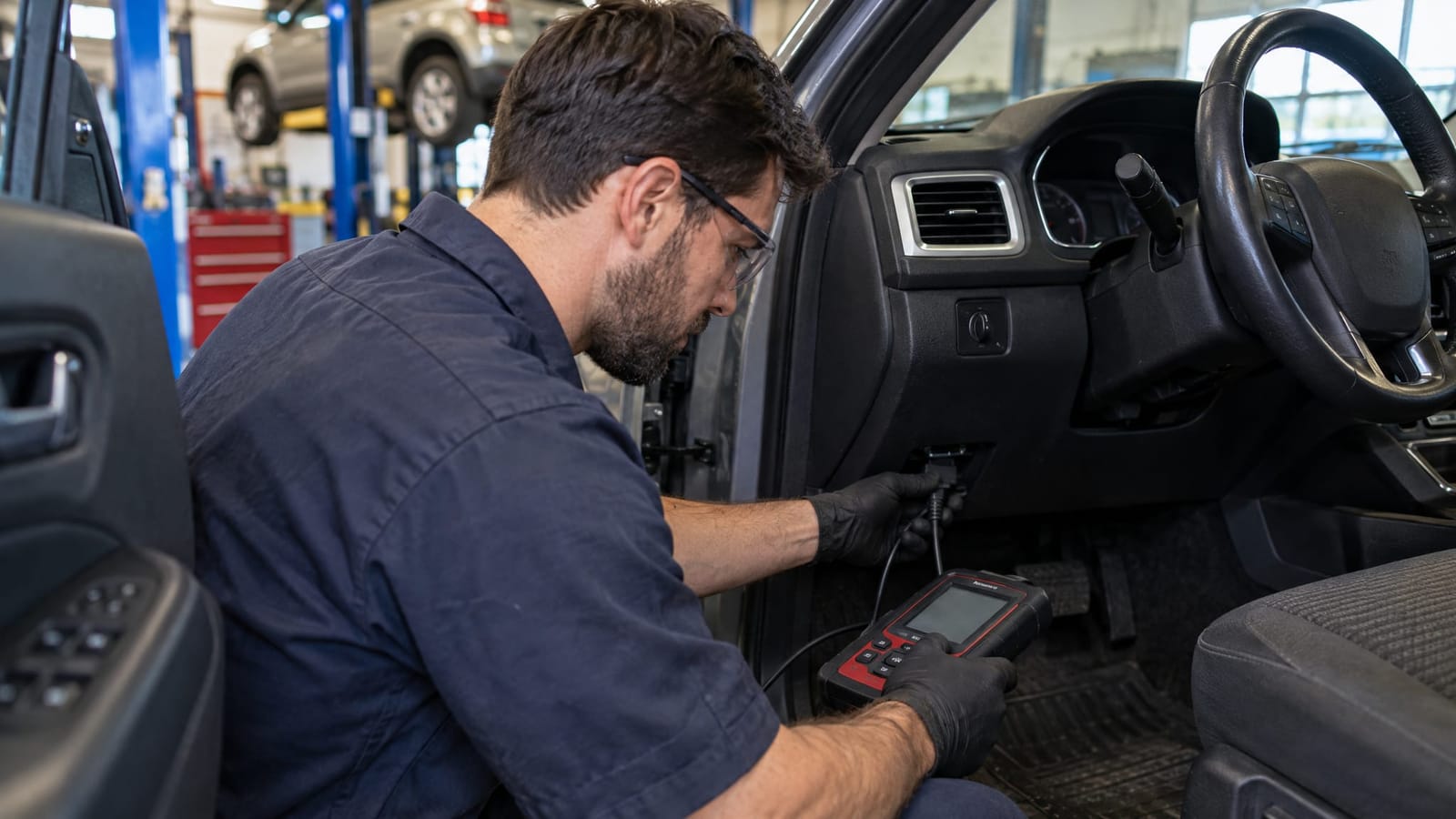
At Jordan Auto Repairs and Tires Plus LLC in Jacksonville, we offer battery diagnostics and vehicle electrical system diagnostics. Our focus is efficient testing and dependable repair work. Finding the cause helps avoid replacing parts that are not responsible.
A parasitic-drain diagnosis generally follows this sequence:
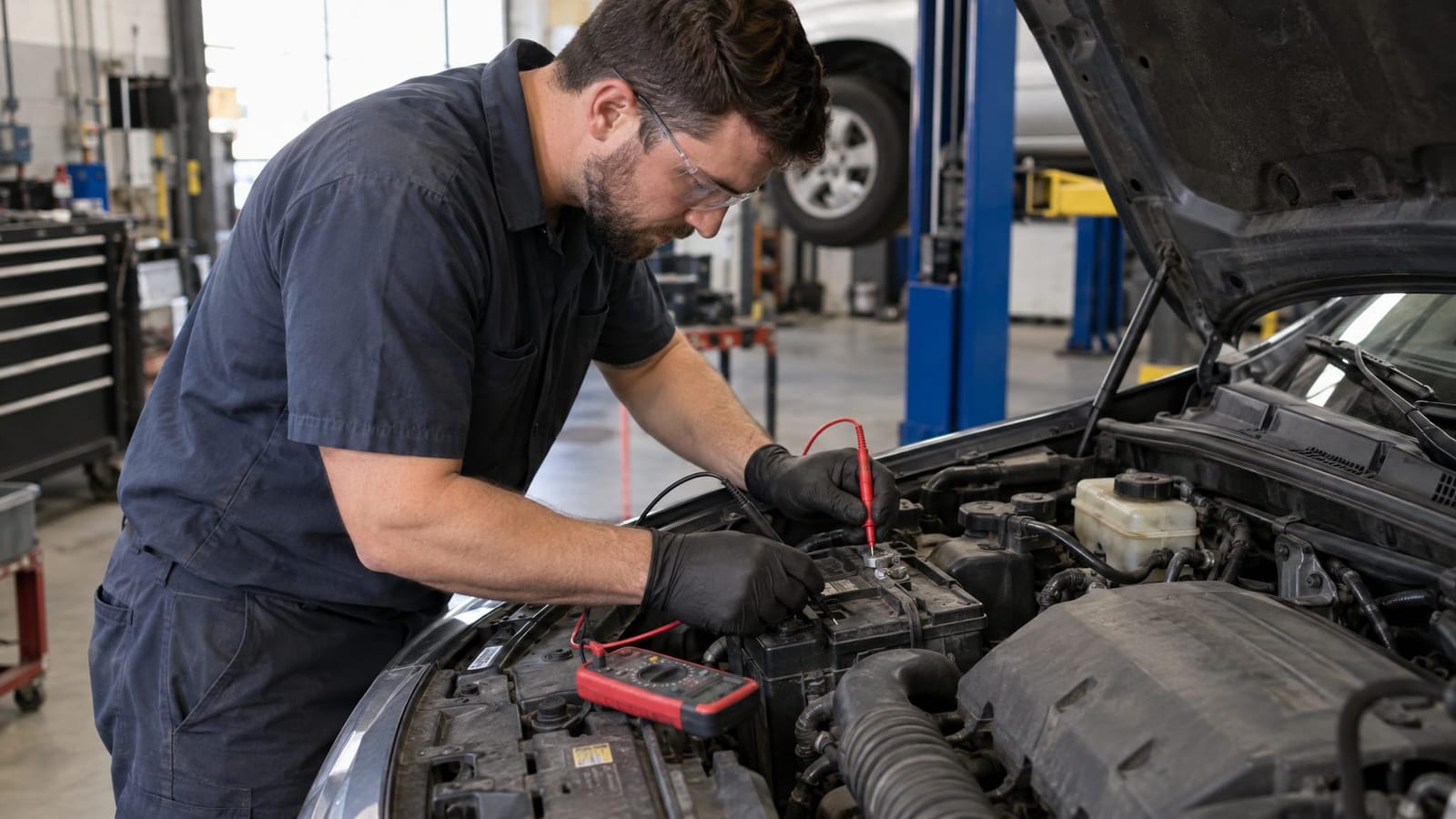
- Check the battery and charging system. The technician evaluates battery condition, connections, and charging operation. A discharged battery may need charging before its condition can be assessed properly.
- Prepare the vehicle for a parked-state test. Doors, latches, keys, and accessories are accounted for so the vehicle can enter its normal sleep state. Opening a door during testing can wake electronics and change the reading.
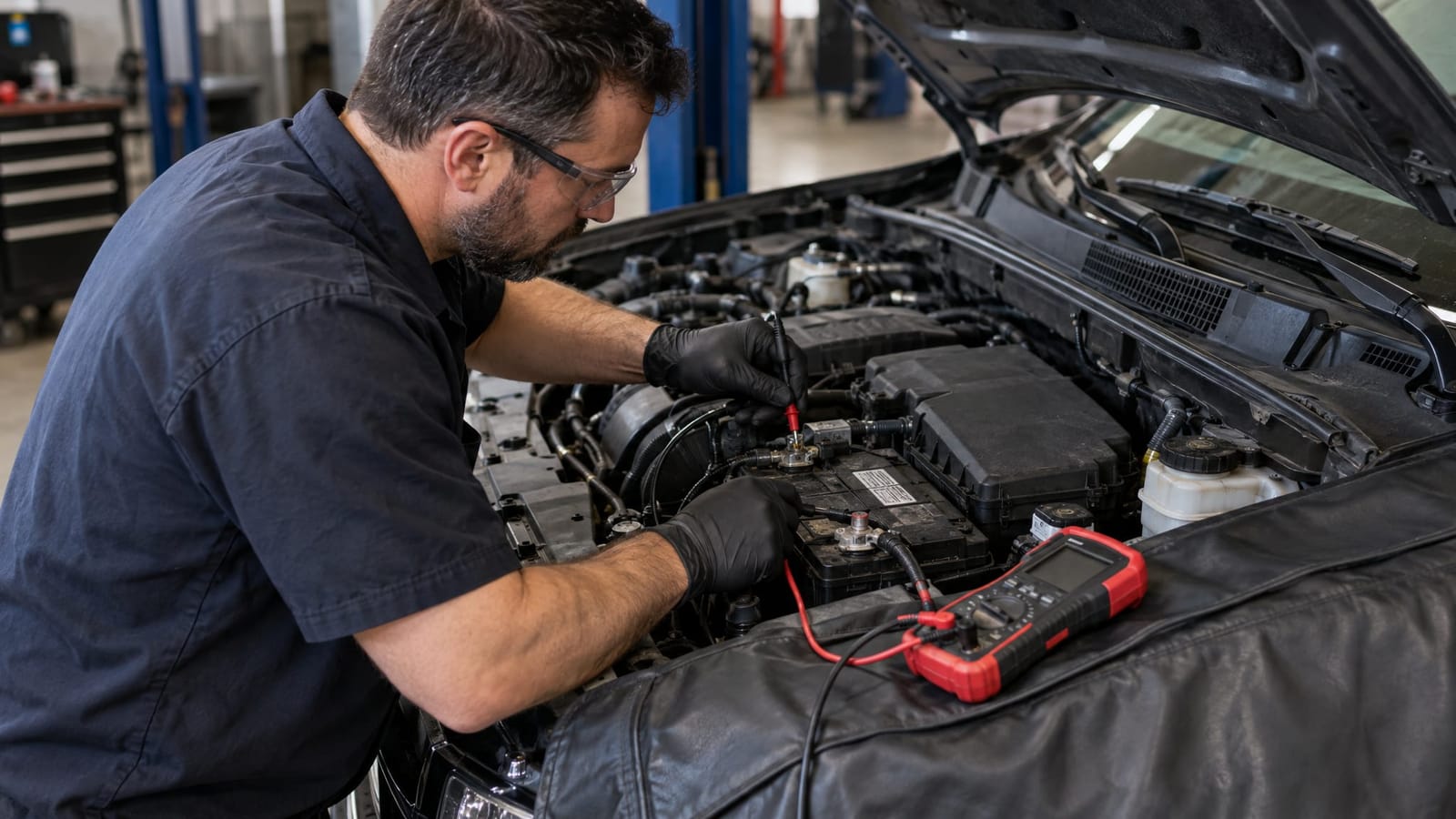
- Measure current with an ammeter. An ammeter measures electricity flowing from the battery. Depending on the setup, the technician uses a sensitive clamp meter around a battery cable or an in-line meter through which the current flows.
- Compare the settled reading with vehicle specifications. There is no single acceptable draw for every car. The technician allows the required sleep period and checks whether current remains excessive.
- Isolate the circuit and component. Controlled fuse testing or measurements across fuses help identify the circuit carrying the unwanted draw. The technician then checks the devices on that circuit to locate the cause.
- Retest after repair. Another parked-state measurement checks whether the excessive draw has stopped.
A drop in current when a fuse is removed identifies a circuit, not necessarily a failed part. Several components may share that fuse, so further testing matters.
Frequently Asked Questions
Will a jump-start fully recharge the battery?
No. A jump-start provides help starting the engine; it does not establish that the battery is fully charged or healthy. A short drive may leave a deeply discharged battery well below a full charge.
Why does the battery sometimes behave normally at the shop?
Some drains are intermittent. A relay may stick only occasionally, or a module may wake under particular conditions. Longer monitoring and details about when the problem occurs can help capture the fault.
Does the battery warning light mean I need a new battery?
Not necessarily. That light generally indicates a charging-system problem rather than measuring battery health. Testing distinguishes a battery issue from an alternator, wiring, or connection problem.
Find the Cause Before Replacing Parts
An overnight battery failure calls for checking battery condition, charging performance, and electricity use while parked. Separating those causes gives the repair a clear direction, whether the answer is a worn battery, a hidden light, or a component that never goes to sleep.