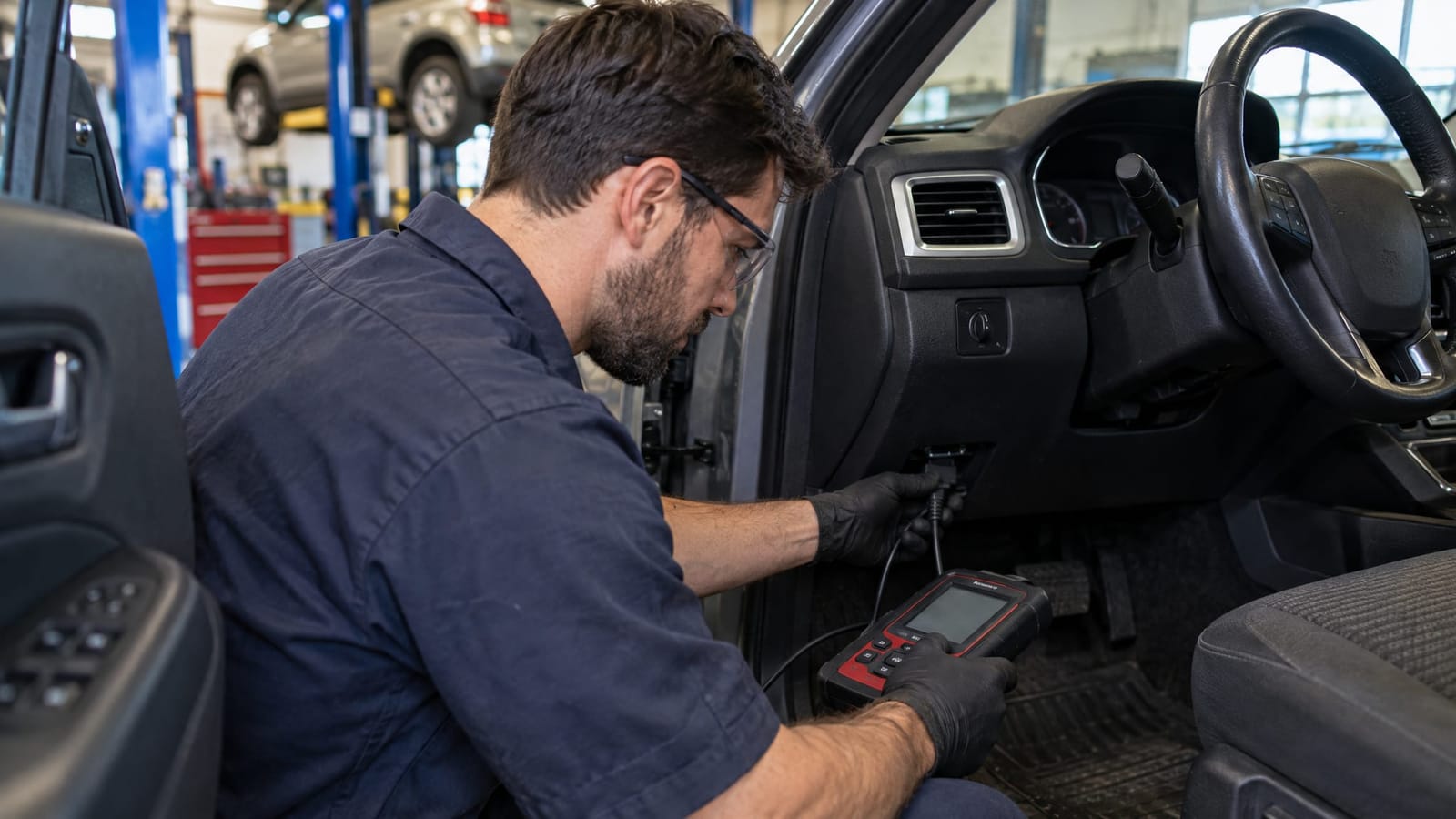
How Do I Know If My Alternator Is Bad?
A bad alternator can cause a battery warning light, dimming headlights, unusual electrical behavior, or a battery that keeps going flat, even after replacement. Whining or grinding near the alternator can also be a clue. But none of these symptoms proves the alternator needs replacing.
The reliable way to tell is to check the battery, inspect the charging system, and test the alternator under electrical load. Here is how to recognize the warning signs and understand what confirms the diagnosis.
1. Check When the Battery Warning Light Appears
The battery supplies power to start the engine. Once the engine is running, the alternator supplies electricity to the vehicle and replenishes the battery.
The battery-shaped dashboard light generally warns about the charging system, not simply a worn-out battery. It normally illuminates before the engine starts, then goes out after starting.
If it stays on with the engine running or comes on during a trip, possible causes include:
- An alternator that is not producing the required output.
- A loose, slipping, or damaged drive belt.
- A poor electrical connection or wiring problem.
- A fault in the system that controls charging.
Notice whether the light stays on continuously or appears only under certain conditions. For example, a light that comes on at idle but disappears as engine speed increases gives the technician a useful detail to investigate.
2. Watch for Dimming Lights and Unusual Accessory Behavior
Headlights or interior lights that noticeably dim at idle and brighten as engine speed rises can indicate a charging problem. Flickering lights may also point to unstable electrical output or a poor connection.
Other clues include power windows moving unusually slowly, the radio restarting, or several electrical features behaving strangely at the same time.
The pattern matters more than one isolated symptom. One slow window could have a worn motor or regulator. Several windows slowing down while the lights dim makes a shared electrical supply problem more likely.
Note which accessories were operating when the problem appeared. Headlights, the cabin blower, and the rear-window defroster add electrical demand. Symptoms that appear together when these are running can help guide a charging-system test. A brief change in brightness alone is not enough to condemn the alternator.
3. Track When the Battery Goes Flat
A replacement battery does not fix a charging-system problem. It may start the car normally for a while, then lose charge if the alternator is not replenishing the electricity used.
Repeated battery trouble makes an alternator check worthwhile, but other causes remain possible. Loose terminals, frequent short trips, a defective battery, or an electrical component drawing power while the car is parked can produce similar complaints.
The timing helps separate these possibilities:
- Trouble after sitting overnight: Battery condition and unwanted electrical draw while parked deserve attention.
- Electrical symptoms while the engine runs: Charging output, connections, and belt condition become important checks.
- A replacement battery repeatedly losing charge: Testing the whole system is more useful than replacing another battery without finding the cause.
Keep a simple note of when starting trouble happens, how long the car sat, and whether any warning lights appeared beforehand.
4. Describe Any Whining or Grinding Noise
An alternator can develop a whining or grinding sound when internal components or bearings wear. However, a belt, tensioner, pulley, or another belt-driven component can make a similar noise.
A sound that changes with engine speed is useful information, but it does not identify the faulty part by itself. Note whether it occurs only after a cold start, continues after the engine warms up, or appears alongside dimming lights or a charging warning.
The useful distinction is between hearing a noise near the alternator and confirming that the alternator is its source.
5. Confirm the Cause With an Alternator Load Test
An alternator load test checks whether the charging system can supply enough electricity when the vehicle needs it. Measuring voltage with few accessories running can miss a problem that appears only under greater demand.
A thorough evaluation generally includes these checks:
- Check the battery first. Battery condition and state of charge affect charging-system readings. A discharged battery may need charging before testing gives a useful result.
- Inspect the belt and electrical connections. Loose terminals, damaged cables, poor ground connections, or belt problems can interfere with charging even when the alternator itself works.
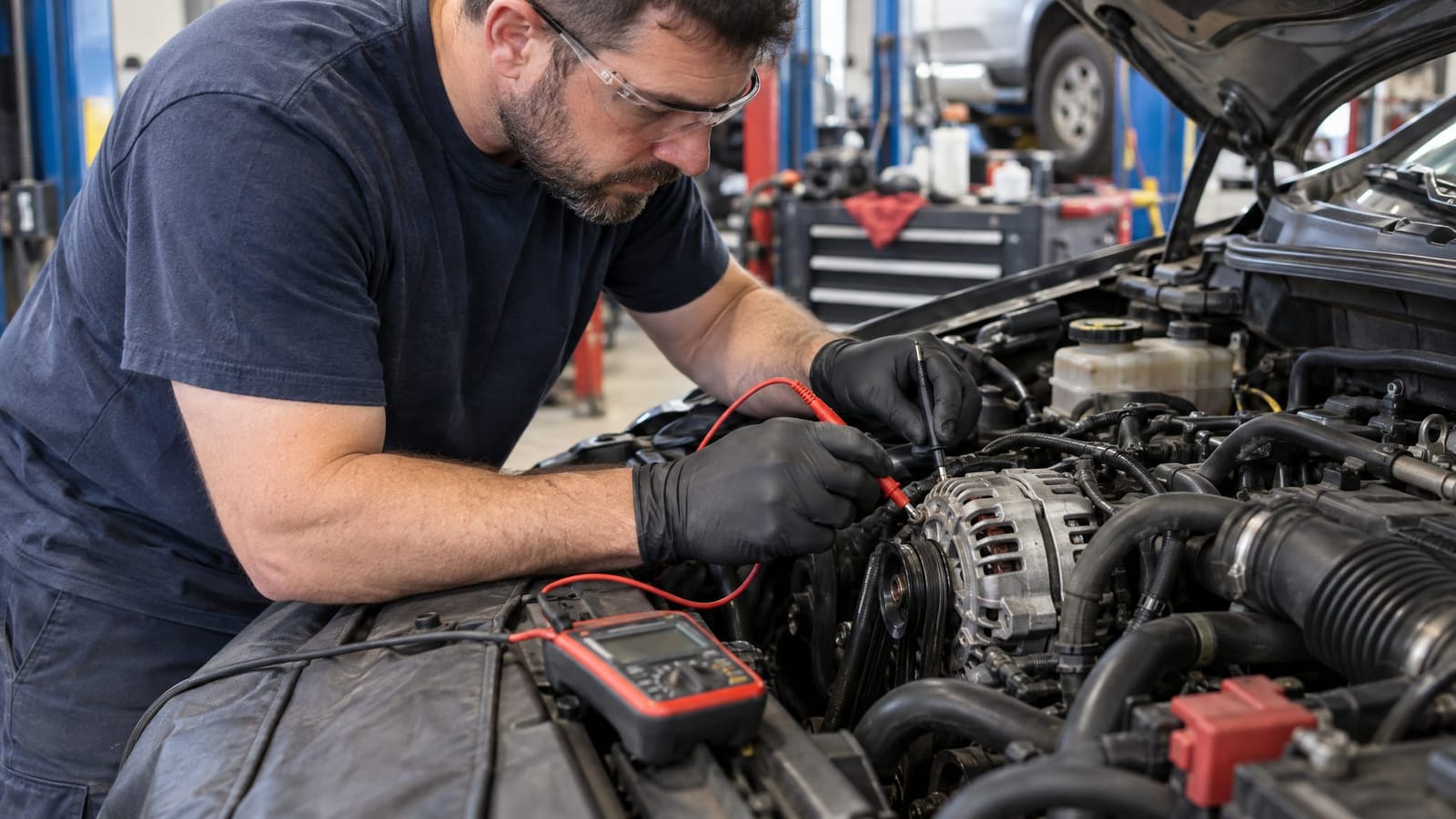
- Measure output under load. The technician monitors charging voltage and current while adding electrical demand, using vehicle accessories or suitable test equipment. Checks may include different engine speeds.
- Compare results with the vehicle’s requirements. Charging behavior varies by vehicle. Computer-controlled systems can intentionally change output, so one universal voltage cutoff does not reliably diagnose every car.
If output falls short under the required conditions, the next question is why. Checking wiring losses and charging controls helps distinguish a failing alternator from a problem elsewhere in the circuit. The diagnosis supports alternator replacement when the test results point to the alternator itself.
At Jordan Auto Repairs and Tires Plus LLC, we offer battery diagnostics and vehicle electrical system diagnostics in Jacksonville. Our focus is honest explanations, dependable service, and quick turnaround without skipping the checks that identify the cause.
Common Questions About Alternator Problems
Can an alternator problem come and go?
Yes. Some faults appear only after components warm up or electrical demand increases. A system may behave normally during a brief check. Details about when the symptoms happen help a technician reproduce the conditions rather than rely on one reading.
Does a successful jump-start mean the battery is the problem?
No. A jump-start provides additional starting power, but it does not explain why the battery lacked charge. The cause could be the battery, inadequate charging, an unwanted electrical draw, or poor connections.
Can I test the alternator by disconnecting the battery while the engine runs?
That old shortcut is not a reliable test and can damage vehicle electronics. A charging-system evaluation by our team can assess the alternator’s output without using battery disconnection as a test.
Look for Evidence Before Replacing Parts
Warning lights, dimming lights, repeated battery trouble, and unusual noises are reasons to investigate, not automatic reasons to replace an alternator. The deciding evidence is how the charging system performs under load, supported by checks of the battery, belt, wiring, and controls.