How Long Do Brakes Last? Factors That Affect Brake Life in Florida
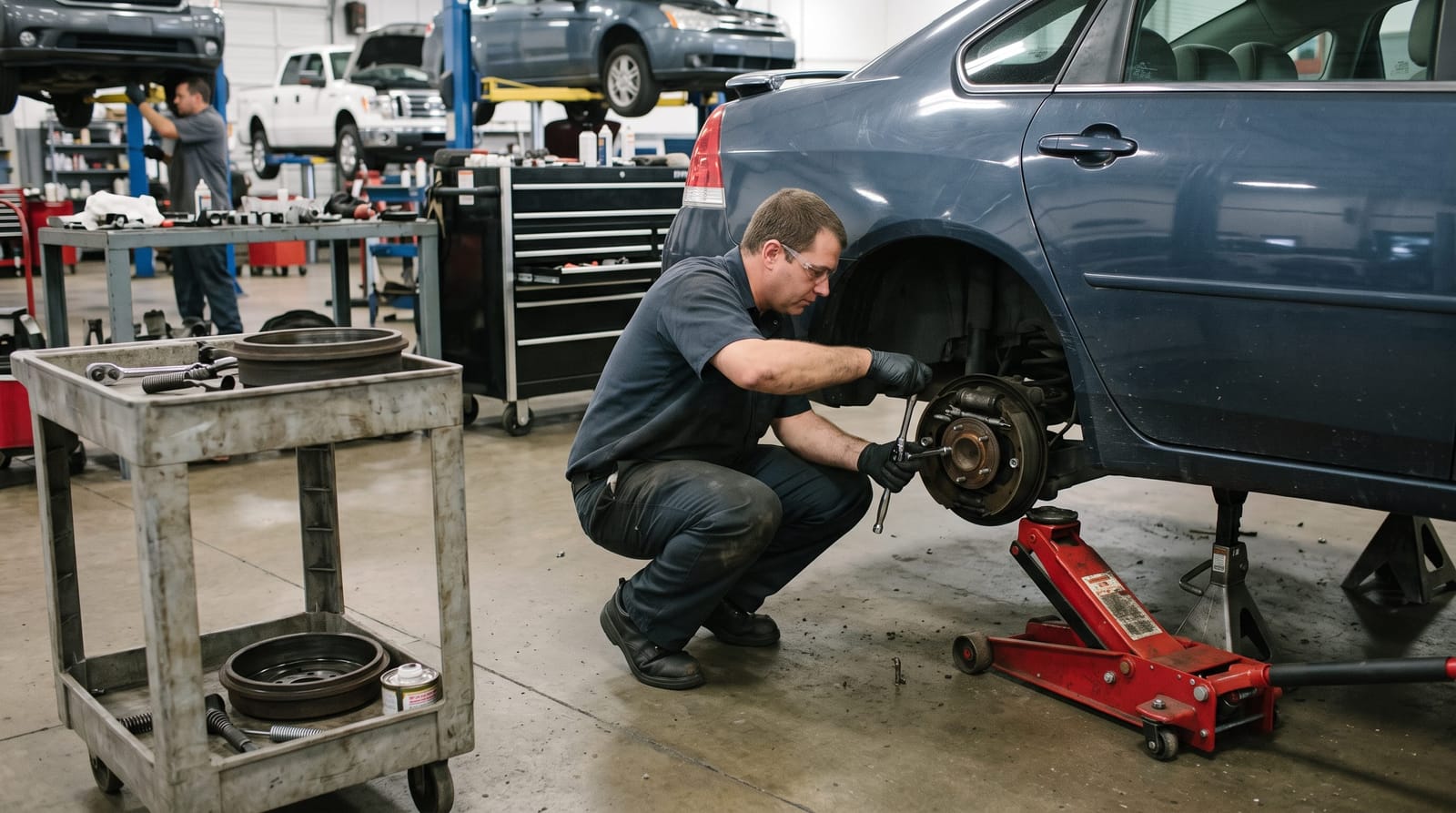
Brake pads generally last tens of thousands of miles, but their useful life depends heavily on how and where a vehicle is driven. Frequent stops, hard braking, heavier loads, and parts that do not move freely can shorten that life. In Florida, moisture also matters because corrosion can affect brake components, especially on vehicles that sit unused.
For Jacksonville drivers, the most useful distinction is between mileage and condition. Mileage helps with maintenance planning. Remaining pad thickness, rotor condition, and even wear determine whether replacement is needed. Pads, rotors, and brake fluid also follow different maintenance timelines, so “replacing the brakes” does not always mean replacing everything.
Brake Components Do Not All Last the Same Amount of Time
A brake system contains both wear items and longer-lasting mechanical parts. Understanding the difference makes a repair recommendation easier to evaluate.
Brake pads wear with each stop
Brake pads press against the rotors to slow the vehicle. Their friction material gradually wears away through use. Two vehicles with the same odometer reading can have very different amounts of pad material remaining because distance alone does not measure how often the brakes worked.
A car used mainly for highway travel may cover long distances with little braking. Another car making neighborhood deliveries may brake repeatedly over a much shorter distance. The second vehicle can use up its pads sooner, even with fewer miles traveled.
Pad material and vehicle design also affect wear. A particular pad type is not automatically the longest-lasting choice for every car. The correct fit and friction material for the vehicle matter more than a broad label such as “premium.”
Rotors need a condition and thickness check
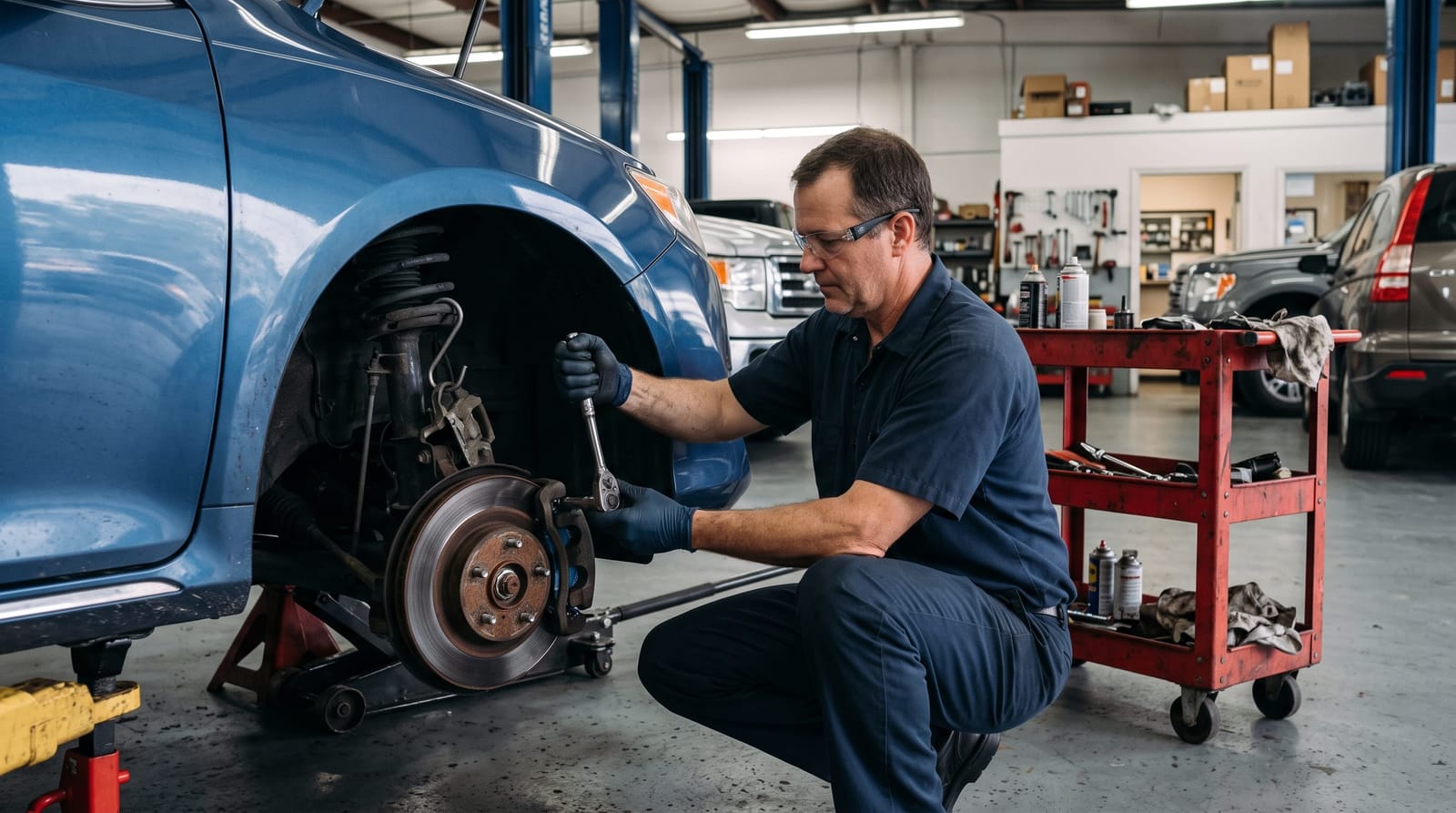
Rotors are the metal discs that the pads grip. They wear too, but their replacement timing does not necessarily match the pads. A rotor may remain usable through a pad replacement if its thickness and surface condition meet the vehicle’s requirements.
Deep grooves, cracking, significant corrosion, or insufficient remaining thickness can change that decision. Resurfacing also removes metal, so it is not appropriate for every rotor. The useful question is not simply how old the rotors are, but whether they remain suitable for service.
Calipers and other moving parts affect pad life
Calipers hold the pads and apply pressure when the brake pedal is pressed. Their moving parts need to release properly afterward. If a pad remains pressed against a rotor, it can wear faster and generate extra heat.
This is why unusually rapid wear deserves more than another set of pads. Replacing worn material without addressing the reason for uneven wear can leave the underlying problem in place.
What Shortens Brake Life in Jacksonville?
Stop-and-go driving adds wear without adding much mileage
Traffic lights, school pickup lines, congested commutes, and frequent errands all increase the number of braking events. A short Jacksonville trip with repeated stops may ask more of the brakes than a much longer drive at a steady speed.
That distinction also helps explain why a previous set of pads is only a rough planning reference. A change in commute, driving habits, or vehicle use can change how long the next set lasts.
Hard braking creates more heat
Brakes convert the vehicle’s motion into heat. Repeated braking from higher speeds puts more demand on the pads and rotors than gradual slowing under lighter loads.
Following traffic closely often creates a cycle of accelerating and braking. Looking farther ahead and allowing space can reduce unnecessary braking when traffic conditions permit. Braking promptly when needed remains more important than trying to save pad material.
Vehicle weight and cargo increase the workload
A heavier vehicle requires more braking effort to slow from the same speed. Vehicle manufacturers account for weight when designing the brake system, so a larger vehicle does not automatically need new brakes sooner than a smaller one.
However, towing, carrying equipment, or regularly hauling a full load adds demand compared with driving the same vehicle lightly loaded. For example, a pickup used for daily tool deliveries has a different braking workload from the same model used mostly for unloaded highway travel.
Humidity affects corrosion, not just wear
Florida’s moisture can contribute to rust on exposed iron brake rotors. A light surface film may appear after rain, washing, or parking in damp conditions. That light film often clears during normal braking and does not, by itself, mean the rotors need replacement.
Deeper corrosion is a different issue. A vehicle that sits for extended periods can develop more persistent rust. Moisture and salt exposure near the coast can also contribute to corrosion on brake hardware.
Humidity is therefore not a reason to assume every Florida vehicle needs early brake replacement. It is a reason to consider parking conditions, time spent unused, and the actual condition of the parts alongside mileage.
Practical Habits That Can Help Brakes Last Longer
Reducing avoidable brake use and keeping the system working properly are more useful than trying to reach a particular mileage number.
- Maintain a steadier pace. Looking ahead at traffic and upcoming stops can reduce repeated acceleration followed by unnecessary braking.
- Avoid resting a foot on the brake pedal. Even light, continuous pressure can keep the pads in contact and create heat.
- Remove unnecessary cargo. Equipment or supplies carried all week add weight even when they are not needed.
- Follow the vehicle’s towing guidance. Towing changes braking demand, and the correct equipment and operating limits are vehicle-specific.
- Include brake checks in routine maintenance. Tracking wear over time makes planning easier than waiting for a noise or a change in pedal feel.
- Address uneven wear at its cause. A sticking component or installation issue needs attention along with the worn pads.
Driving fewer miles does not eliminate the need for inspections. A frequently parked vehicle may have plenty of pad material while developing corrosion or movement problems elsewhere in the system.
How to Tell Whether Replacement Is Actually Needed
A useful brake inspection provides more than a statement that the pads “look low.” It connects the recommendation to measurable wear and the condition of the surrounding parts.
Helpful details include:
- Remaining pad material: How much friction material remains, including on the less-visible inner pads.
- Wear pattern: Whether the pads are wearing evenly across each axle and between the inner and outer positions.
- Rotor measurements: Whether the rotors meet the vehicle’s minimum thickness requirements.
- Surface condition: Whether grooves, corrosion, or other damage affect the recommendation.
- Component movement: Whether the calipers and associated hardware apply and release properly.
These findings also explain why front and rear brakes may need service at different times. Brake systems distribute work differently, and the same replacement schedule does not automatically apply to both axles.
Noise alone does not identify the repair. A brief sound after damp parking conditions differs from persistent squealing, grinding, or vibration. Changes in stopping performance or pedal feel call for a professional assessment of the individual vehicle rather than a mileage estimate. At Jordan Auto Repairs and Tires Plus LLC, we offer brake repair and replacement here in Jacksonville, with an experienced local team focused on honest service and efficient repairs.
Brake Fluid Has Its Own Maintenance Schedule
Brake fluid transfers pressure from the pedal through the braking system. It does not wear down like a brake pad, and its maintenance needs cannot be judged from pad thickness.
The fluid used in most everyday vehicles absorbs moisture over time. That can affect its performance and contribute to internal corrosion. The vehicle’s maintenance schedule and the fluid’s condition help determine service timing.
New pads do not automatically mean the brake fluid has been serviced, and a fluid service does not replace worn pads. Our explanation of how often to get a brake fluid flush covers that separate maintenance decision.
Plan Around Wear, Not a Mileage Promise
Brake life in Florida comes down to repeated use, vehicle load, component condition, and exposure to moisture. A lightly braked highway vehicle and a stop-and-go commuter can reach the same mileage with very different brake wear.
Keeping the mileage and measurements from each inspection creates a useful maintenance history. That record makes it easier to spot changing wear patterns, plan future service, and understand why a repair is recommended without replacing parts simply because the odometer reached a particular number.