How Often Should You Service Your Car AC System?

For everyday driving in Jacksonville, an annual car AC inspection before summer is a sensible maintenance plan. Follow your vehicle’s maintenance schedule for any specific requirements, and have changes in cooling or airflow checked rather than waiting for the next yearly visit.
An annual inspection does not mean an annual refrigerant recharge. A properly sealed AC system circulates refrigerant rather than using it up like fuel. The purpose of a check is to assess performance, spot developing problems, and determine whether any service is actually needed.
Annual Inspection, Recharge, and Repair Are Different Jobs
The phrase “AC service” can mean several things. Knowing the difference helps you understand a repair estimate and avoid treating every cooling complaint the same way.
- An inspection checks cooling, airflow, controls, and the condition of accessible components.
- A recharge restores the correct amount of refrigerant. It is not a substitute for identifying why the system is low.
- A repair addresses a specific fault, such as a leaking connection, failed component, or electrical problem.
In Jacksonville, a spring inspection provides a useful opportunity to check performance before the hottest weather. If the AC cools normally and the inspection reveals no problem, refrigerant service may not be necessary.
Your owner’s manual remains the starting point for scheduled maintenance, including cabin air filter replacement. The yearly AC check is a practical planning recommendation, not a universal manufacturer requirement.
What a Useful Car AC Check Includes
A useful inspection looks beyond whether air coming from the vents feels cold. Weak airflow, poor heat removal, and control problems can all affect comfort without having the same cause.
Cooling and Airflow
Checking vent temperature, fan speeds, and airflow helps establish how the system performs. Outdoor temperature and operating conditions matter, so one temperature reading alone does not explain every cooling complaint.
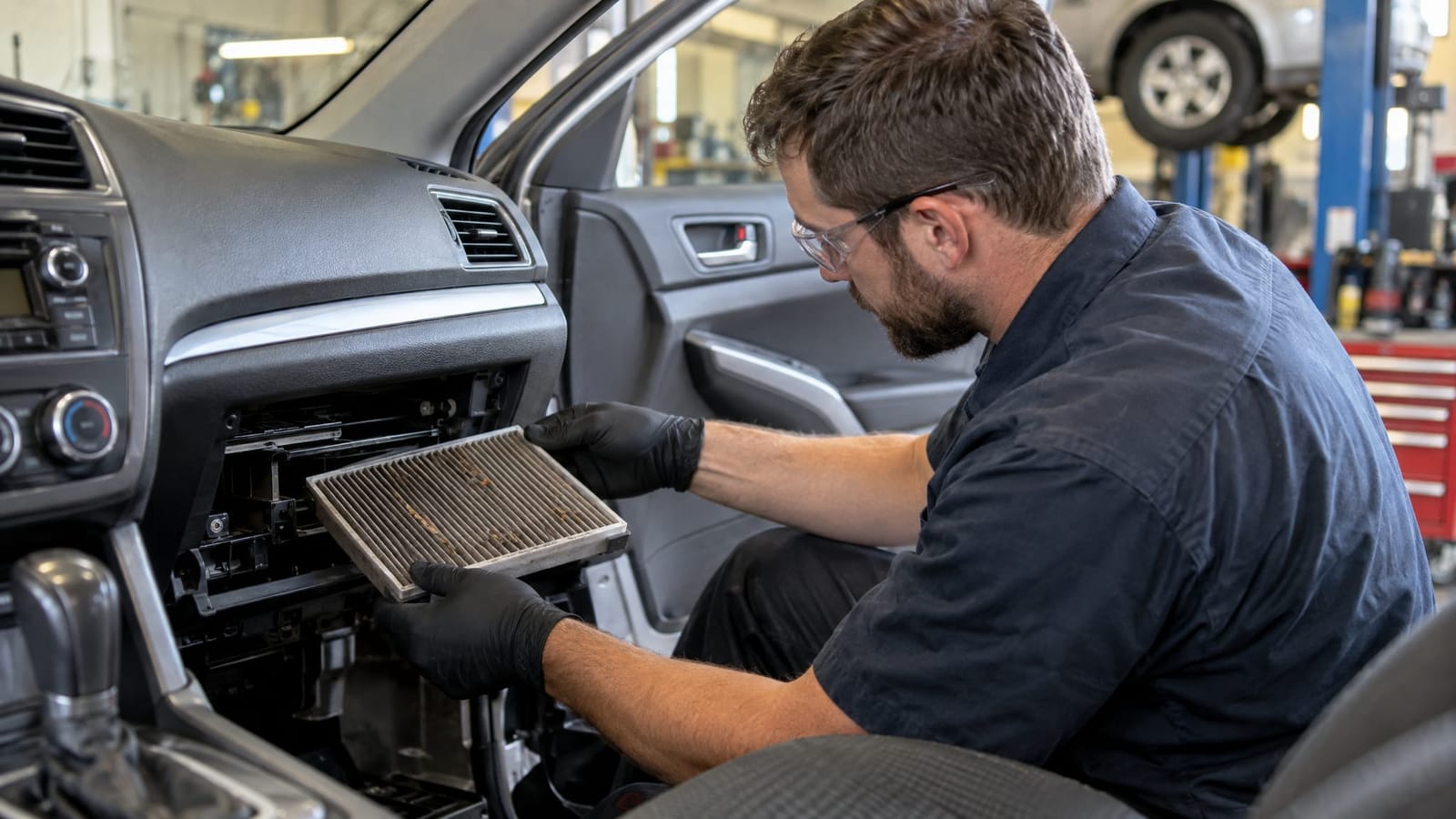
The check can also include cabin filter condition, where accessible, and whether air comes through the selected vents. A restricted filter can reduce airflow even when the refrigerant system is working.
Visible Components and Controls
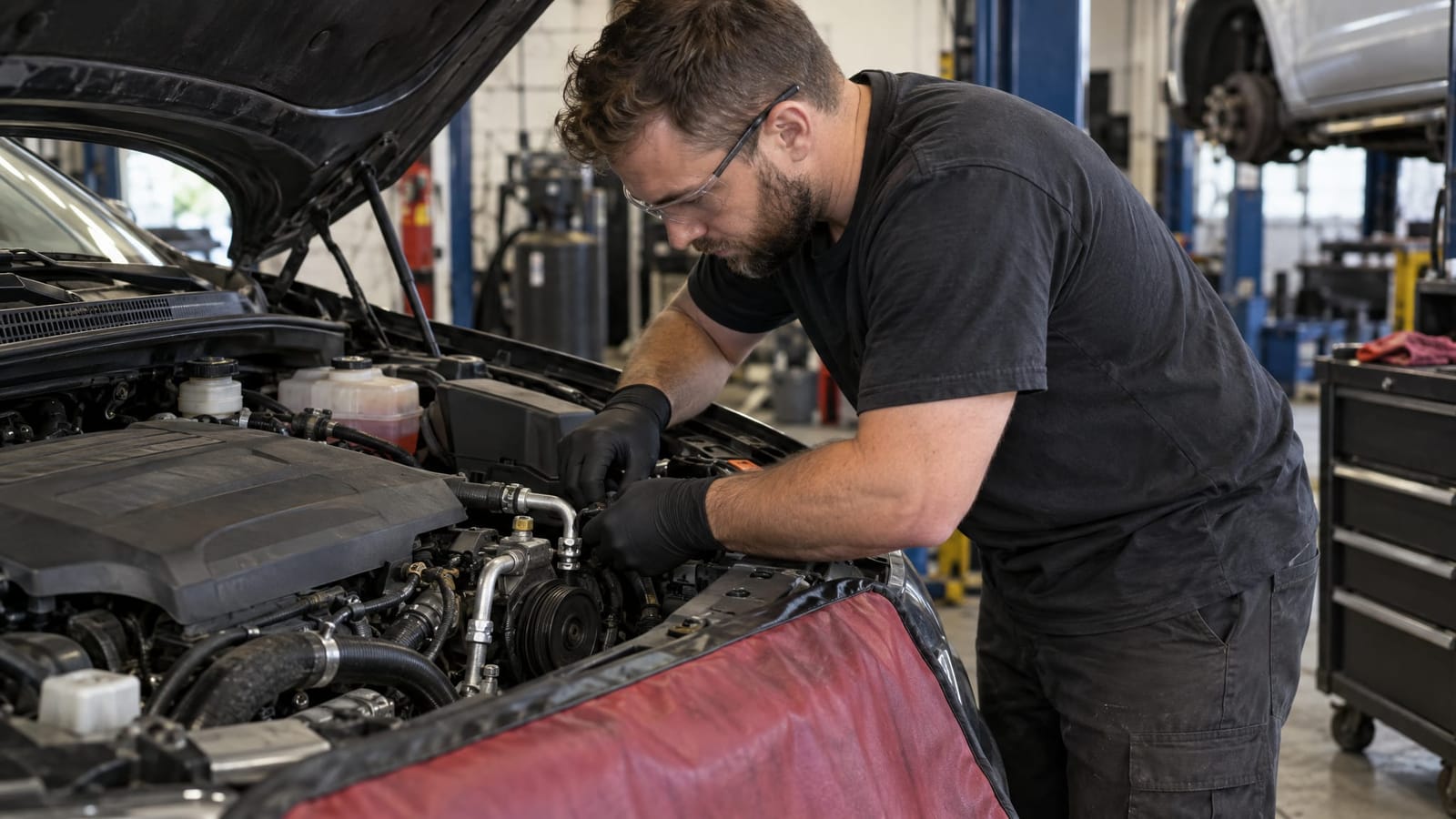
Accessible hoses, connections, wiring, and belt condition, where applicable, can provide clues about developing problems. Debris around the AC components at the front of the vehicle can interfere with heat removal. Cooling fan operation also matters, particularly when the car is stopped.
Further Testing When Performance Is Poor
If the AC is not cooling properly, additional temperature and pressure measurements, electrical checks, or leak testing may be needed. These are diagnostic steps, not reasons to replace parts automatically.
For example, cold air with very little airflow points toward a different investigation than strong airflow that stays warm. Describing that distinction helps narrow down the problem.
Why Catching a Small Refrigerant Leak Matters
The compressor moves refrigerant through the AC system and relies on oil for lubrication. In many car AC systems, circulating refrigerant also helps carry that oil back to the compressor.
When the refrigerant charge becomes too low, oil circulation can be affected. That can increase compressor wear. Finding and repairing a leak early helps reduce this risk, rather than allowing a cooling problem to continue unchecked.
Low refrigerant does not automatically mean the compressor needs replacement. It means the cause and system condition need attention. Some vehicles have controls that stop compressor operation when pressure becomes too low, but those controls do not repair the leak.
Repeated top-ups can temporarily improve cooling while leaving the underlying problem in place. After a leak repair, restoring the vehicle-specified refrigerant charge matters too. More refrigerant is not better; overcharging can also interfere with proper operation.
When to Have the AC Checked Before the Year Is Up
The calendar is useful for routine maintenance, but a noticeable change in performance is a reason for an earlier diagnosis. Watch for:
- Cooling that gradually gets weaker: Especially if the AC previously cooled well under similar conditions.
- Cold air that comes and goes: Note whether it happens at idle, while driving, or after the system has been running.
- Reduced airflow: This can involve a filter, blower, or airflow-control issue rather than low refrigerant.
- A new noise when AC is selected: The sound and when it occurs help guide the inspection.
- A persistent musty smell: Moisture, drainage, and filter condition may need attention.
These symptoms are clues, not diagnoses. Warm air alone does not establish that a recharge is the right repair.
How to Make the Service Visit More Efficient
Before the visit, note when the problem occurs. Useful details include whether cooling changes in traffic, whether all fan speeds work, and whether the trouble began suddenly or gradually. Mention any previous recharge or AC repair, even if cooling improved afterward.
At Jordan Auto Repairs and Tires Plus LLC, we offer AC repair and general automotive maintenance here in Jacksonville. We focus on honest explanations and efficient, dependable service. Clear symptom details help the diagnostic process move forward without relying on guesswork.
An inspection and a repair are separate tasks. Leak testing, parts needs, and the location of a failed component affect the work involved. Understanding the diagnosis, proposed repair, and expected timing makes it easier to plan around the visit.
Frequently Asked Questions
Does replacing the cabin air filter count as AC service?
It is part of maintaining airflow, but it does not check refrigerant charge, locate leaks, or assess compressor operation. A filter change may help restricted airflow; it will not correct every cause of warm air.
Is water dripping under the car a sign of an AC leak?
Clear water dripping after AC use is often normal condensation draining from the system. A puddle by itself is not evidence of refrigerant loss. Water collecting inside the passenger compartment is a different issue and can indicate a drainage problem.
Does an older car need more frequent AC inspections?
Age alone does not set the interval. Service history and current performance are more useful. A car with recurring cooling trouble or a recent AC repair may need a follow-up check sooner than its regular annual inspection.
A Practical Schedule for Jacksonville Drivers
Plan a yearly AC inspection before summer, follow vehicle-specific maintenance requirements, and respond to changes between visits. The goal is to keep track of system condition and address faults early, not to recharge a working AC system simply because another year has passed.