
How to Keep Your Car Cool in Jacksonville and Care for Your AC
Keeping your car comfortable through a Jacksonville summer starts before you turn on the air conditioning. Park out of direct sunlight when possible, use a windshield sunshade, let trapped hot air escape, and switch to recirculation once the initial heat clears. Keep up with the cabin air filter and pay attention when cooling or airflow changes.
These habits reduce the heat your AC has to remove, but normal use should not damage a properly working system. You do not need to avoid the coldest setting or put up with warm air to protect it. The goal is to help the system work efficiently and recognize when maintenance or repair is needed.
1. Block sunlight before it heats the interior
Direct sunlight heats the dashboard, seats, steering wheel, and other interior surfaces. Even after the AC starts cooling the air, those hot surfaces continue releasing heat into the cabin. Reducing sun exposure makes the initial cooldown more manageable.
- Choose covered parking or shade when practical. For a longer stop, consider where the shade will be when you return, not just when you arrive.
- Use a windshield sunshade while parked. A shade that covers the windshield well helps limit direct sunlight on the dashboard and front seating area.
- Keep expectations realistic. Shade helps reduce heat buildup, but it does not keep a parked car at outdoor temperature.
For an afternoon appointment, a shaded space farther from the entrance may offer more comfort when you return than a nearby space in full sun.
2. Treat cracked windows as optional, not essential
A slightly open window can allow some air exchange, but it is not a dependable solution to parked-car heat. It also creates tradeoffs with rain and security. For Jacksonville drivers leaving a car outside for several hours, closed windows and a sunshade are often the more practical choice.
Opening the doors or windows briefly when you return lets trapped hot air escape without leaving the car open while unattended. There is no need to crack the windows to protect the AC system itself.
Sunshades and cracked windows do not make a parked car safe for children or pets. These cooling measures are for an empty parked vehicle.
3. Release trapped heat, then use recirculation
When the cabin feels hotter than the outside air, giving that trapped heat an escape route helps the AC begin cooling the interior. A simple sequence works well:
- Vent the cabin. Briefly open the doors or windows when you return.
- Start cooling. Turn on the AC and use a higher fan setting during the initial cooldown. Fresh-air mode can help move the hottest cabin air out while the windows are open.
- Close the windows and select recirculation. Once the initial heat clears, recirculation lets the system cool cabin air instead of continually drawing in hot outside air.
Leaving the windows open throughout the drive works against cabin cooling. Once the AC is making progress, closed windows help it maintain a comfortable temperature.
If the windows fog, use the vehicle’s defogging controls rather than keeping recirculation selected. Many vehicles manage the AC and air intake automatically in defog mode.
4. Use the controls for comfort, not out of fear of damage
The coldest temperature setting and a high fan speed are normal operating settings. A healthy system is designed to use them. Avoiding those settings is not a maintenance strategy, and routinely turning the AC off to “give it a rest” is not necessary.
With automatic climate control
Select a comfortable temperature and let automatic mode manage the fan and cooling. Setting a much lower temperature usually does not make the initial cooldown faster if the system is already providing maximum cooling.
With manual controls
Use cold air and a higher fan speed to cool the cabin, then adjust as it becomes comfortable. Keep dashboard vents open and aim them toward the occupied seating areas. Blocking several vents is not a useful way to protect the system.
Repeated loss of cooling or airflow calls for diagnosis, not a special sequence of button presses.
5. Keep the cabin air filter and air openings clear
If your vehicle has a cabin air filter, it helps keep dust and debris out of the ventilation system. As it becomes loaded with dirt, it can restrict airflow. The air may still feel cold at a vent, yet too little reaches the cabin to keep everyone comfortable.
The cabin filter is different from the engine air filter. Replacing one does not service the other.
- Follow the cabin filter inspection and replacement schedule in the owner’s manual.
- Consider an earlier inspection if airflow weakens or the vehicle regularly encounters dusty conditions.
- Keep leaves away from the outside air intake near the base of the windshield.
- Keep bags and loose items from blocking interior vents or air openings.
A dirty filter is one possible cause of weak airflow, not proof of the problem. If a filter change does not restore airflow, further checking is more useful than repeatedly replacing filters.
6. Pay attention to airflow at the front of the car
Your AC moves heat from inside the cabin to the outside. A component called the condenser, usually near the radiator behind the front grille, releases that heat. It needs airflow to do its job.
Visible leaves or debris covering the grille are worth noting during routine maintenance. Avoid aggressive cleaning of the delicate metal fins behind it, which can bend easily.
Cooling that improves while driving but fades at stoplights is also useful information. That pattern can point toward an airflow or cooling-fan issue, although other problems can produce similar symptoms. It does not automatically mean the system needs refrigerant.
Turning the cabin fan higher will not correct a problem with the fan or airflow outside the cabin. Those are separate parts of the cooling process.
7. Recognize possible icing instead of changing settings indefinitely
The evaporator is the cooling coil inside the ventilation system. If ice forms on it, airflow through the vents can decrease. One possible pattern is air that starts cold, followed by steadily weaker airflow even though the blower still sounds like it is running.
That pattern alone does not confirm icing. A restricted filter, blower problem, or other fault can also affect airflow. Normal use of the coldest setting or recirculation should not cause a properly functioning system to freeze.
Switching the AC cooling off while leaving the fan running may allow ice to thaw. If airflow returns, that is helpful information for diagnosis, not evidence that the underlying problem is fixed.
Repeated icing can involve restricted airflow, refrigerant-related problems, or temperature-control faults. Continually adjusting the controls may hide the symptom temporarily, but it does not replace finding the cause.
8. Follow maintenance intervals, not a yearly refrigerant refill habit
There is no single AC service interval that fits every vehicle. The owner’s manual provides the starting point for scheduled maintenance, including cabin filter care. Cooling performance and changes in operation help determine when additional AC testing makes sense.
- Before sustained summer heat: Check whether cooling and airflow still feel normal, especially if performance faded toward the end of the previous summer.
- During routine maintenance: Review filter service needs and mention any changes in cooling, odors, or noise.
- When performance changes: Have the symptom evaluated rather than waiting for the next calendar-based service.
Refrigerant circulates in a closed system. It is not something the AC normally uses up each summer. A low charge calls for checking why refrigerant is missing, rather than treating repeated refills as preventive maintenance. Adding too much can also interfere with cooling.
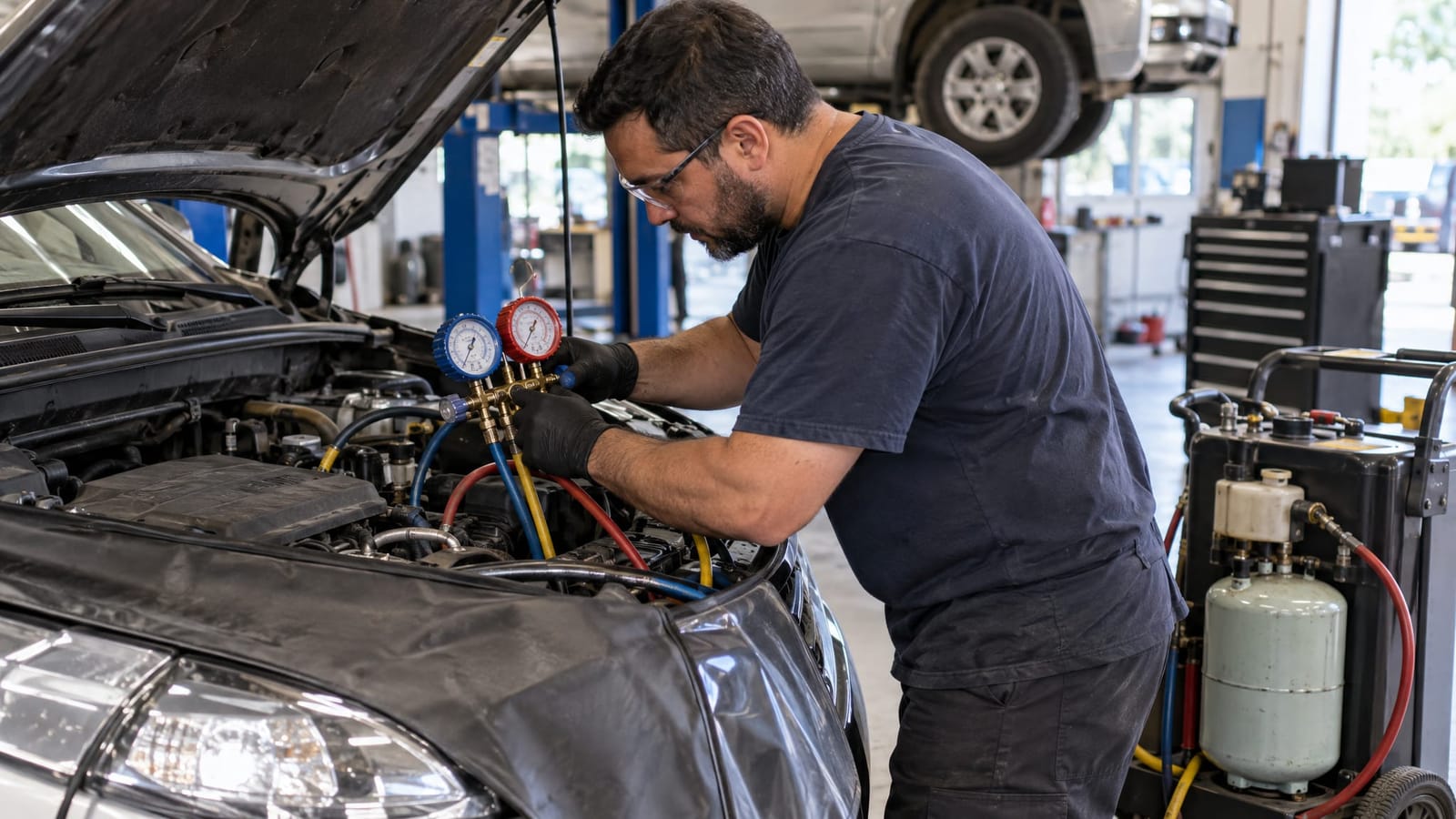
At Jordan Auto Repairs and Tires Plus LLC, we provide AC repair and general automotive maintenance here in Jacksonville. Our focus is honest service, dependable work, and prompt repairs. Preventive care means addressing actual maintenance needs, not replacing parts simply because summer is approaching.
9. Note the pattern when something changes
A clear description helps narrow down an AC complaint. Instead of only saying “it is not cold,” note what happens:
- Does the air stay warm, or does it become warm after initially cooling?
- Is airflow weak, or is there plenty of air that is not cold?
- Does cooling change between stopped traffic and normal driving?
- Do all vents feel similar, or is one side warmer?
- Is there a persistent odor or a new noise when the AC operates?
You do not need to identify the failed part. These observations help separate cooling problems from airflow problems and give the repair team a clearer starting point.
The most useful summer habits are straightforward: reduce sun exposure, release trapped heat, use the controls normally, and maintain clear airflow. When performance changes, finding the reason is more effective than working around it for the rest of the season.