Vehicle Electrical System Diagnostics: What Does the Check Engine Light Really Mean?
A check engine light means your vehicle’s computer has detected a problem in a system it monitors, usually involving engine operation or emissions. It does not identify a failed part by itself, and it does not automatically mean the engine needs major repairs.
The first distinction is whether the light is steady or flashing. A steady light calls for diagnosis, while a flashing light with the engine running usually indicates a misfire that needs more immediate attention. What happens next depends on the warning, how the vehicle behaves, and what testing finds.
For Jacksonville drivers, understanding that difference can take some uncertainty out of an unexpected dashboard warning. Here is what the light tells you, what a code reader cannot tell you, and how a complete diagnosis helps avoid unnecessary parts replacement.
What a Solid or Flashing Check Engine Light Means
The check engine symbol often looks like an engine outline. Some vehicles display wording such as “Check Engine” or “Service Engine Soon.” A brief appearance during the startup self-check is different from a light that stays on after the engine starts.
A solid light means a fault has been detected
A steady check engine light can accompany anything from a fuel vapor leak to an engine-running problem. The vehicle may feel completely normal because some monitored faults affect emissions before they noticeably change how it drives.
A solid light is not, by itself, proof that continued driving is appropriate. Engine behavior matters too. A steady light accompanied by shaking, stalling, overheating, or a noticeable loss of power deserves a different response from a steady light with no other symptoms.
A flashing light calls for a different response
A flashing check engine light while the engine is running usually signals an active misfire. A misfire means a cylinder is not burning its fuel properly. Unburned fuel can reach the catalytic converter, the part that treats exhaust, and cause it to overheat.
When flashing continues or the engine runs roughly, stopping in a safe place and arranging an assessment avoids continuing to operate the engine under those conditions. Towing provides an alternative to driving it farther. Guidance for your particular vehicle depends on its symptoms and owner’s manual instructions; our repair team can assess the situation.
What OBD-II Diagnostics Actually Tell You
OBD-II stands for second-generation on-board diagnostics. It is the monitoring system used in most modern gasoline vehicles. The vehicle’s computer watches information from sensors and checks whether certain systems are operating as expected.
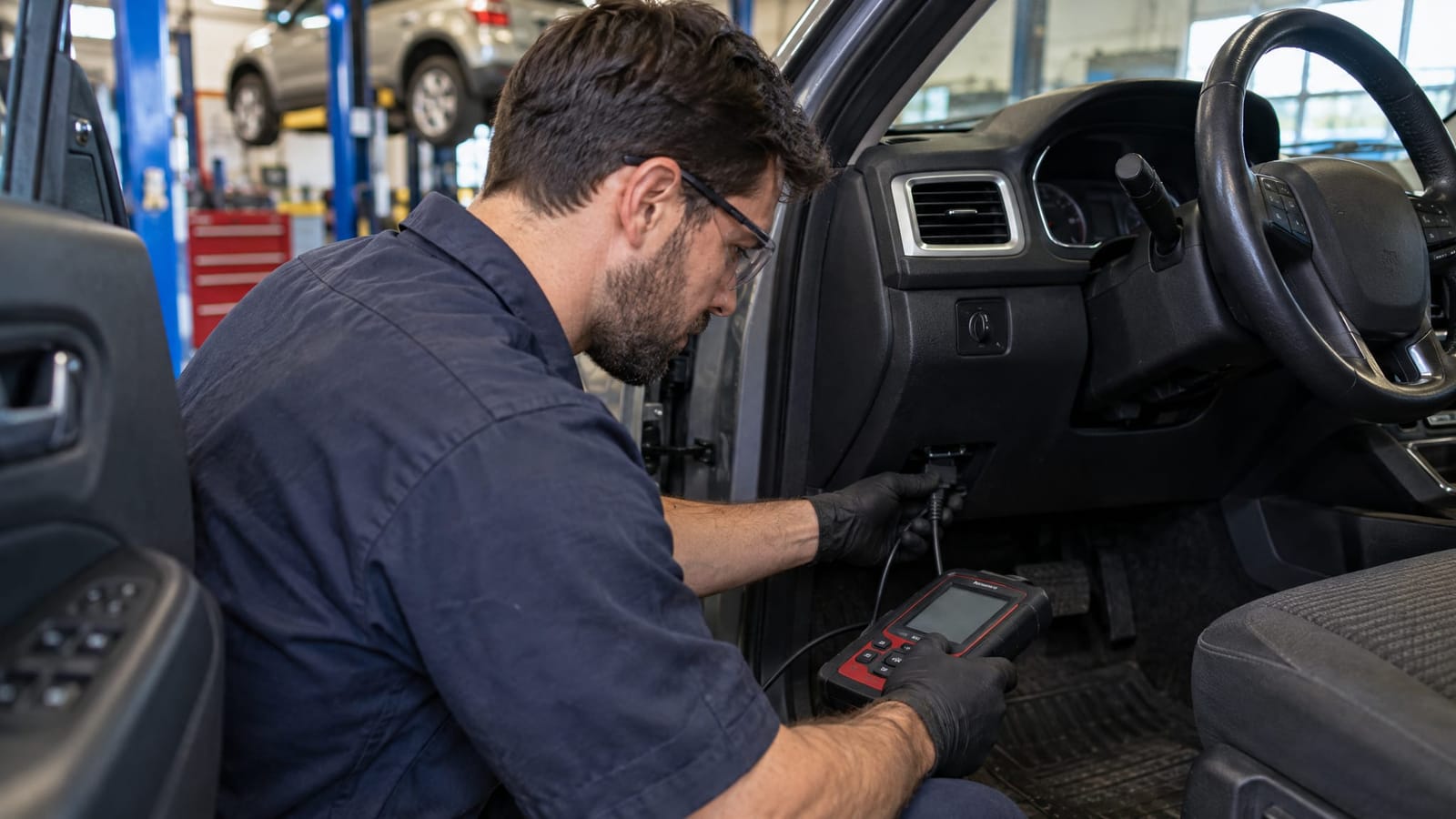
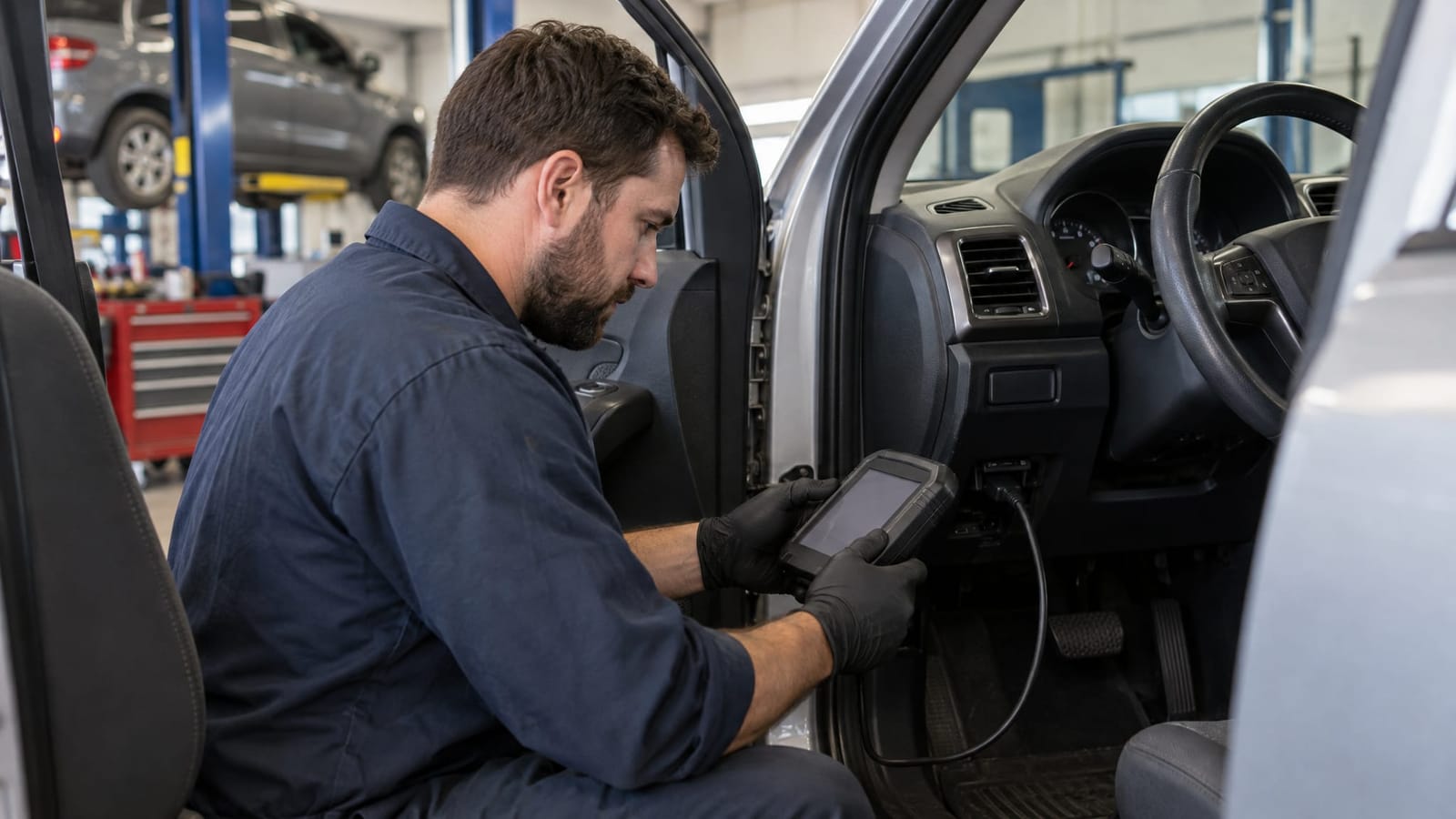
When it detects a qualifying fault, it stores a diagnostic trouble code. A code reader or scan tool connects through the vehicle’s diagnostic port to retrieve that information.
A trouble code is a clue, not a parts order
A code describes the condition the computer detected. It might identify a misfire, an electrical circuit problem, or a fuel vapor leak. The wording helps narrow the investigation, but it does not always identify the cause.
For example, a code describing an oxygen sensor circuit problem could involve the sensor, its connector, or its wiring. A different oxygen-sensor-related code might reflect an actual problem with the engine’s air and fuel mixture. Replacing the sensor simply because its name appears in a description skips that distinction.
Conditions when the fault occurred matter
The computer may also save a snapshot of operating conditions when the fault appeared. This is often called freeze-frame data. Details such as engine temperature, speed, and load help explain whether the problem occurred during a cold start, at idle, or while accelerating.
A pending code can record a detected fault before the conditions for turning on the light have been met. Stored codes can also remain after a symptom stops. That is why the light’s current behavior and the vehicle’s history both matter.
Common Causes, From a Loose Fuel Cap to Engine Problems
Several different problems can turn on the same dashboard light. These examples explain why diagnosis matters more than guessing from the symbol alone.
- A loose or damaged fuel cap: On vehicles with a removable cap, an improperly fitted cap can allow fuel vapor to escape from the sealed system. Checking that it is fitted correctly is a reasonable first check when a steady light appears after refueling. A vapor-leak code can also come from a hose, valve, or seal, so the cap is not the only possibility.
- Worn spark plugs or an ignition problem: Spark plugs and ignition coils help ignite fuel inside the engine. A problem with either can cause misfires, rough running, or hesitation. Fuel delivery and internal engine problems can produce similar symptoms.
- An air or fuel mixture problem: An air leak, a fuel delivery issue, or inaccurate sensor information can upset the balance the engine needs. Testing helps separate an actual mixture problem from a problem with the sensor reporting it.
- A catalytic converter efficiency fault: The computer monitors how effectively the converter treats exhaust. A related code does not automatically justify replacing the converter. Exhaust leaks, sensor operation, and engine-running problems can affect the diagnosis.
- Wiring or connection problems: Damaged wiring, loose connectors, or poor electrical connections can interrupt signals. These faults may appear intermittently as temperature, vibration, or moisture changes.
- An internal engine problem: A cylinder that cannot build proper compression, or a problem with engine timing, can also trigger faults. These possibilities require testing rather than an assumption that every misfire needs a spark plug.
A loose cap and a mechanical engine problem sit at very different ends of the repair range. The warning light alone cannot distinguish between them.
Why a Code Scan Is Not a Complete Diagnosis
A basic code scan, including one performed at a parts counter, is a useful starting point. It can identify stored codes and give you something concrete to discuss. The important distinction is not simply where the reader is plugged in. It is whether the code is followed by appropriate testing.
A complete diagnostic process connects the computer’s information with what is happening on the vehicle. Depending on the fault, that process can include:
- Understanding the complaint. Does the problem happen during startup, after refueling, in traffic, or under acceleration? Those details help guide the checks.
- Reviewing codes and saved operating data. Several codes may come from one underlying problem rather than several unrelated failed parts.
- Inspecting the relevant components. A loose hose, damaged connector, or poor connection may explain the fault before any part replacement is considered.
- Testing the suspected cause. Electrical measurements, live sensor readings, leak checks, or mechanical tests help distinguish between competing explanations.
- Checking operation after the repair. Verification may involve checking readings, repeating the conditions that produced the fault, and allowing the vehicle’s monitoring system to run its checks.
Consider a misfire affecting one cylinder. A code scan identifies where the computer detected the problem. Further testing distinguishes an ignition fault from a fuel injector issue or a mechanical problem. Those causes call for different repairs.
That additional work is why professional diagnosis offers more useful direction than a code description alone. Even a sophisticated scan tool needs someone to interpret its information and test the vehicle.
How Battery and Electrical Problems Fit In
The check engine light is not the same as the battery-shaped charging-system warning. The charging warning concerns the electrical supply system, while the check engine light generally concerns monitored engine and emissions operation.
There can be overlap. Low system voltage or poor power connections can interfere with electronic operation and contribute to fault codes. At the same time, a vehicle that cranks slowly or will not start may have a battery, starting, or charging problem without a check engine warning.
Recognizing the signs of a dying car battery in Florida helps separate starting symptoms from engine-running symptoms. Understanding the differences between a battery, alternator, and starter problem also helps explain why testing one component does not evaluate the entire electrical system.
A battery test answers questions about the battery. A check engine diagnosis investigates a recorded engine or emissions fault. Neither automatically replaces the other.
Useful Information to Keep Before a Diagnostic Visit
A few observations can make an intermittent problem easier to investigate. There is no need to diagnose the vehicle yourself. Useful details include:
- Whether the light stays solid, flashes, or comes and goes.
- Whether the engine shakes, hesitates, stalls, or starts differently.
- Whether the warning appeared after refueling, maintenance, a jump-start, or battery replacement.
- Whether it happens with a cold engine, after warming up, or during acceleration.
- Any other dashboard warnings that appear at the same time.
- The exact code information from any earlier scan, rather than only a suggested replacement part.
Clearing codes or disconnecting the battery before testing can erase useful fault information and reset emissions readiness checks. Turning the light off that way does not correct the cause.
Likewise, a light that turns off on its own does not necessarily mean the underlying problem has been repaired. An intermittent fault may stop meeting the conditions needed to illuminate the warning, while useful information remains stored.
What to Expect From Diagnostics at Our Jacksonville Shop
At Jordan Auto Repairs and Tires Plus LLC, we offer vehicle electrical system diagnostics and battery diagnostics in Jacksonville. We focus on honest explanations, dependable work, and prompt service.
Diagnostic time depends on the problem. A fault that is present during testing is generally easier to investigate than one that appears only occasionally. A quick code reading and a complete diagnosis are different tasks, so repair timing depends on what the checks reveal.
Our diagnostic is free when you approve the repair in our shop. If you do not have the repair completed here, we provide a printed repair statement and charge a diagnostic fee.
The useful result is more than a code number. It is an explanation of what the vehicle detected, what testing found, and which repair those findings support. That distinction helps turn an unfamiliar warning light into an informed repair decision.