Warning Signs Your Car Needs Brake Repair (Don't Ignore These)
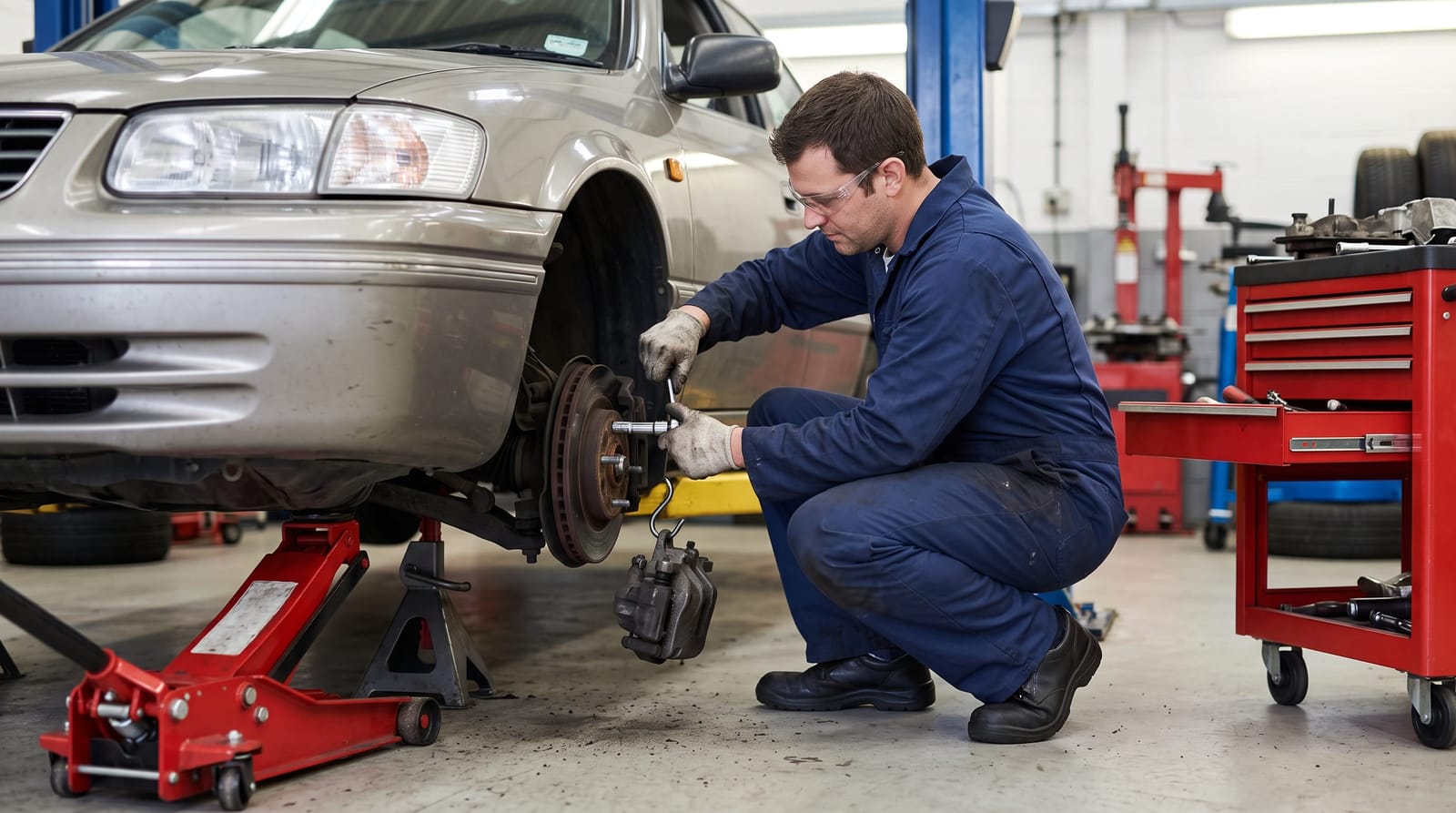
Squealing, grinding, vibration, pulling to one side, a soft brake pedal, and dashboard warning lights are common reasons to arrange a brake inspection. For Jacksonville drivers, the important distinction is whether the change is only a noise or whether the car is also becoming harder to slow down or control. A sudden change in braking deserves more immediate attention than an occasional squeak.
Recognizing these symptoms is a useful starting point for understanding brake repair and replacement in Jacksonville, FL. It does not, however, identify the failed part. Similar symptoms can come from different problems, and replacing pads alone will not resolve every brake concern.
The tips below explain what each warning sign may mean, what details help with diagnosis, and how to discuss the next step with a repair shop. This is general educational information, not a determination that a particular vehicle is safe to drive. For vehicle-specific guidance, consult a qualified automotive repair professional licensed where applicable.
1. Notice When Squealing Happens, Not Just How Loud It Is
A high-pitched squeal during braking can indicate that the brake pads are approaching their wear limit. Some pads have a small metal indicator designed to make noise as the friction material wears down. However, squealing does not automatically mean the pads need replacement.
Moisture, surface rust, vibration between brake components, and worn or loose hardware can also contribute to noise. A brief squeak after a wet night is different from a squeal that continues throughout a commute, but sound alone cannot confirm the cause.
Details that help narrow it down
- Does the noise happen only during the first few stops?
- Does it continue after the car has been driven for a while?
- Does it occur during light braking, firm braking, or both?
- Did it begin after recent brake work?
Persistent or recurring squealing calls for inspection rather than an assumption that it is harmless. Looking through a wheel provides only a limited view; an outer pad may look acceptable while another pad has worn differently.
The related guide on why brakes squeal when the pads look fine explains why visible pad thickness is only part of the picture.
2. Treat Grinding as More Than an Annoying Sound
Grinding or harsh scraping during braking can occur when pad friction material is severely worn and metal contacts the brake rotor: the disc the pads squeeze to slow the wheel. It can also come from trapped debris or a component rubbing where it should not.
Those possibilities require different repairs. A description such as “the brakes sound rough” is helpful, but an inspection is needed to distinguish worn pads from debris, contact with a protective shield, or another mechanical issue.
Why prompt attention matters
If worn components are rubbing against a rotor, continued use can cause additional damage. Grinding combined with reduced stopping response is more concerning than noise without a noticeable change in braking. Neither situation can be cleared as safe through a phone conversation alone.
Useful observations include whether the sound occurs only with the pedal pressed, whether it seems to come from one wheel, and whether it started suddenly. There is no need to recreate the sound through repeated hard stops for a shop to begin evaluating the concern.
A repair recommendation is easier to understand when it identifies the source of contact and explains which parts are affected, rather than treating every grinding noise as the same repair.
3. Separate Braking Vibration From Vibration While Cruising
A pulsing brake pedal or shaking steering wheel during a stop may point to uneven braking contact. Variations in rotor thickness or friction material on the rotor surface can contribute. Loose or worn wheel, steering, or suspension components may also produce or intensify a vibration.
People often describe this as “warped rotors,” but that label is not a complete diagnosis. An inspection and appropriate measurements help establish whether the rotor, another brake component, or something outside the brake system is responsible.
Describe the conditions clearly
For example, a hypothetical driver might report: “The steering wheel shakes when I slow down from road speed, but it feels smooth while cruising.” That is more useful than simply saying the vehicle shakes.
- Vibration mainly during braking can point toward braking-related causes.
- Vibration while cruising may also involve tires, wheels, or other components.
- A pulse during an emergency stop may be the anti-lock braking system operating, depending on the vehicle and conditions.
New or repeated vibration during ordinary stops deserves evaluation. Not every pedal pulse means the same thing, so the circumstances matter as much as the sensation.
4. Pay Attention if the Car Pulls While Braking
A car that consistently pulls left or right when the brake pedal is pressed may have uneven braking force between its wheels. One possible cause is a sticking caliper, the component that presses the pads against the rotor. Uneven wear or contamination on braking surfaces can also contribute.
Pulling is not always a brake problem. Tire pressure differences, alignment, road slope, and suspension issues can affect how a vehicle tracks. This is why a brake-only diagnosis based on the symptom can miss the underlying cause.
Distinguish a braking pull from a constant drift
The useful question is whether the pull appears or becomes stronger specifically during braking. A vehicle that drifts all the time presents a different diagnostic picture from one that travels straight until the brakes are applied.
Describe observations from normal driving rather than attempting a hands-off steering test. A noticeable change in directional control warrants prompt professional assessment, especially when it occurs alongside grinding, vibration, or a changed pedal feel.
5. Give a Soft, Spongy, or Sinking Pedal Prompt Attention
A brake pedal that feels unusually soft, travels farther than normal, or gradually sinks under steady pressure can indicate a problem in the system that transfers pedal force to the brakes.
Most everyday vehicles use hydraulic pressure for this task. Air in the system, a fluid leak, or an internal component problem can interfere with that pressure. The pedal sensation alone cannot establish which issue is present.
Why this differs from a simple squeak
A soft pedal can involve how braking force is delivered, rather than just the condition of a friction surface. Adding fluid is not a complete diagnosis or proof that the concern has been resolved. A low level requires an explanation, which may involve wear, a leak, or another issue.
A pedal that suddenly approaches the floor, particularly with reduced stopping response, calls for immediate professional guidance. When normal braking is in doubt, roadside assistance or towing offers an alternative to driving the vehicle to an inspection.
The guide to soft or spongy brake pedal causes covers the distinctions in more detail.
6. Identify the Exact Brake Warning Light
A dashboard brake warning does not always mean worn pads. Depending on the vehicle, a light may relate to an engaged parking brake, brake fluid level, a system fault, or pad wear monitoring. An ABS light generally concerns the anti-lock braking system, but the exact meaning depends on the vehicle.
The owner’s manual is the appropriate reference for identifying a particular symbol or message. A light that remains illuminated after the parking brake is released needs an explanation rather than a guess.
Record the light and any accompanying changes
- Which symbol or message appears?
- Does it stay on or appear intermittently?
- Are several warning lights illuminated together?
- Has pedal feel or stopping response changed?
A warning light alongside altered braking deserves more immediate attention than an isolated message with no noticeable change. Conversely, an unlit dashboard does not rule out mechanical wear.
These six symptom categories are also listed in the brake warning-sign information published by Brakes 4 Less for Jacksonville. The list helps identify reasons for inspection; it does not diagnose an individual vehicle.
7. Mention Reduced Stopping Response, Odors, or Visible Fluid
Not every brake concern announces itself with a squeal or dashboard light. A vehicle taking noticeably more effort or distance to slow down is important to report, even if the brakes are quiet.
A new burning odor near a wheel can be associated with excessive heat, including a brake that is not releasing properly. However, odors can have other sources. Similarly, fluid near a wheel or beneath the vehicle is not automatically brake fluid.
Reduced braking combined with an unusual odor, visible fluid, or a changed pedal feel warrants immediate professional assessment. These symptoms are not a reason to perform a driveway stopping test. Remote descriptions cannot establish whether continued driving is appropriate.
8. Ask for Findings Before Approving Parts Replacement
A useful brake inspection connects the symptom to an observed condition. Depending on the concern, that may involve checking pad wear, rotor condition, moving brake components, fluid leaks, or dashboard fault information.
Questions that support a transparent repair discussion include:
- What finding explains the symptom I reported?
- Are the pads wearing evenly?
- What measurements or visible damage support replacement?
- Is the problem limited to the brakes, or is another system involved?
- What affects the expected completion time?
For Jacksonville drivers coordinating work and family transportation, quick turnaround matters. Asking separately about inspection timing, parts availability, and repair time makes scheduling clearer. An initial estimate may change after diagnosis; dependable communication is more useful than an unsupported same-day promise.
There is no single mileage interval that determines when every vehicle needs brake replacement. Wear depends on the vehicle, driving conditions, and component condition. The maintenance schedule and inspection findings offer a better basis than mileage alone.
Likewise, there is no universal remaining-distance allowance once pads are worn. The related guide, Can You Drive with Worn Brake Pads?, explains why that question depends on the actual condition of the brakes.
Turn the Warning Sign Into a Clear Repair Conversation
The most helpful starting point is a specific description: what changed, when it happens, and whether stopping response changed too. Noise may point toward wear or vibration; a soft pedal, reduced braking, or altered control raises different concerns. Inspection turns those clues into a repair decision.
Contact Jordan Auto Repairs and Tires Plus LLC in Jacksonville to discuss your brake symptoms and ask about scheduling a vehicle check.