Why Is My Car AC Blowing Cold Then Warm Intermittently?
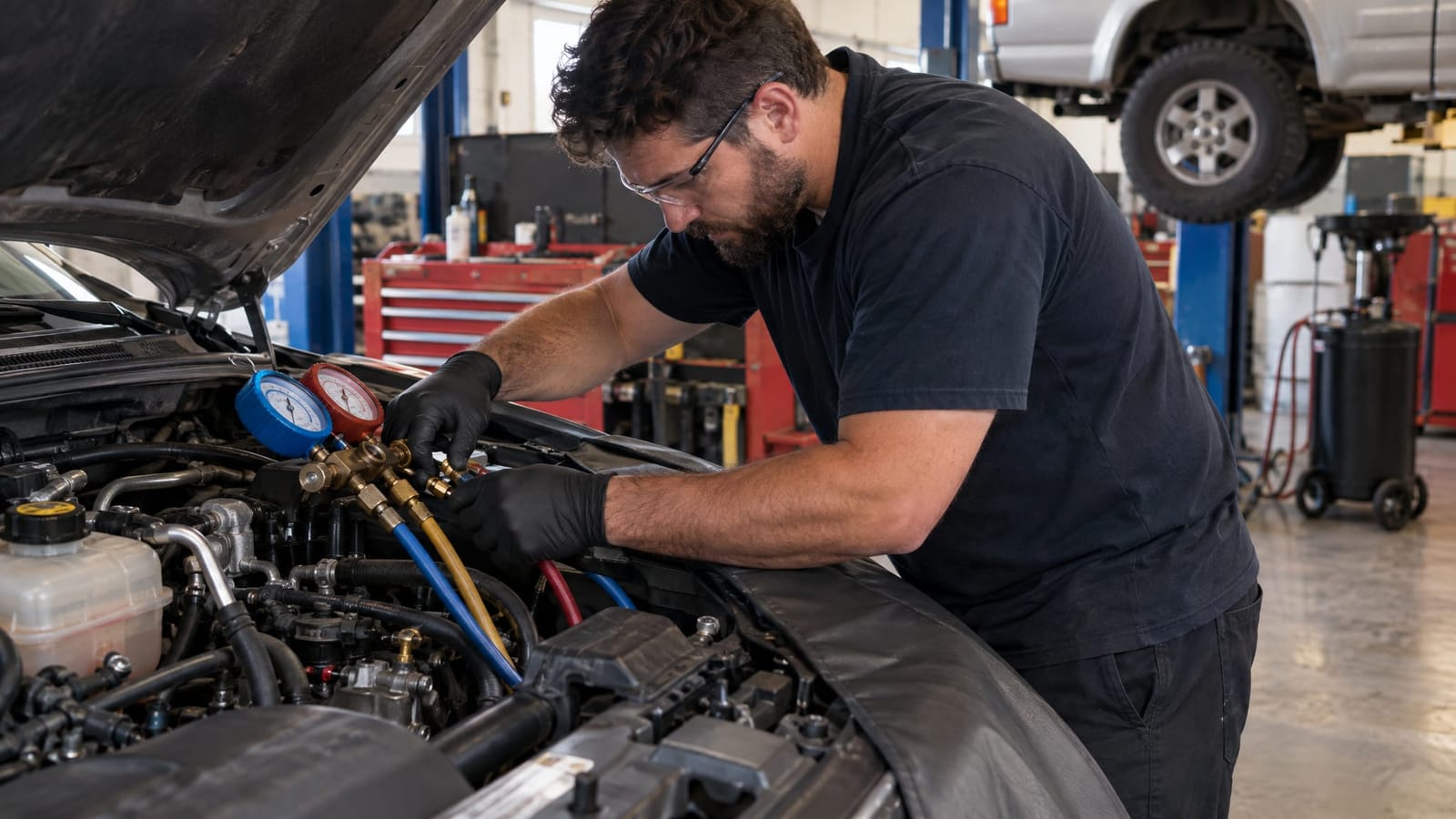
If your car’s AC starts cold, turns warm, and then cools again, the problem often involves changing airflow, refrigerant flow, or compressor operation. Common explanations include an evaporator freezing over, a faulty expansion valve, an intermittent compressor electrical fault, or poor airflow through the condenser.
The most useful clue is what changes when the cooling stops. Does the air coming from the vents get weaker, or does it stay strong but turn warm? Does it happen only in Jacksonville traffic, or after a long stretch of driving? Those differences help narrow the diagnosis without guessing at parts.
What the Cooling Pattern Can Tell You
A temperature change alone does not identify the failed component. The circumstances around it are more useful:
- Airflow gradually weakens: Ice building up on the evaporator is one possibility, especially if airflow returns after the AC has been off.
- Airflow stays strong but turns warm: The compressor, refrigerant controls, or temperature-control system deserve attention.
- Cooling improves while driving: Condenser airflow and cooling-fan operation become important checks.
- Cooling returns after the car sits: A heat-sensitive electrical fault or thawing evaporator could explain the recovery.
These are diagnostic clues, not proof that a particular part needs replacement.
Four Causes of AC That Alternates Between Cold and Warm
1. The Evaporator Is Freezing Over
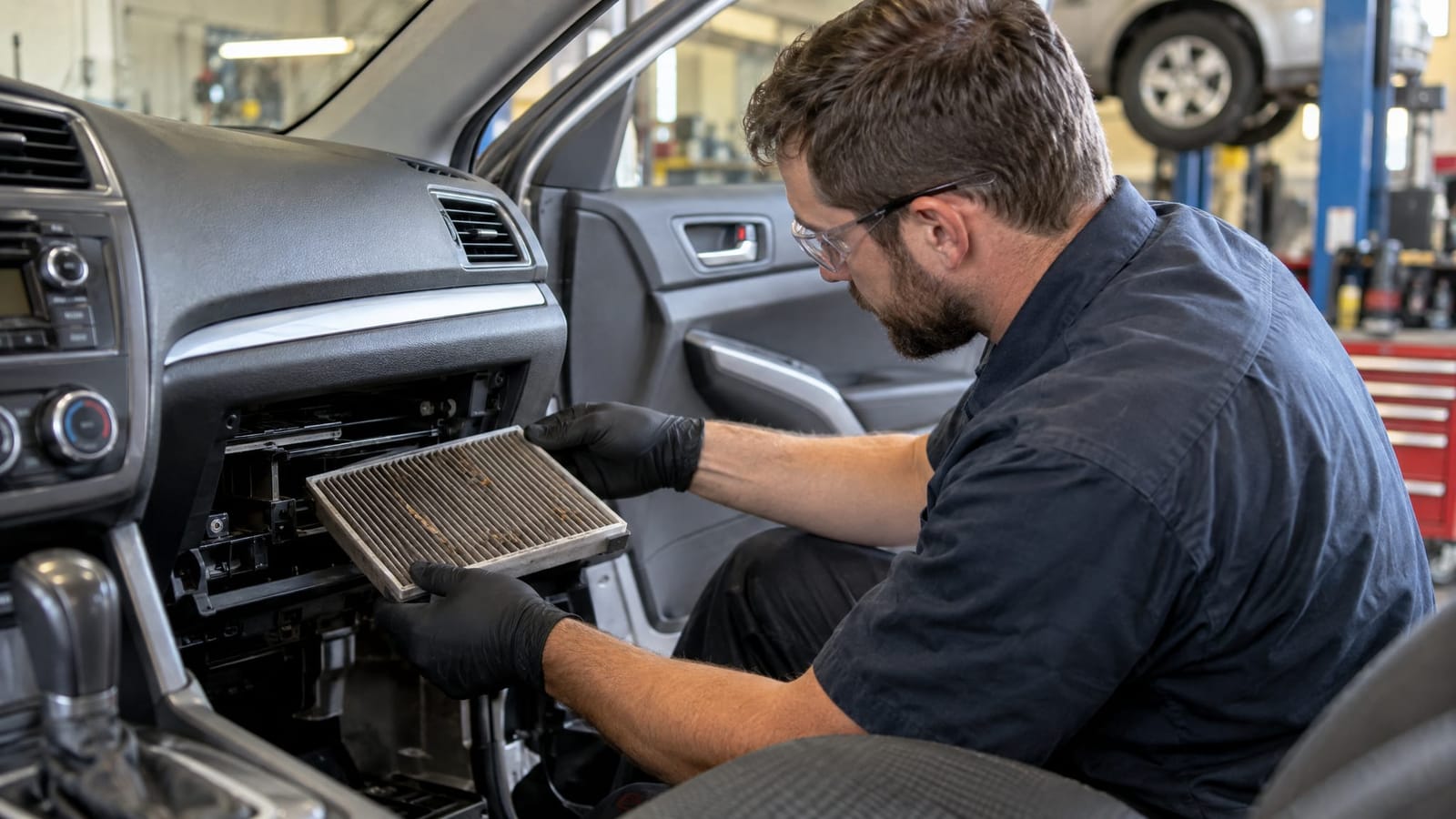
The evaporator is the cold component inside the dashboard that removes heat from cabin air. Moisture normally collects on it and drains away. If its surface gets too cold, that moisture can freeze.
As ice builds up, it blocks air from passing through. The blower may still sound normal, but less air reaches the vents. After the ice melts, cooling and airflow can return temporarily.
Refrigerant pressure problems, including low refrigerant under some operating conditions, can contribute to icing. Restricted airflow from a dirty cabin filter and faults in evaporator temperature control are other possibilities. Simply adding refrigerant does not address every cause, and an incorrect charge can create additional cooling problems.
2. The Expansion Valve Is Not Controlling Refrigerant Properly
On systems equipped with an expansion valve, that valve controls how much refrigerant enters the evaporator. A sticking or restricted valve disrupts the flow needed for steady cooling.
The result can be changing vent temperatures or abnormal frost formation. However, not every vehicle uses the same refrigerant-metering design, and these symptoms overlap with low refrigerant and other restrictions.
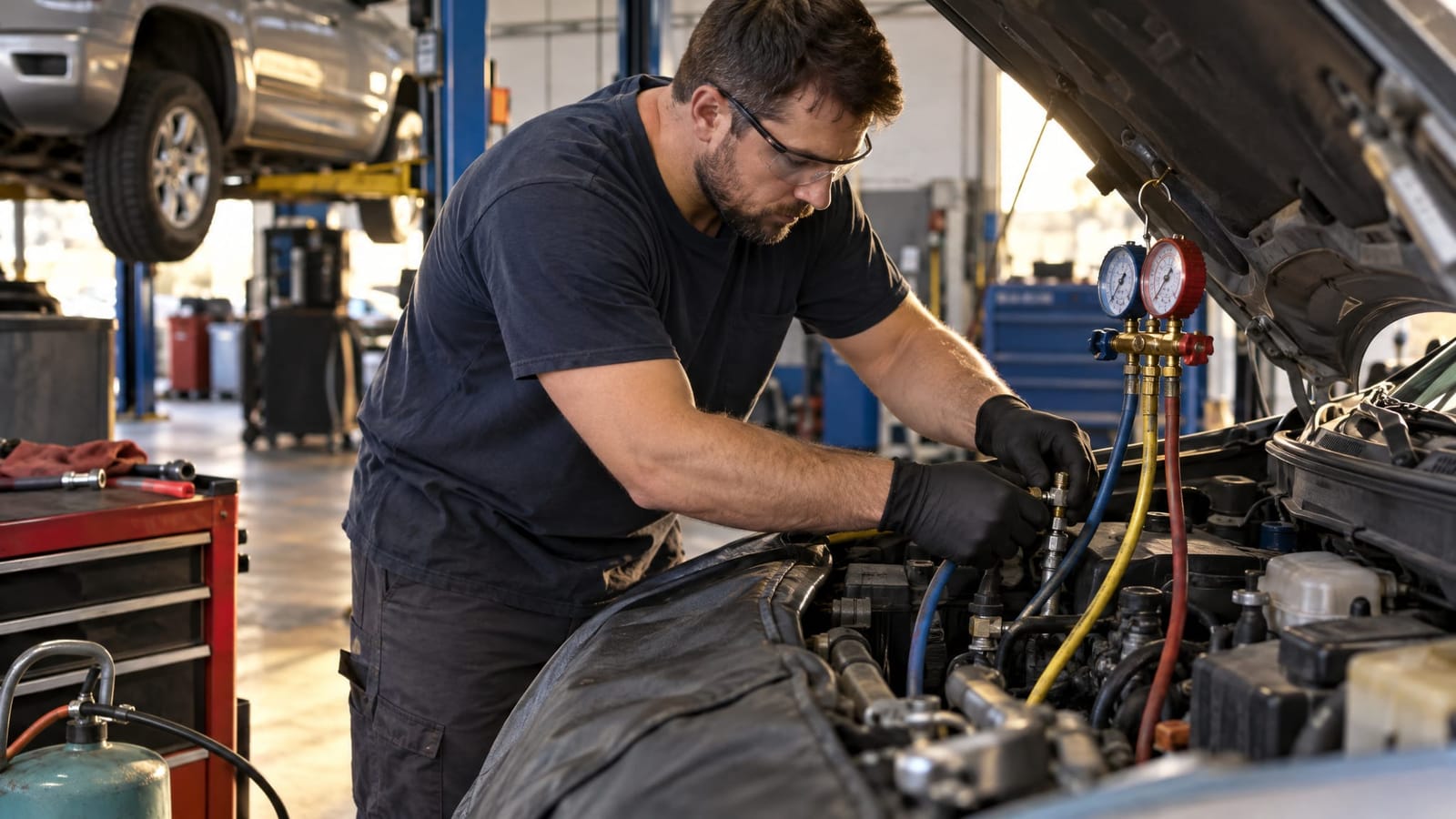
Diagnosis involves comparing system pressures and temperatures with how the vehicle’s AC is designed to operate. A cold-then-warm pattern by itself is not enough reason to replace the valve.
3. The Compressor Has an Intermittent Electrical Fault
Many vehicles use an electrically operated clutch to engage the AC compressor. A failing clutch coil, relay, wiring connection, or excessive clutch gap can interrupt engagement, particularly as components heat up.
When the compressor stops pumping refrigerant, the cabin fan can keep blowing at full strength while the air becomes warm. Some vehicles use different compressor-control designs, so a visible clutch check does not apply to every car.
Another important distinction: the vehicle may intentionally stop compressor operation because a sensor reports an unsuitable pressure or temperature. Testing needs to establish whether the compressor lost electrical power, failed to respond, or was commanded to stop.
4. The Condenser Cannot Release Enough Heat
The condenser sits near the front of the vehicle and releases heat from the AC system. Leaves, dirt, or blocked fins reduce the air moving through it. A cooling fan that is not operating properly can cause a similar problem.
This often becomes more noticeable at stoplights or in slow traffic. Once the car moves, additional airflow can improve cooling. Excessive system pressure can also cause the controls to interrupt compressor operation.
An external airflow blockage is different from a restriction inside the condenser. Cleaning the outside will not correct an internal restriction, and warmer air at idle alone does not establish that the condenser needs replacement.
Why Diagnosis Matters More Than a Refrigerant Top-Off
Refrigerant circulates through a closed system; it is not routinely used up like fuel. A low charge calls for checking for leakage or an incorrect previous fill. Adding more without establishing the existing charge can leave the actual fault unresolved or overcharge the system.
A useful diagnostic evaluation connects the symptom with several checks:
- Vent temperature and airflow while the problem is happening.
- Condenser condition and cooling-fan operation.
- System pressures and temperature readings.
- Compressor commands, electrical supply, and relevant sensor information.
- Refrigerant quantity and leak testing when indicated.
The goal is to explain why cooling stops, not simply confirm that the vents are warm.
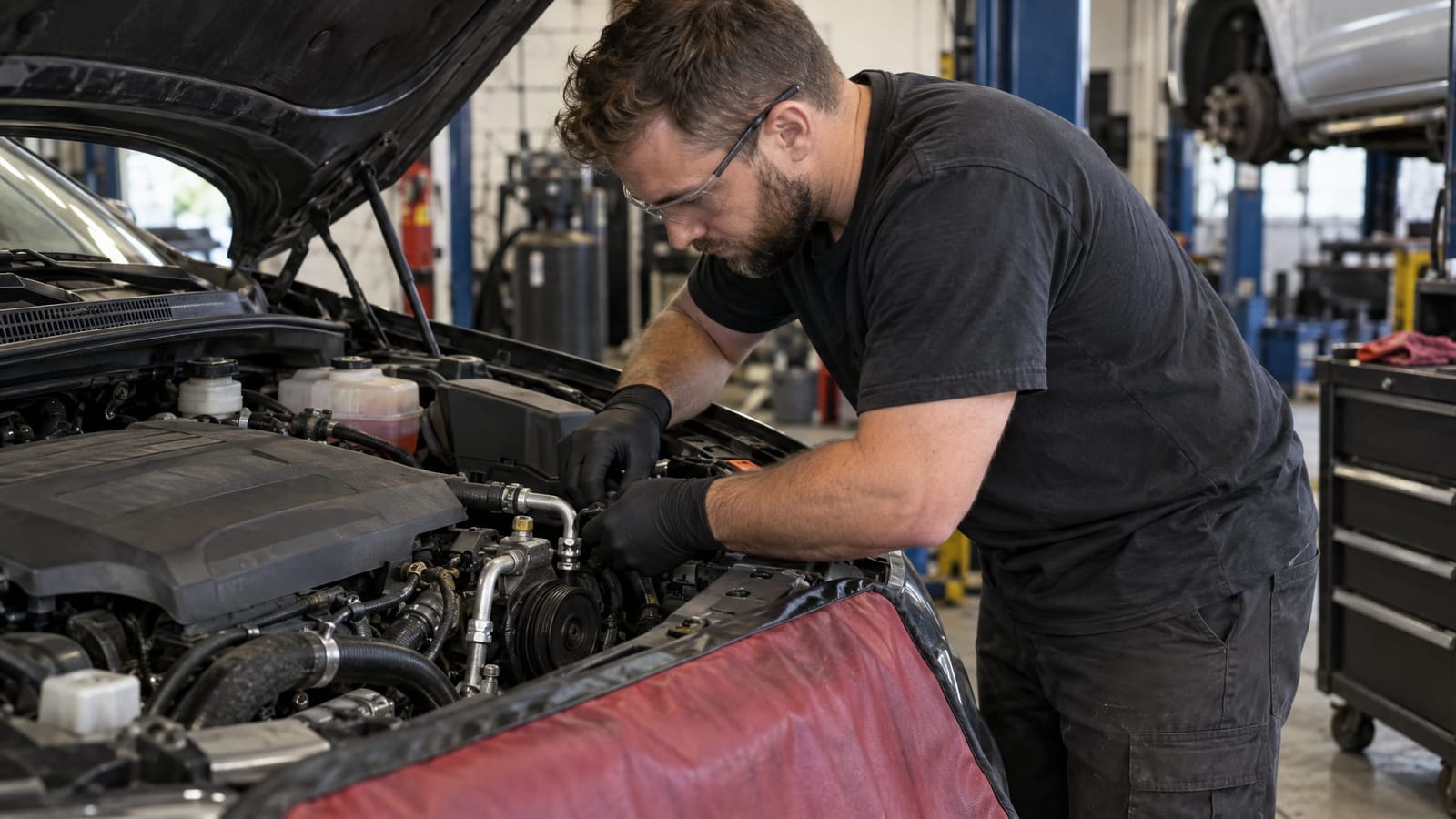
At Jordan Auto Repairs and Tires Plus LLC, we offer AC repair and vehicle electrical system diagnostics in Jacksonville. We focus on dependable work and quick turnaround, with repair timing depending on the fault and the work required.
Useful Details to Note Before an AC Inspection
There is no need to reproduce the problem while distracted behind the wheel. Details you remember from normal use can help:
- Whether the problem begins immediately or after the cabin has cooled.
- Whether it happens while parked, in traffic, or at road speed.
- Whether airflow weakens along with the temperature change.
- Whether every vent warms up or only one side does.
- Whether restarting the car or leaving the AC off restores cooling.
- Whether the issue began after recent AC service.
For example, “It cools while moving but warms at every stoplight” gives a technician a more focused starting point than “The AC sometimes quits.”
Frequently Asked Questions
Is it normal for the AC compressor to cycle on and off?
Yes. Many systems cycle the compressor or adjust its output to control cooling. Cycling alone does not indicate a fault. Repeated uncomfortable swings to warm air, especially with unchanged settings, deserve a closer look.
Does intermittent cooling mean I need a new compressor?
No. A wiring fault, control problem, incorrect refrigerant charge, or poor condenser airflow can interrupt cooling even when the compressor itself still works. Testing helps distinguish a compressor failure from a problem affecting its operation.
What if only one side of the car blows warm?
That pattern adds the cabin’s temperature-control doors and their small motors to the inspection list, particularly on dual-zone systems. These doors direct air through the heating and cooling paths. Refrigerant problems can also produce uneven cooling, so the temperature difference alone does not settle the diagnosis.
The Key Is What Happens When Cooling Stops
Intermittent AC trouble is easier to narrow down when airflow, driving conditions, and compressor operation are considered together. Identifying the reason cooling drops out gives the repair a clear purpose and helps avoid replacing parts that are not causing the problem.