
Why Is My Car AC Blowing Warm Air? Common Causes and Fixes
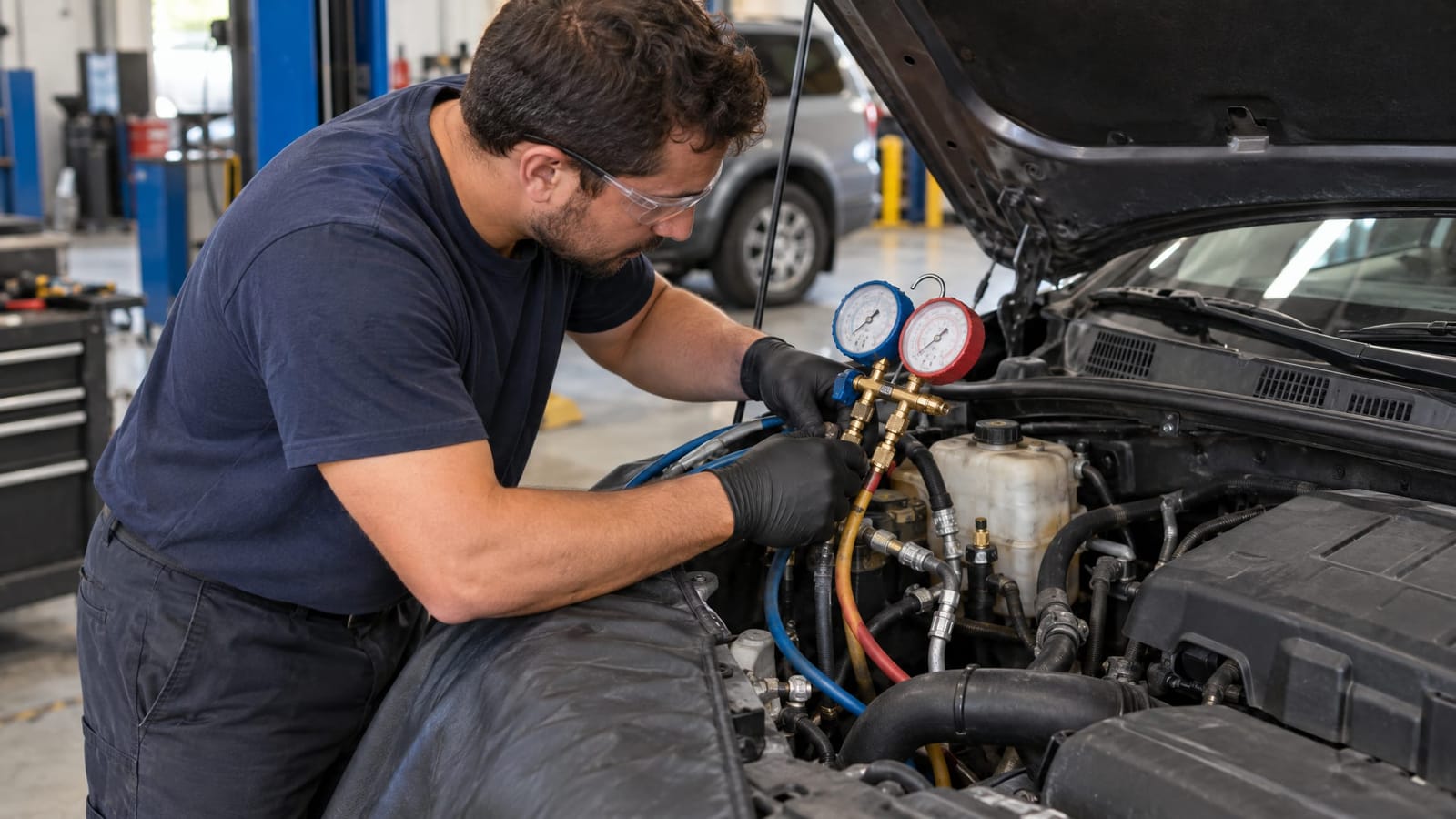
Car AC blowing warm air usually points to low refrigerant, a compressor problem, poor airflow through the condenser, a temperature-control problem, or an electrical fault. A clogged cabin air filter can also make cooling feel weak, although it mainly reduces how much air comes through the vents.
The repair can range from a simple filter replacement to more involved work on a leaking condenser or failed compressor. The symptom alone does not tell you which repair is needed, and adding refrigerant is not always the answer.
In Jacksonville, warm air becomes especially noticeable in afternoon traffic. Paying attention to when cooling changes helps separate a smaller fix from a larger repair.
First, Separate Warm Air From Weak Airflow
Before comparing possible causes, notice what the vents are doing. Air temperature and airflow are two different clues:
- Strong airflow that stays warm: Refrigerant, compressor, condenser, or temperature-control problems are possible.
- Weak airflow, even at a higher fan setting: A restricted cabin filter, blower problem, or another airflow restriction deserves attention.
- Cool air on one side and warm air on the other: A temperature-door problem is one possibility, particularly with separate driver and passenger temperature settings.
- Cooling that changes between stops and moving traffic: Condenser airflow and cooling-fan operation are important checks.
These patterns narrow the inspection. They do not identify a failed part by themselves.
Six Common Causes of Warm Air From Car AC
1. Low Refrigerant, Often From a Leak
Refrigerant carries heat out of the cabin. When the system does not contain the correct amount, cooling suffers. A sufficiently low charge can also cause the system to prevent compressor operation.
Refrigerant does not get used up like gasoline. A low charge generally means refrigerant has escaped through a leak or the system was not filled correctly during earlier service. Possible leak locations include connections, hoses, seals, and AC components.
Cooling that gradually becomes weaker fits this possibility, but it is not proof. A system that improves after a recharge and then loses cooling again needs attention to the cause of the refrigerant loss.
The fix and repair size: Diagnosis focuses on finding the leak and checking the charge. Repairing an accessible connection is generally less involved than replacing a leaking component behind the dashboard. After the repair, the system needs the correct refrigerant charge for that vehicle.
2. A Compressor That Is Not Working Properly
The compressor circulates refrigerant through the AC system. If it cannot do that job, the vents may blow warm air even though the cabin fan works normally.
A compressor can fail internally, but a compressor that is not running is not automatically a failed compressor. Low refrigerant, an electrical fault, or a control problem can keep an otherwise working unit from operating.
Unusual noise when the AC turns on is useful information for diagnosis. It does not, by itself, establish that the compressor needs replacement. Different vehicles also use different compressor designs, so watching for a visible clutch to engage is not a universal test.
The fix and repair size: Testing checks compressor operation, its controls, and system pressures before replacement is considered. Compressor replacement is usually a larger repair. Internal damage that spreads debris through the system can make the job more involved than replacing the compressor alone.
3. Condenser Damage or Poor Airflow
The condenser releases heat from the refrigerant to the outside air. It sits near the front of the vehicle, where road debris can damage it and material collecting on its surface can restrict airflow.
There are two important distinctions. A damaged condenser may leak refrigerant. A blocked condenser, or a cooling fan that is not working properly, may prevent heat from escaping even when refrigerant is present.
If the AC cools better while driving but becomes warm at stoplights, checking condenser airflow and fan operation makes sense. Moving air can mask an airflow problem that becomes more noticeable while the vehicle is stationary.
The fix and repair size: Removing an external obstruction may be relatively straightforward. A fan fault needs its own diagnosis. A leaking condenser generally needs replacement, followed by the appropriate AC service and recharge, making it more involved than surface cleaning.
4. A Clogged Cabin Air Filter
The cabin air filter catches dust and debris in the ventilation system. As it becomes restricted, less air reaches the vents. The air may still be cool, but there may not be enough of it to cool the cabin comfortably.
This distinction matters: a dirty cabin filter does not lower the refrigerant charge or stop a working compressor from circulating refrigerant. If airflow is strong but consistently warm, replacing the filter alone is unlikely to solve the problem.
Weak airflow at multiple fan settings makes a filter inspection worthwhile. Blower operation and other restrictions can produce similar symptoms.
The fix and repair size: Replacing a dirty, accessible cabin filter is usually among the simpler repairs discussed here. Filter location varies by vehicle, so access affects the work involved. If airflow remains weak afterward, the next step is further diagnosis rather than repeated filter changes.
5. A Blend Door or Actuator Problem
Inside the dashboard, temperature doors control how much air passes through the heater portion of the ventilation system. A small motor, called an actuator, moves these doors according to the temperature setting.
If a door sticks or its actuator stops working, the AC system may produce cooling while the vents still deliver warm air. Clicking behind the dashboard, little response to temperature adjustments, or different temperatures from opposite sides can point toward this area.
Uneven cooling is a clue, not a diagnosis. Refrigerant problems and other faults can also cause temperature differences between vents.
The fix and repair size: Testing checks whether the controls, actuator, and door move correctly. An accessible actuator can be a smaller repair than compressor replacement. A buried actuator or damaged internal door can require considerable dashboard disassembly, so a small part does not always mean a small job.
6. Electrical or Control Problems
The AC depends on electrical power and control signals. Fuses, relays, wiring, connectors, sensors, and control modules all play a role. A fault in one part of that system can prevent the compressor, cooling fan, or cabin blower from working properly.
Electrical trouble can appear suddenly or come and go. For example, the fan may stop responding, cooling may work intermittently, or the AC indicator may turn on without the system actually producing cold air.
The fix and repair size: A confirmed faulty relay or accessible connection may be a relatively modest repair. Damaged wiring or a control-unit problem can take more time to locate and repair. A blown fuse also calls for checking why it blew, particularly if a replacement fails again.
Why a Refrigerant Recharge Is Not Always the Fix
A recharge addresses the amount of refrigerant in the system. It does not repair a leak, restore a failed compressor, move a stuck temperature door, or fix a cooling fan.
The correct charge matters in both directions. Too little refrigerant reduces cooling, but adding too much can also interfere with operation. A reading from a refill-can gauge does not provide a complete diagnosis or establish exactly how much refrigerant is already inside.
Because refrigerant is under pressure, refrigerant handling and leak testing belong with a trained automotive technician.
For example, if the vents blow strongly but stay warm because a temperature door is stuck, adding refrigerant does not address the fault. Confirming the cause first avoids paying for work that leaves the original problem unchanged.
What a Useful AC Diagnosis Checks
A useful diagnosis connects the symptoms to test results rather than choosing a part based on warm air alone. Depending on what the vehicle is doing, the inspection can include:
- Comparing vent temperature and airflow under different settings.
- Checking whether the compressor and cooling fans operate as intended.
- Measuring system pressures and assessing the refrigerant charge.
- Checking for refrigerant leaks.
- Inspecting the cabin filter and testing temperature-door movement.
- Testing relevant electrical circuits and control signals.
At Jordan Auto Repairs and Tires Plus LLC in Jacksonville, we offer AC repair and vehicle electrical system diagnostics. Our focus is honest service, quality work, and prompt, dependable repairs.
The explanation accompanying an estimate matters as much as the part name. It can connect the failed test to the proposed repair and explain whether one fault accounts for all the symptoms.
How to Compare Smaller Fixes With Major Repairs
As a general guide, accessible cabin filters, confirmed faulty relays, and minor connection repairs tend to be less involved. Compressor replacement, condenser replacement, and work requiring dashboard removal tend to involve more labor, parts, or refrigerant service.
Access can change that comparison. An inexpensive actuator buried inside the dashboard may take more labor than a larger component that is easy to reach. A refrigerant leak also has no single repair size: its location determines much of the work.
Useful questions about an estimate include:
- What test identified the problem?
- Does the repair address a refrigerant leak or only restore the charge?
- Which parts and labor are included?
- Is refrigerant service part of the repair?
- What affects the expected completion time?
Diagnosis, component access, and parts availability affect turnaround. Those details provide a more useful expectation than a time estimate based only on “AC blowing warm.”
The Most Helpful Next Step Is Identifying the Pattern
Before a service visit, note whether the change happened suddenly or gradually, whether airflow is strong, whether both sides behave alike, and whether cooling changes at stops. Include any recent AC work or recharge in that description.
Warm air does not automatically mean a major repair. It also does not automatically mean the system only needs refrigerant. Separating airflow, refrigerant, mechanical, and control problems is what makes the repair decision clearer.