Brake Pads vs. Rotors: What's the Difference and When Do You Replace Each?
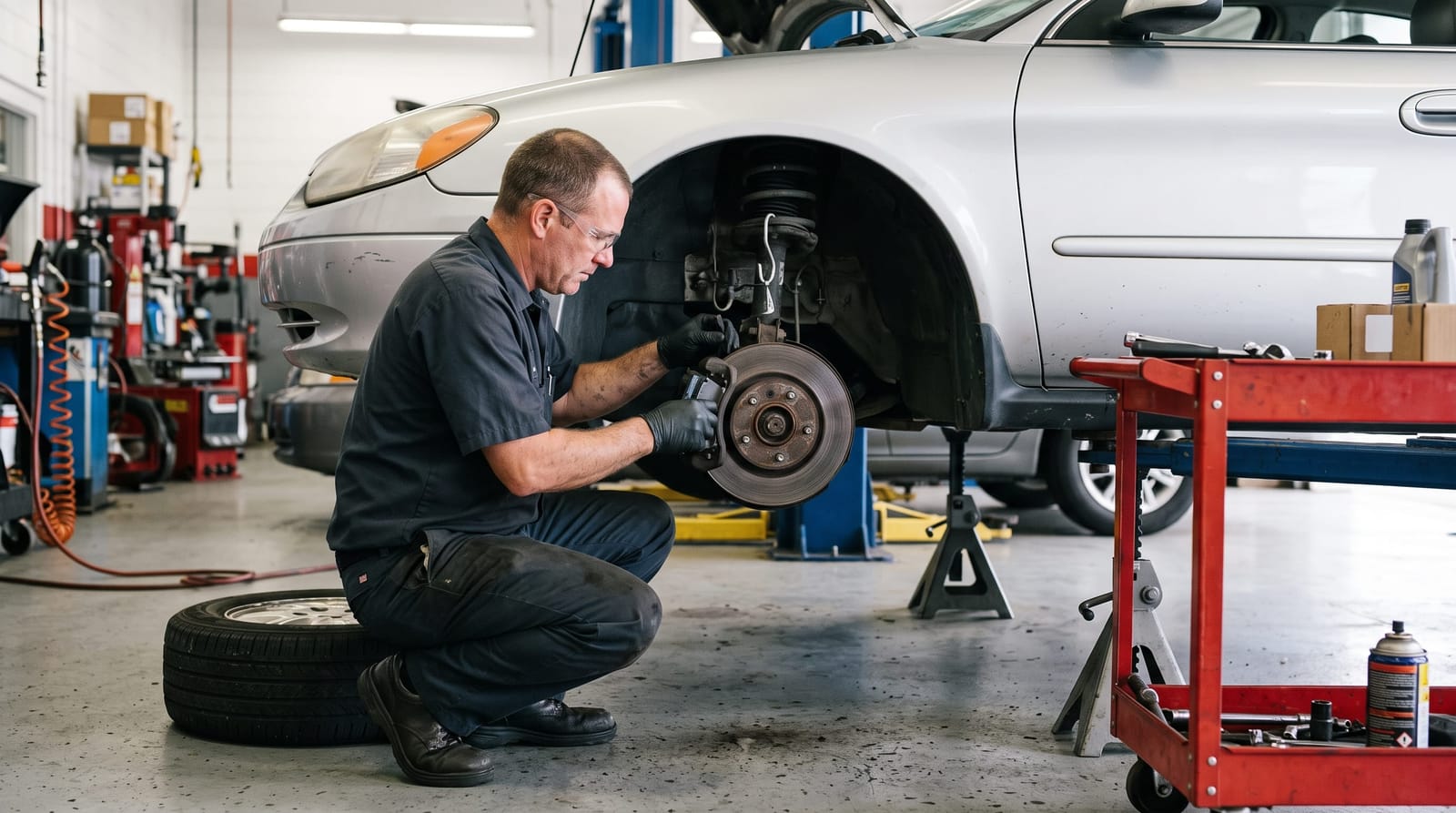
Brake pads are the friction material that presses against the rotors; rotors are the metal discs that turn with the wheels. Pads generally wear out faster and need replacement when their friction material reaches its service limit or becomes damaged. Rotors need replacement when their thickness or condition no longer meets the vehicle’s requirements. Replacing both together is sometimes necessary, but it is not an automatic rule for every brake job.
A pad-only repair can make sense when the rotors remain suitable for use. Putting new pads against damaged or excessively worn rotors, however, leaves part of the problem unresolved.
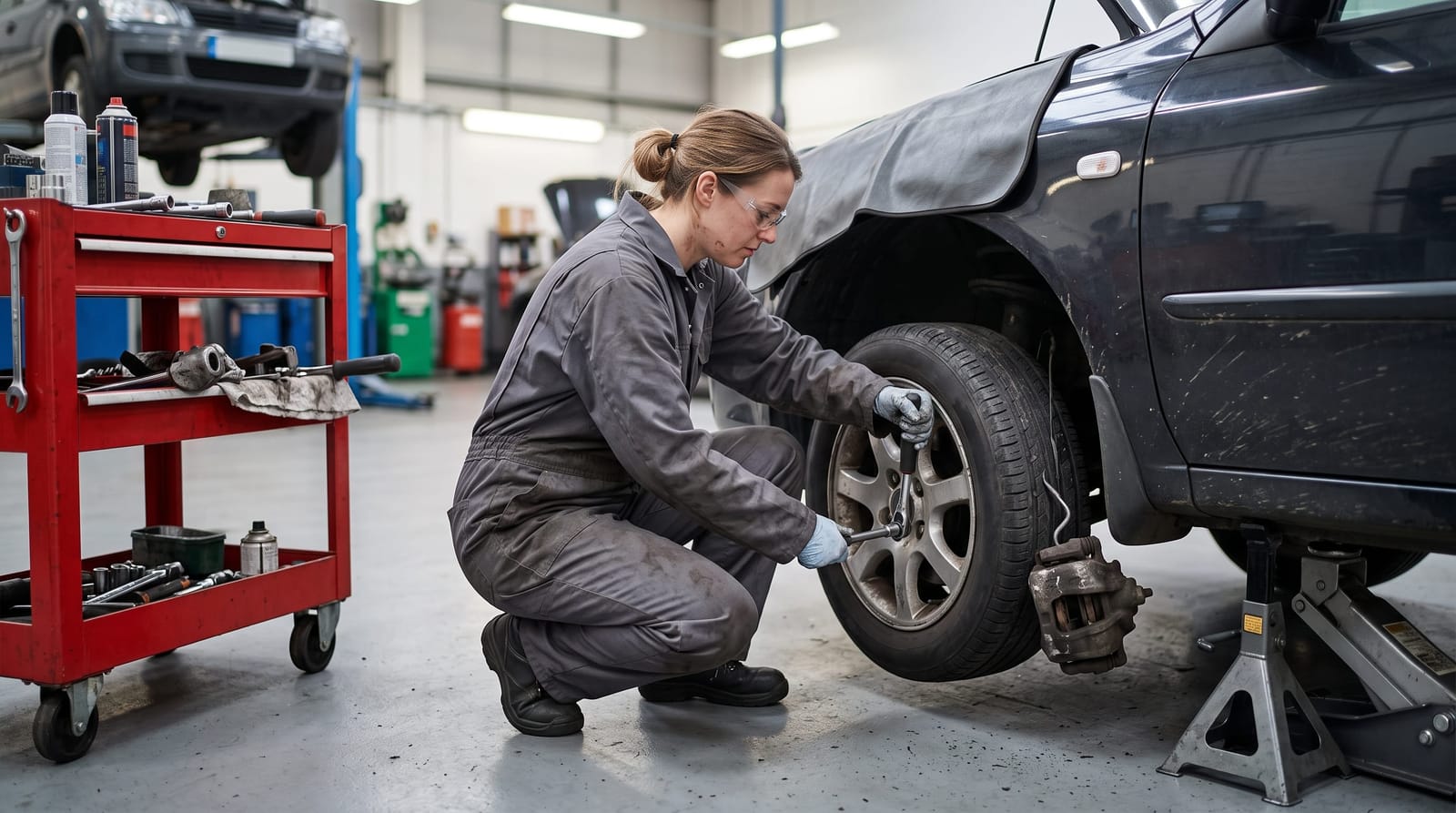
At Jordan Auto Repairs and Tires Plus LLC, we offer brake repair and replacement in Jacksonville. Our team can assess your vehicle’s braking concerns and determine which parts need attention. The distinctions below explain what goes into that decision.
Brake Pads vs. Rotors: A Side-by-Side Comparison
| Question | Brake pads | Brake rotors |
|---|---|---|
| What do they do? | Press friction material against the rotor to slow the wheel. | Provide the rotating surface the pads grip and help manage braking heat. |
| How do they wear? | The friction material gradually gets thinner. | The disc loses thickness and can develop grooves, uneven wear, or surface damage. |
| What prompts replacement? | Friction material at its service limit, damage, or abnormal wear. | Insufficient thickness or damage that cannot be corrected within the manufacturer’s specifications. |
| Can symptoms identify the problem? | Squealing or grinding may involve pads, but inspection is needed. | Vibration or scraping may involve rotors, but those symptoms can have other causes. |
How Pads and Rotors Wear Together
Pads provide friction; rotors provide the contact surface
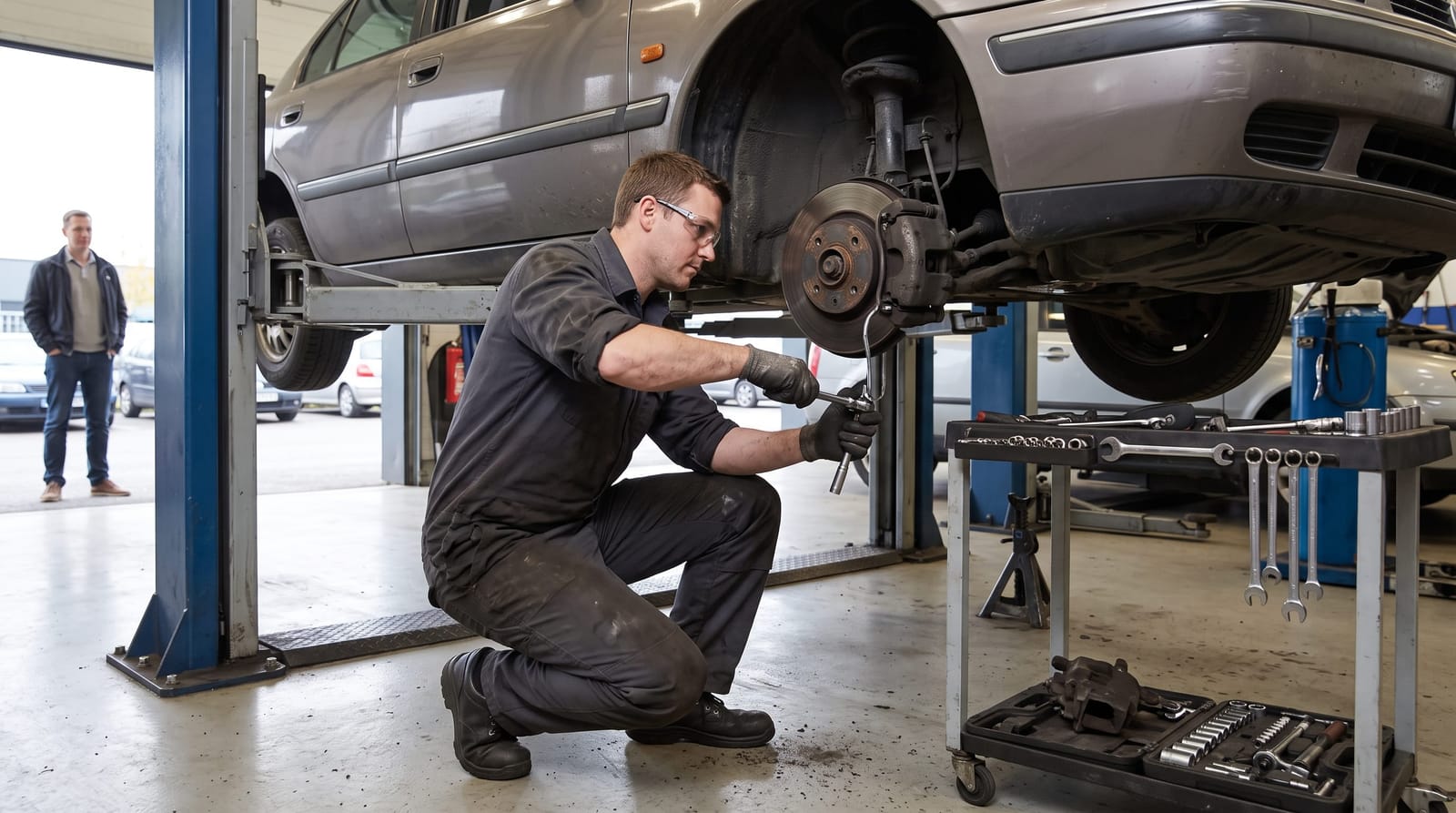
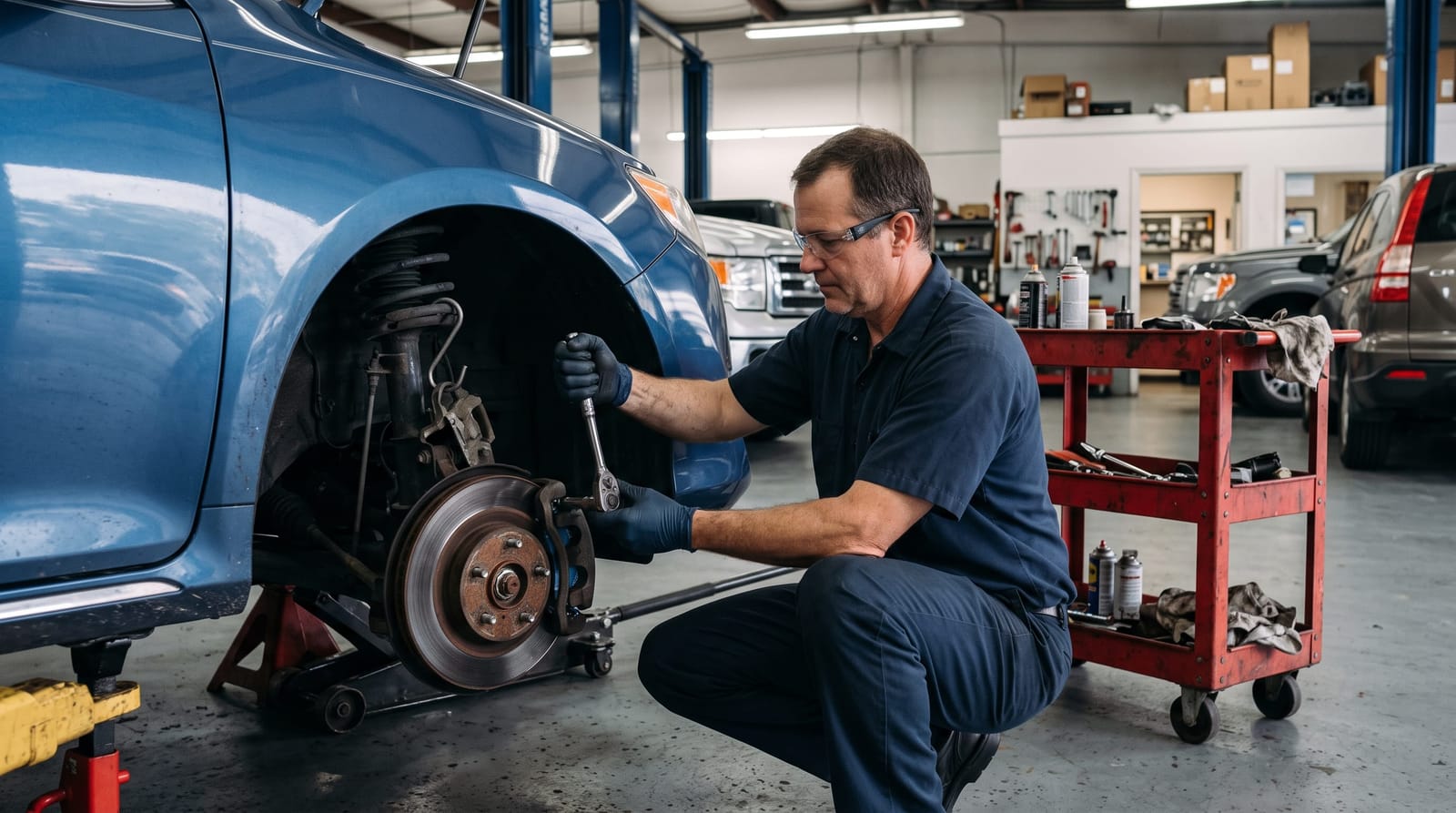
In a disc-brake system, the brake caliper holds the pads and presses them against the rotor when the brakes are applied. That friction slows rotation and produces heat. The pads gradually lose material through normal use, and the rotor’s working surfaces also wear over time.
Because these parts work together, their condition affects each other. A deeply grooved rotor does not give a new pad the same contact surface as a rotor in good condition. Likewise, pads worn down to their metal backing plates can damage a rotor that might otherwise have remained usable.
Uneven wear can point to another problem
A brake inspection involves more than checking the easiest-to-see pad. Inner and outer pads can wear differently, and one wheel’s brakes may show substantially more wear than the other side.
Uneven wear can involve a caliper or related hardware that is not moving properly. Replacing the worn parts without addressing the cause can allow that wear pattern to return. A useful estimate explains both the replacement parts needed and any underlying problem found.
Replacement Timing: Mileage vs. Measured Condition
Brake pad life depends on use, not just mileage
Frequent stops, vehicle load, driving habits, and pad material all affect wear. Two similar cars with the same mileage can have different amounts of pad material remaining. Regular stop-and-go trips around Jacksonville, for example, can involve more brake applications than comparable mileage driven steadily on open roads.
The more useful information is the measured pad thickness, how it compares with the vehicle’s service limit, and whether wear is even. Mileage provides context; inspection shows the current condition.
Rotor replacement depends on thickness and damage
There is no single rotor mileage limit that applies to every car. A rotor may remain usable through another set of pads, or it may need replacement at the same time as the pads.
A technician compares rotor measurements with the manufacturer’s specifications and checks for damage. Relevant findings include excessive thinning, deep grooves, cracks, significant corrosion on the braking surface, and unevenness associated with braking vibration.
A rotor can look acceptable through the wheel and still need closer examination. Quiet braking also does not tell you whether a rotor has enough thickness remaining.
Brake Symptoms: What They Can and Cannot Tell You
Squealing and grinding can involve worn pads
Some pads have a wear indicator designed to make noise as the friction material becomes thin. However, squealing can also involve surface conditions, hardware, or other causes. Inspection determines whether the pads need replacement, rather than the sound alone.
Grinding can occur when pad friction material has worn away and the backing plate contacts the rotor. Other problems can also cause scraping or grinding, so describing when the sound occurs helps narrow the inspection.
Useful details include whether the noise happens only during braking, appears mainly on the first stop, or continues while the vehicle is moving without brake pressure. Our overview of warning signs that may call for brake repair in Jacksonville covers other changes worth discussing during an inspection.
Pulsation and vibration may involve the rotors
A pulsing brake pedal or steering-wheel vibration during braking can involve variations in rotor thickness or an uneven braking surface. Uneven deposits of pad material on the rotor can also contribute. Drivers often describe these symptoms as a “warped rotor,” but that label does not explain every case.
Changes such as pulling during braking or an unusual pedal feel may involve other brake-system components. They are not reliable ways to distinguish pad replacement from rotor replacement on their own.
Pad-Only Replacement vs. Pads and Rotors Together
When replacing only the pads makes sense
A pad-only repair may be appropriate when inspection confirms that the rotors meet the vehicle’s requirements and have suitable braking surfaces. The decision also depends on the manufacturer’s service guidance and whether another fault is causing abnormal wear.
For example, a vehicle with evenly worn pads near their service limit may have rotors that remain within specifications and show no damage requiring correction. In that situation, replacing the pads without replacing the rotors can be a reasonable repair.
When replacing both is appropriate
Replacing pads and rotors together may be appropriate when the pads are worn and the rotors are too thin, deeply damaged, or otherwise unsuitable for continued use. New pads cannot restore missing rotor thickness or remove deep grooves.
If an inspection finds a pad worn down to its backing plate and a deeply scored rotor, a pad-only repair would leave the damaged disc in place. A recommendation for both components addresses the condition of both contact surfaces.
For a closer look at this decision, see whether rotors need replacing with brake pads every time. The key distinction is between replacing rotors because inspection supports it and replacing them simply because the pads are due.
Where rotor resurfacing fits
Resurfacing removes a small amount of metal to restore the rotor’s braking surface. It is not suitable for every rotor or every type of damage. Enough thickness needs to remain afterward to meet the applicable specifications.
Rotor condition, manufacturer guidance, and the labor involved affect whether resurfacing is a practical alternative to replacement. A transparent estimate explains which options apply, rather than treating resurfacing as always better or cheaper.
Why Delaying Pad Replacement Can Expand the Repair
The friction material keeps the pad’s metal backing plate from contacting the rotor during normal operation. Once that material wears away, metal-to-metal contact can score the rotor. That can turn a potential pad replacement into a repair involving both pads and rotors.
However, worn-out pads are not the only reason rotors need replacement. Normal wear and surface damage can make new rotors necessary even when the pads receive timely attention. A recommendation for rotor replacement does not, by itself, mean maintenance was neglected.
Questions That Make a Brake Estimate Clearer
A useful brake-repair conversation connects each recommended part to an inspection finding. These questions help clarify the work:
- What are the remaining pad thicknesses, and is wear even?
- How do the rotor measurements compare with the manufacturer’s limits?
- What damage or condition makes rotor replacement necessary?
- Is resurfacing an appropriate option for this vehicle?
- Did the inspection identify a caliper or hardware problem?
- What parts and labor are included in the estimate?
- How will any additional work be explained and approved?
- What is the expected completion time, and could parts availability affect it?
If uneven wear is part of the explanation, our guide to signs of a bad brake caliper provides related detail. Understanding the cause helps distinguish routine replacement of worn parts from a repair that needs additional work.
We focus on honest explanations, quick turnaround, and dependable service at our Jacksonville shop. The time needed for a brake repair depends on the findings and parts involved, so a clear estimate covers the work as well as the expected timing.
The Bottom Line: Replace Based on Condition
Pads generally wear faster, while rotor replacement depends on measured thickness and surface condition. Both may need replacement together, but neither mileage nor a single noise tells the whole story. A sound recommendation explains what is worn, how it was assessed, and why the proposed repair addresses it.