Brake Repair and Replacement in Jacksonville, FL: Everything You Need to Know
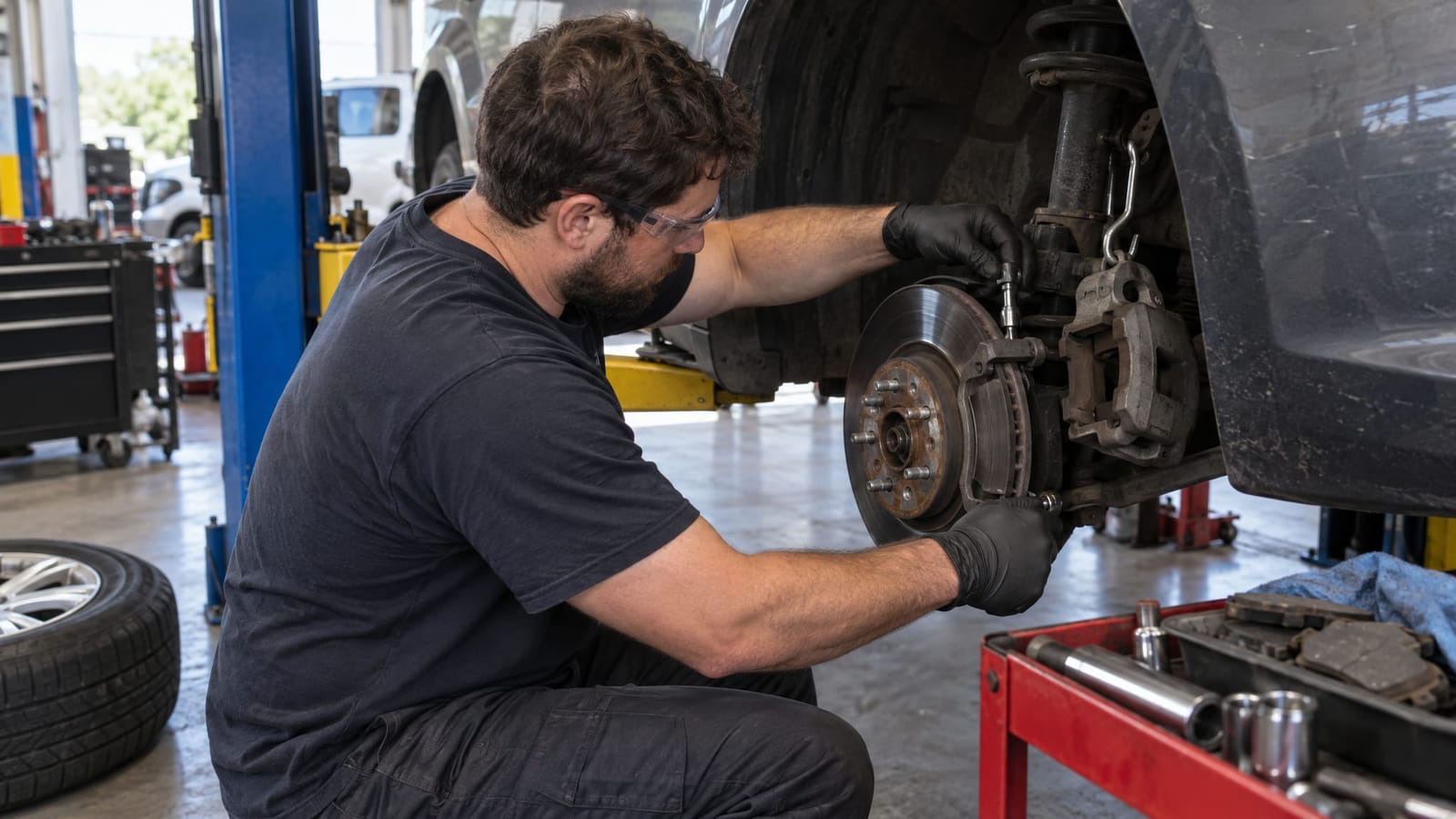
Brake repair starts with finding the cause of the problem, not automatically replacing every brake part. A squeal may come from worn pads, vibration may involve the rotors, and a soft pedal can point to a different issue entirely. An inspection separates normal wear from problems that need additional repair.
For drivers comparing brake repair in Jacksonville, FL, the most useful information is straightforward: what needs attention, what evidence supports the repair, what the estimate includes, and how long the work is expected to take.
This guide explains the main brake components, common warning signs, the inspection process, and the factors behind repair costs. It also covers how to evaluate a recommendation without paying for parts your vehicle does not need.
What Parts of the Brake System May Need Repair?
Your brakes use friction to slow the vehicle. Pressing the pedal sends force through brake fluid to the braking components at the wheels. Several parts work together, but they do not all wear out at the same rate.
- Brake pads: These press against the rotors to slow the wheels. Their friction material wears down through normal use.
- Brake rotors: These metal discs turn with the wheels. Their thickness and surface condition help determine whether they can remain in service.
- Brake calipers: These hold the pads and apply pressure to them. A sticking caliper can cause uneven wear or keep a brake from releasing properly.
- Brake fluid: This transfers pressure from the pedal through the hydraulic system. The correct fluid type and its condition matter.
- Brake hoses and lines: These carry fluid between components. Inspection checks for leaks, damage, and deterioration.
- Brake shoes and drums: Some vehicles use drum brakes, often at the rear. Shoes press outward against the inside of a drum rather than squeezing a rotor.
- Anti-lock braking system, or ABS: This system helps manage wheel lockup during braking. An ABS warning requires diagnosis rather than an assumption that the pads need replacement.
The parking brake is another part of the system. Depending on the vehicle, it may use cables, separate brake components, or an electronic mechanism. That difference can affect the service procedure.
Brake Warning Signs and What They Can Mean
A symptom helps direct an inspection, but it rarely identifies the failed part by itself. Noting when the problem happens is often more useful than trying to name the repair.
Squealing, scraping, or grinding
Some brake pads have a wear indicator that makes noise as the friction material becomes thin. Squealing can also involve vibration, hardware, or surface conditions. A recurring sound deserves a closer look, even if the vehicle still seems to stop normally.
Grinding or heavy scraping can involve worn friction material or contact between components that normally remain separated. The inspection needs to identify the source and check whether other parts have been affected.
Helpful details include whether the noise happens on the first stop, continues after the brakes warm up, or comes from one side.
Vibration when braking
A steering wheel shake or pedal pulsation during ordinary braking can involve variations in a rotor's surface or thickness. Tires, wheels, and suspension components can also contribute to vibration, so replacing rotors based only on how the vehicle feels can miss the cause.
There is also a difference between vibration during routine stops and the pedal pulsing that can occur when ABS activates during hard braking. Describing the driving conditions helps distinguish them.
Pulling to one side
A vehicle that pulls mainly while braking may have uneven braking force. Possible causes include a sticking caliper, a hose problem, or contamination on a friction surface.
A pull that is present even when the brakes are not applied may involve tire pressure, alignment, or another issue. That distinction helps focus the diagnosis.
A soft, sinking, or unusually hard pedal
A pedal that feels spongy, travels farther than usual, sinks under steady pressure, or takes noticeably more effort can involve the hydraulic system or power assistance. New brake pads do not automatically correct these conditions.
Because changes in stopping ability affect vehicle control, a sinking pedal, markedly reduced braking, or a suspected brake-fluid leak needs a vehicle-specific assessment by our repair team. If the vehicle is not braking normally, towing avoids relying on the affected brakes during the trip.
Brake or ABS warning lights
A brake warning light can have different meanings, including an engaged parking brake or a system problem. An ABS light points to the anti-lock system rather than directly measuring pad wear. The owner's manual identifies the symbols used in your vehicle.
Checking the warning and diagnosing its cause is more useful than replacing parts based on the light alone.
What Happens During a Brake Inspection?
A useful inspection connects the driver's concern with the condition of the vehicle. It also distinguishes worn parts from the problem that caused them to wear.
-
Review the symptoms and service history. The starting point is when the problem occurs, whether it changed suddenly, and what brake work has been done before. A noise after recent service may call for a different investigation than gradual wear over time.
-
Check pedal feel and warning indicators. These observations help determine whether the concern involves friction parts, hydraulic pressure, power assistance, or electronic controls.
-
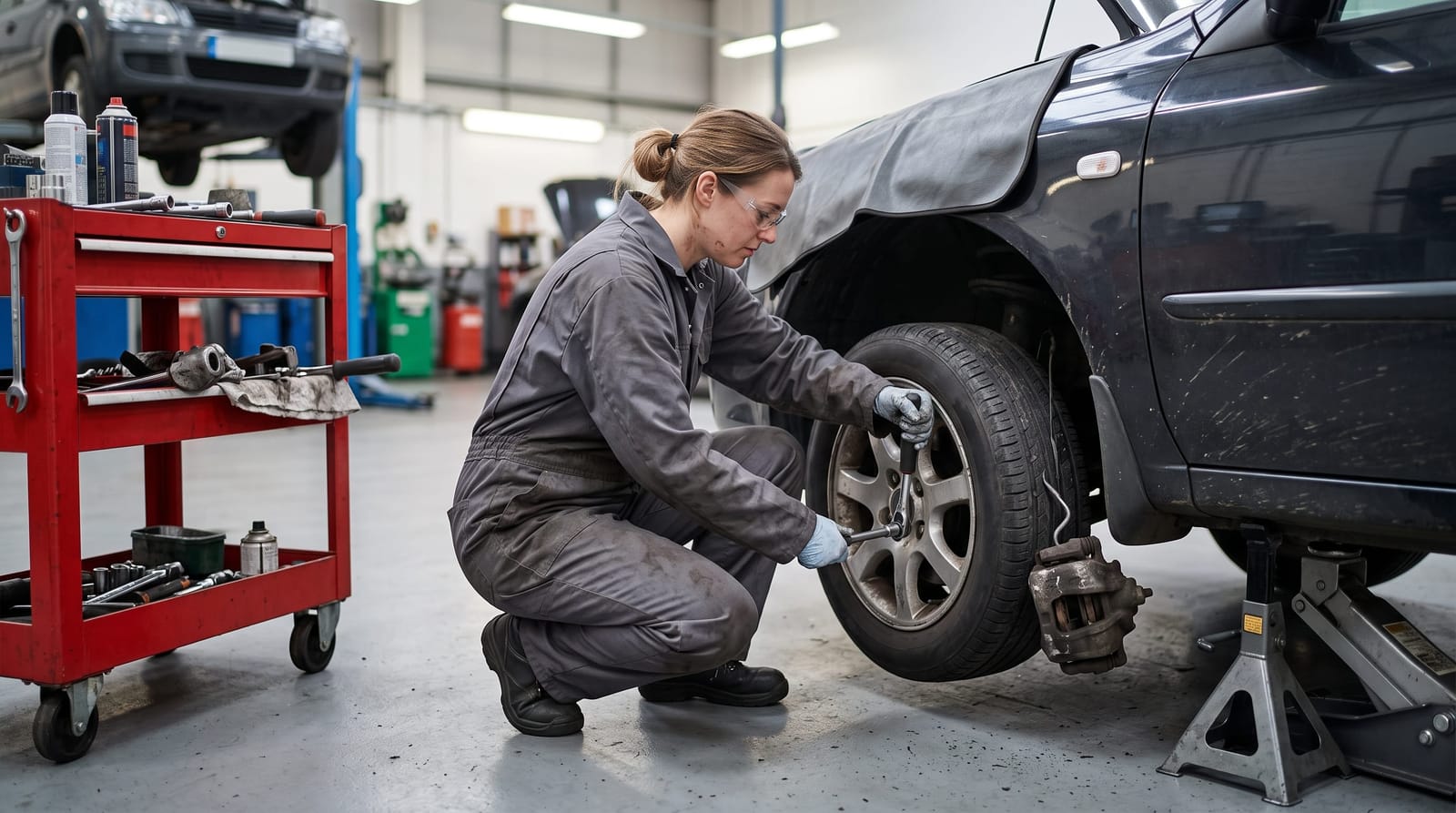
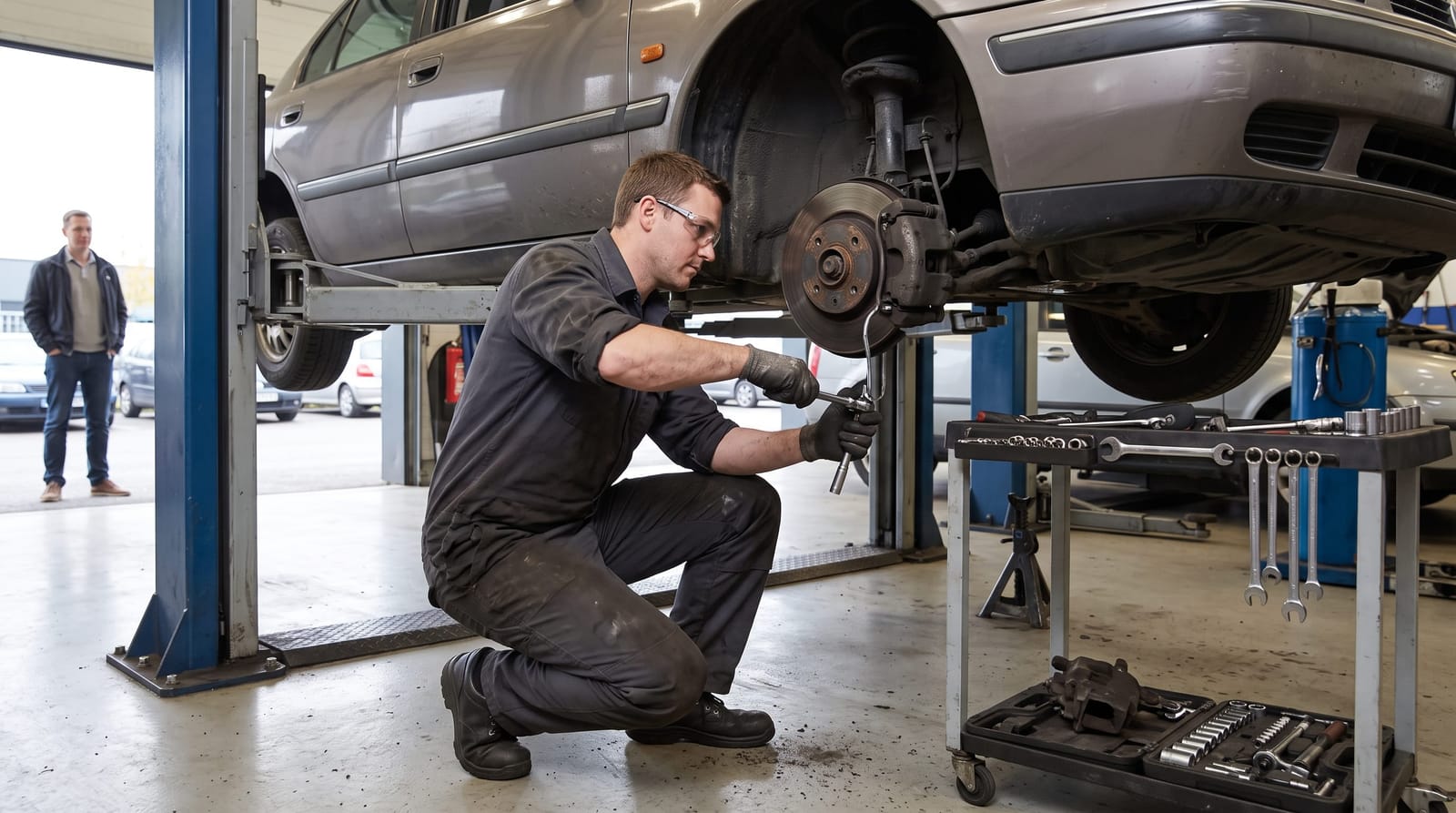
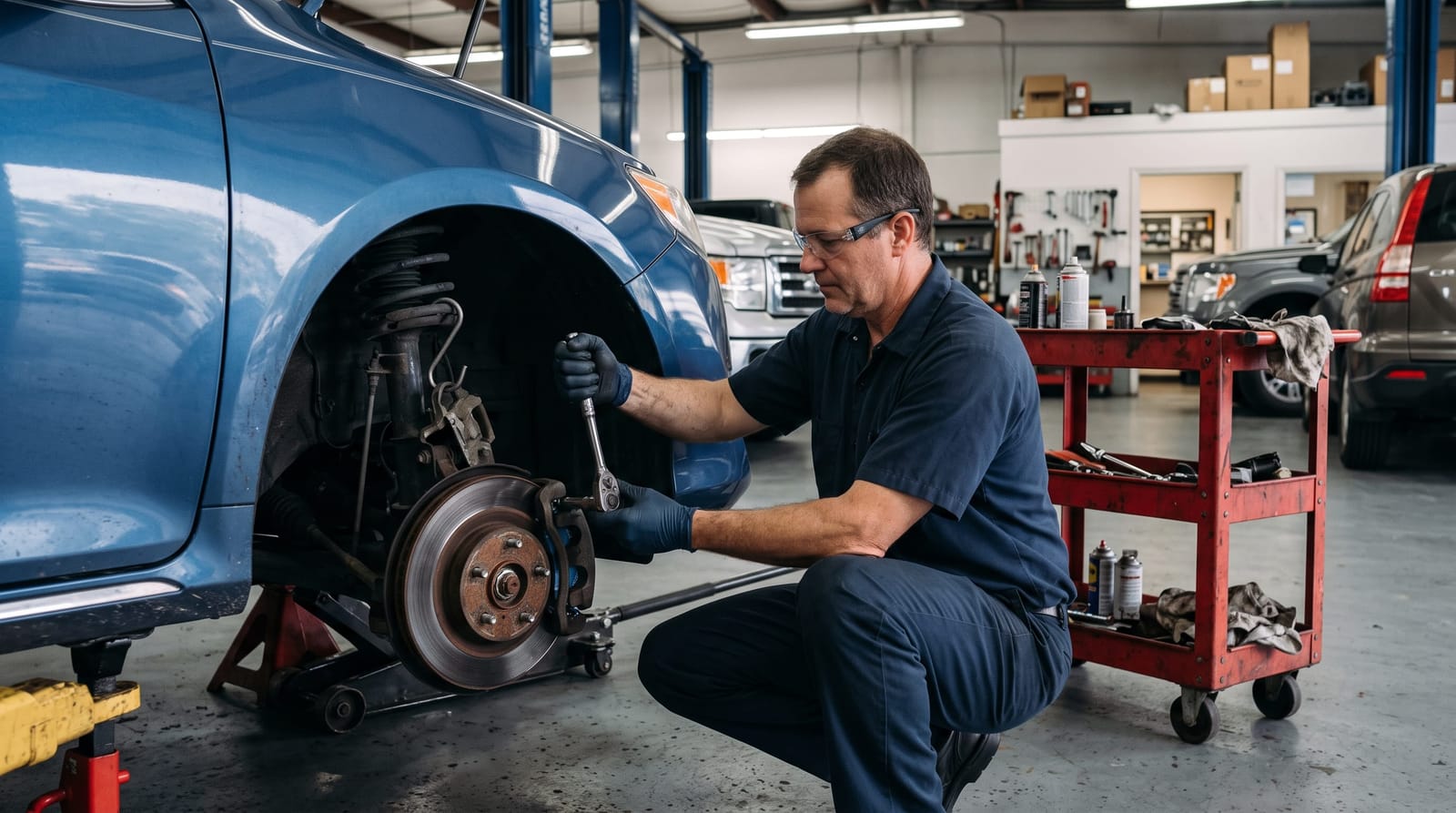
Inspect the pads, rotors, or drum brakes. This includes checking remaining friction material, comparing wear across the axle, and looking for damage or contamination. Rotor measurements are compared with the vehicle's service limits.
-
Check calipers, hardware, hoses, and visible lines. Pads need to move and release correctly. A sticking component can make a new set wear unevenly if the underlying problem remains.
-
Evaluate fluid and hydraulic concerns. Fluid level, visible leaks, maintenance history, and the reported pedal symptoms help guide further checks.
-
Explain the findings and repair scope. The recommendation should connect each proposed repair to an observation, measurement, maintenance requirement, or diagnostic finding.
Scanning for fault codes may be part of an ABS investigation, but a code does not automatically identify a part that needs replacement. Additional testing can be necessary to distinguish a sensor problem from wiring or another cause.
An inspection is most useful when its explanation separates work needed to address the current concern from maintenance that can be planned separately.
How the Inspection Determines the Right Repair
When replacing brake pads may be enough
Pad replacement may be appropriate when the pads are worn, the rotors remain within service requirements, and the calipers and hardware work correctly. This is different from assuming that every brake noise needs a complete replacement package.
Pads are generally replaced as an axle set so the left and right sides have matching friction components. Replacing only the most visibly worn pad leaves the rest of the system's condition unresolved.
Front and rear brakes do not necessarily need replacement together. Their condition, rather than a rule that all four wheels need the same work, determines the recommendation.
When rotors need additional attention
Rotors need evaluation for thickness, damage, and surface condition. Depending on the vehicle and the findings, a rotor may remain in service, qualify for resurfacing, or need replacement.
Resurfacing removes material to restore a suitable working surface. It is only an option when permitted by the vehicle's requirements and when enough material will remain afterward. Replacement is appropriate when a rotor cannot meet those requirements or has damage that resurfacing will not correct.
A visible groove alone does not explain the full condition of a rotor. Measurements and the nature of the damage provide a stronger basis for the decision.
When a caliper or related component needs repair
Calipers are not routine replacements with every set of pads. A recommendation to replace one needs a reason, such as leakage, sticking, damage, or failure to apply and release correctly.
For example, if one pad is much thinner than its partner, the important question is why. Replacing the pads without addressing restricted movement may leave the cause of the uneven wear in place.
Hoses and hardware can also affect how a brake operates. Identifying the actual restriction or failure avoids treating every uneven-wear problem as a failed caliper.
When brake fluid service is appropriate
Brake fluid service is separate from pad and rotor replacement. Maintenance requirements vary by vehicle, so the owner's manual and vehicle-specific service information are the starting points.
Many commonly used brake fluids absorb moisture over time, which can affect fluid performance and contribute to internal corrosion. Fluid condition and maintenance history help determine whether an exchange is appropriate.
Two terms often appear on estimates:
- Bleeding: Removing trapped air from the hydraulic system, including after repairs that open it.
- Fluid exchange or flush: Replacing old fluid with the correct fresh fluid through the system.
These procedures have different purposes. A fluid exchange does not replace worn pads, and bleeding alone does not repair a leak.
Understanding Brake Repair Costs in Jacksonville
Brake repair costs depend on the vehicle, the affected axle, the parts required, and the labor involved. A price for pads alone is not directly comparable with an estimate that includes rotors, hardware, and hydraulic repairs.
The clearest way to compare estimates is to compare the same work. Each quote needs to identify whether it covers the front brakes, rear brakes, or both.
| Estimate item | What it covers | What changes the cost |
|---|---|---|
| Brake pads or shoes | Replacement friction material and installation labor | Vehicle application, part selection, hardware needs, and brake design |
| Rotors or drums | Replacement or eligible resurfacing | Measurements, damage, part size, and whether resurfacing is appropriate |
| Calipers | Replacement of a failed component and related labor | Which component failed, vehicle design, and associated hydraulic work |
| Brake fluid service | Fluid replacement, bleeding, or both, as specified | Required fluid type and the procedure needed for the repair or maintenance |
| Hoses, lines, or hardware | Correction of a specific leak, restriction, or movement problem | Location, access, damage, and the extent of the repair |
| Diagnosis | Investigation of the reported concern | Whether the issue requires mechanical checks, electronic testing, or additional troubleshooting |
What a written estimate can clarify
- The axle and components being serviced.
- The type or brand of replacement parts.
- Whether rotors are being retained, resurfaced, or replaced.
- Parts, labor, diagnostic charges, and applicable fees.
- Whether fluid service is maintenance or necessary for the repair.
- Warranty coverage and its written terms.
- How additional work will be presented for approval.
Consider two estimates for the same complaint: one includes pads only, while the other includes pads and rotors. The difference in totals does not establish which recommendation is better. Rotor measurements and condition explain whether the added work is justified.
When part options are available, the useful comparison is suitability for the vehicle and everyday driving, along with warranty coverage and expected noise characteristics. A more expensive option is not automatically the right choice for every driver.
How Long Does Brake Repair Take?
The repair scope matters more than the general label “brake job.” Straightforward pad and rotor replacement involves different work from tracing an ABS warning, repairing a fluid leak, or dealing with seized hardware.
Scheduling also includes more than installation time:
- Diagnosis: Identifying the cause before selecting parts.
- Parts sourcing: Obtaining components that match the vehicle.
- Repair access: Working around damaged, corroded, or stuck components.
- Vehicle-specific procedures: Completing electronic parking brake or hydraulic service steps where required.
- Final checks: Confirming pedal feel, checking for leaks, and evaluating operation.
For a vehicle needed for commuting, school trips, or business use, it helps to distinguish the expected inspection time from the expected repair completion time. An estimate given after diagnosis is more meaningful than a blanket promise made before the vehicle is examined.
At Jordan Auto Repairs and Tires Plus LLC, we focus on efficient work and dependable service. Quick turnaround matters, but it does not replace identifying the problem and completing the necessary checks.
How to Evaluate an Honest Local Brake Shop
A clear explanation makes a brake recommendation easier to evaluate. The discussion does not need to be technical, but it needs to connect the proposed work to the vehicle's condition.
Look for evidence behind the recommendation
Useful explanations sound like “the rotor is below its service limit” or “this caliper is not releasing correctly.” A general statement that the brakes are old does not explain which parts need replacement.
Measurements, visible wear, damaged components, and diagnostic findings give the recommendation a concrete basis. If several repairs are proposed, each one can be explained separately.
Separate the current repair from other maintenance
A brake inspection may identify more than one concern. A helpful estimate distinguishes the work related to the reported problem from other maintenance items.
For example, replacing worn pads and correcting a sticking caliper belong to the same repair discussion. An unrelated oil change is a separate maintenance decision. Keeping those items distinct makes the total easier to understand.
Review communication and warranty coverage
Useful questions include:
- What finding supports each replacement?
- Can any of the existing components remain in service?
- Does the estimate address the cause of the uneven wear or noise?
- What happens if additional damage becomes visible during disassembly?
- What parts and labor are covered by the warranty?
We have been in business for 20 years and provide brake repair and replacement here in Jacksonville. Our focus is quality work, honest service, and clear explanations. Our work includes a one-year warranty, with two-year coverage on labor. The written coverage details belong alongside the estimate when evaluating a repair.
We also offer a free diagnostic when you approve the repair in our shop. If you choose not to have the repair performed here, a diagnostic fee applies and we provide a printed repair statement.
Practical Brake Maintenance Between Repairs
Brake maintenance is easier to plan when it follows the vehicle's requirements and actual condition rather than a universal replacement interval. Stop-and-go driving, carrying loads, towing, and driving habits can affect wear.
A few useful habits support that approach:
- Keep service records. Knowing which axle received new parts and when fluid service was completed helps make future recommendations more precise.
- Follow vehicle-specific maintenance information. Brake fluid requirements and inspection schedules can differ between models.
- Track changes. A short note about noise, vibration, pedal feel, and driving conditions gives the technician a better starting point.
- Avoid unnecessary brake use. Repeated hard stops and resting a foot on the brake pedal add heat and wear.
- Include operating conditions in the discussion. Regular towing or carrying heavy loads provides useful context for inspection and part selection.
Maintenance does not mean replacing everything early. It means monitoring wear and addressing the right issue before it leads to a larger repair.
A Closer Look at Five Common Brake Topics
Some brake questions benefit from more detail than a general repair estimate provides. These five topics help explain the distinctions behind common recommendations.
-
Brake noises and warning signs: Timing matters. A brief sound after a damp night can involve light surface rust, while a noise that continues through ordinary driving calls for a different investigation. Recording whether the sound disappears, worsens, or changes with pedal pressure helps narrow the possibilities.
-
Brake inspections and uneven wear: The visible outer pad does not always represent the condition of the inner pad. A more complete inspection compares the friction material on both sides of the rotor, which helps explain why a quick glance through the wheel may miss a problem.
-
Brake pad and rotor replacement: New friction components may have a specific break-in procedure. The appropriate process depends on the installed parts and vehicle, so the service instructions matter more than a generic driving routine.
-
Brake fluid and hydraulic repairs: Adding fluid is not the same as identifying why the level changed. Fluid level can change as pads wear, while a leak requires repair. Understanding that distinction helps avoid treating the reservoir level as the whole diagnosis.
-
Brake costs, timing, and related services: Wheel alignment and wheel balancing are not automatic requirements with brake replacement. They address different conditions. If either appears on the estimate, its purpose can be explained separately rather than treated as part of every brake job.
A Clear Brake Repair Decision Starts With the Findings
The right brake repair addresses the cause of the concern, keeps serviceable parts in use where appropriate, and explains the cost before work begins. Symptoms guide the inspection; measurements and testing support the recommendation.
For Jacksonville drivers, the most useful result is a clear understanding of what needs repair, why it matters, what the estimate includes, and how the work is covered. That clarity makes it easier to distinguish necessary repairs from separate maintenance and plan around the time the vehicle will be in the shop.