Can Extreme Heat Kill a Car Battery?
Yes. Extreme heat can shorten a car battery’s life by speeding up internal corrosion and water loss. For long-term battery deterioration, sustained heat is often more damaging than ordinary cold weather. Cold tends to make an already weakened battery struggle to start the engine.
That distinction matters in Jacksonville, where hot weather and heat under the hood put added stress on batteries. But replacing every battery at exactly three years is not the only sensible approach. Battery age, test results, starting performance, and driving habits give a clearer picture of when replacement makes sense.
What heat does inside a car battery
Most everyday gasoline vehicles use a lead-acid starting battery. Inside, lead plates and a chemical solution work together to store and deliver electricity. Heat speeds up the chemical reactions, including reactions that gradually wear the battery out.
Two important effects are:
- Faster internal corrosion: Heat accelerates corrosion of the internal metal structures that support the battery’s operation. As these deteriorate, the battery loses its ability to deliver dependable starting power.
- Increased water loss: In conventional flooded batteries, high temperatures increase water loss from the internal fluid. Losing too much water interferes with normal operation and contributes to permanent damage.
This internal corrosion is different from the crusty buildup sometimes visible around battery terminals. Cleaning a terminal connection does not reverse damage inside the battery.
A “maintenance-free” label does not mean heat-proof, either. It generally means the battery is not designed for routine water checks or refilling.
Why cold weather gets blamed for damage heat helped cause
Cold weather slows battery chemistry, reducing the power available for starting. At the same time, a cold engine takes more effort to turn over. That combination can expose weakness that developed during warmer months.
Heat creates a different problem: it accelerates deterioration even while the battery still seems to start the car normally. Heat from the engine adds to the surrounding outdoor temperature.
That is why a battery can appear fine through hot weather and struggle when temperatures drop. The morning it fails is not necessarily when the damage began.
Does a Jacksonville battery need replacement at three years?
Not automatically. Three years is an age to include in the conversation, not a universal expiration date. Battery construction, charging conditions, driving patterns, and heat exposure all affect its condition.
The more useful decision is whether testing supports continued use or planned replacement:
- Normal starting and a healthy test result: Continued monitoring may make more sense than replacement based only on age.
- Weak starting performance after proper charging: Replacement becomes more reasonable when testing shows the battery cannot deliver dependable starting power.
- Repeated discharge with otherwise acceptable battery performance: The charging system or an electrical drain may need attention instead of another battery.
For example, a three-year-old battery that repeatedly needs a jump-start deserves a different assessment from one of the same age that starts normally and tests well. Age provides context, but it does not identify the cause.
Proactive replacement means acting on declining condition before a breakdown, rather than waiting until the engine will not start. It does not have to mean replacing a healthy battery on a fixed birthday.
What a battery diagnostic can tell you
A battery can show enough voltage to power the dashboard yet lack the strength to start the engine. Lights coming on are not proof that the battery is healthy.
A useful assessment separates three questions:
- Is the battery charged? A discharged battery may need charging before its condition can be evaluated accurately.
- Can it deliver starting power? Battery testing evaluates more than its resting voltage.
- Is the vehicle charging and using electricity properly? Charging-system problems, poor connections, or an electrical drain can cause symptoms that resemble battery failure.
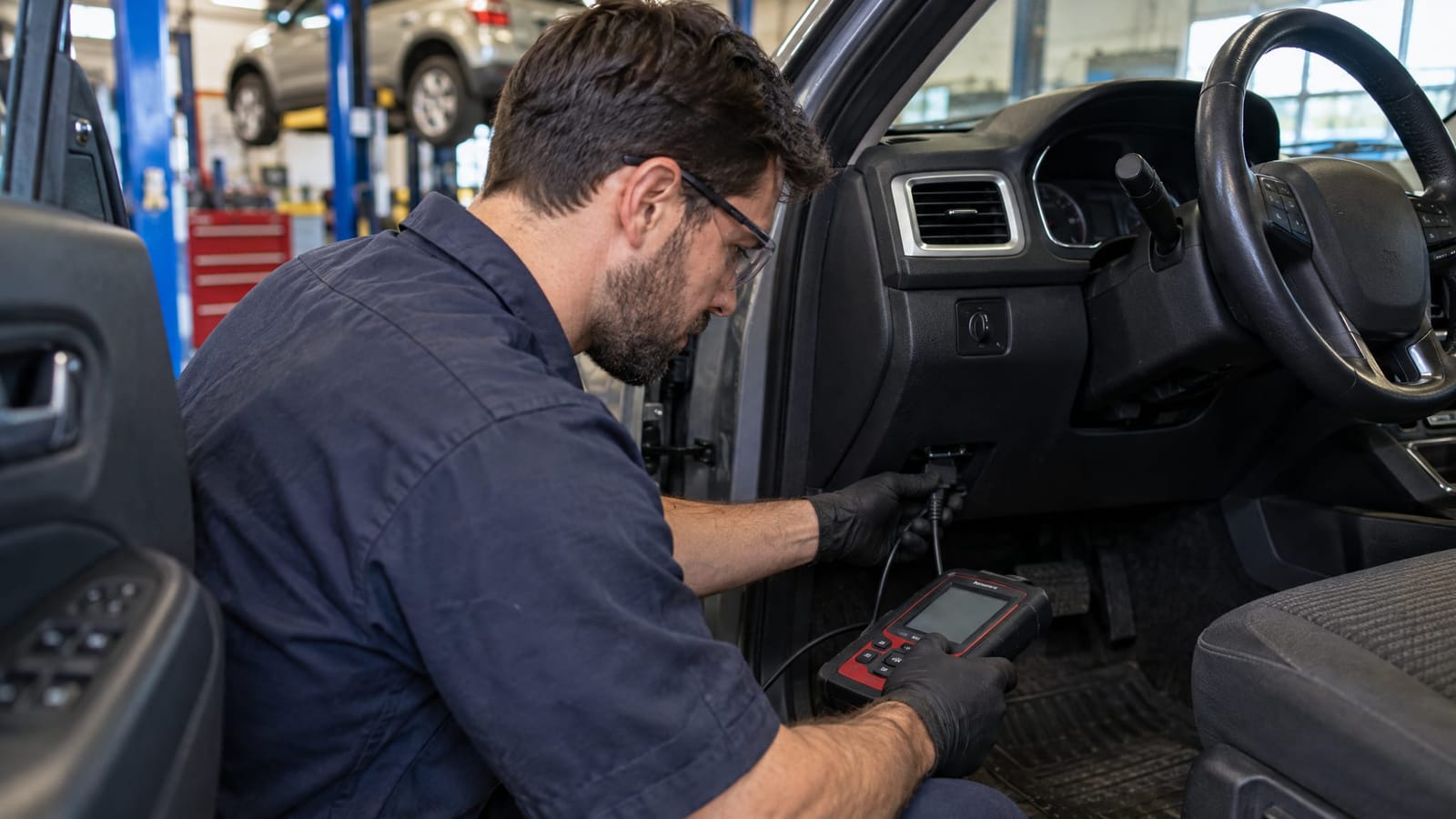
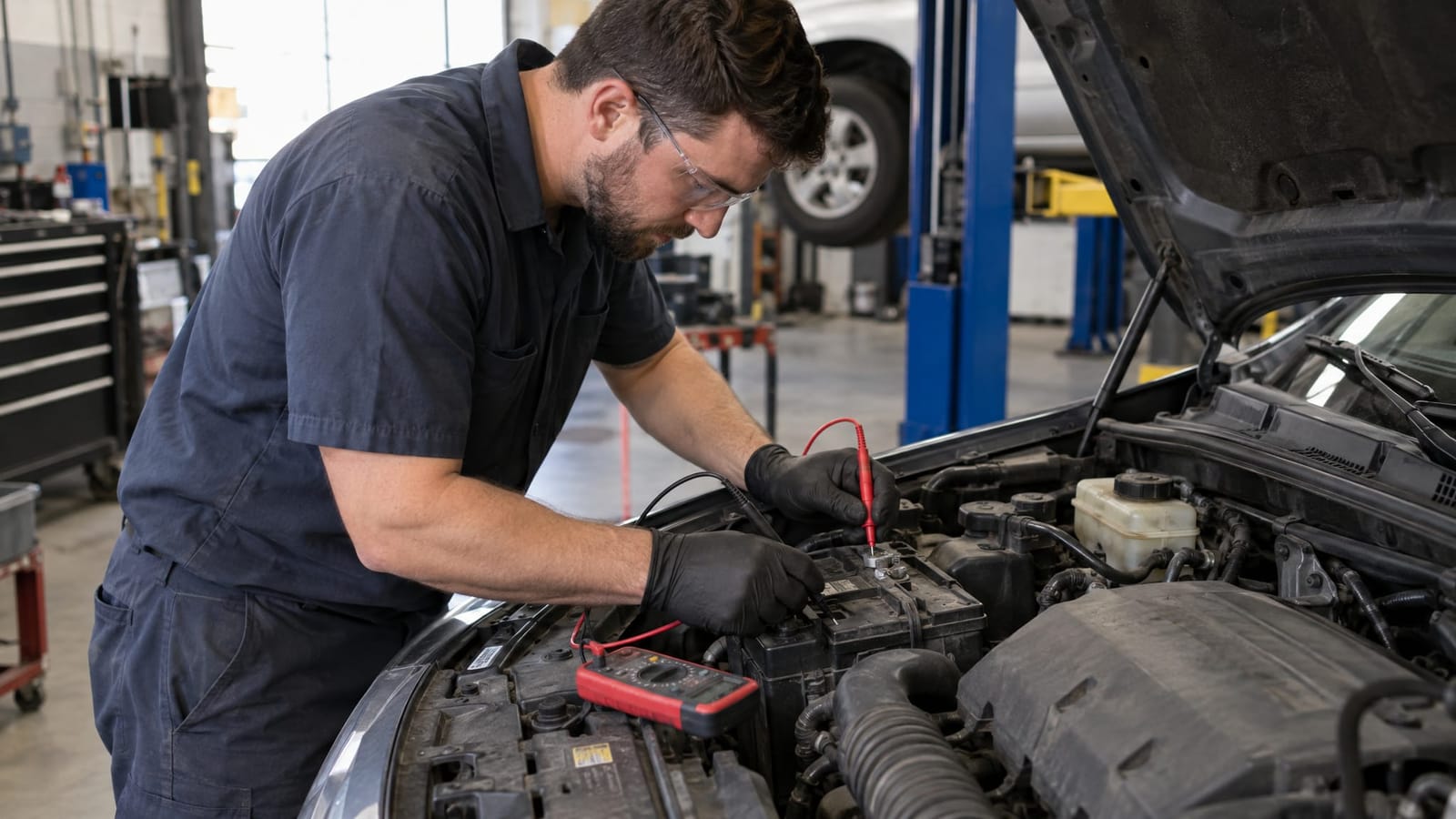
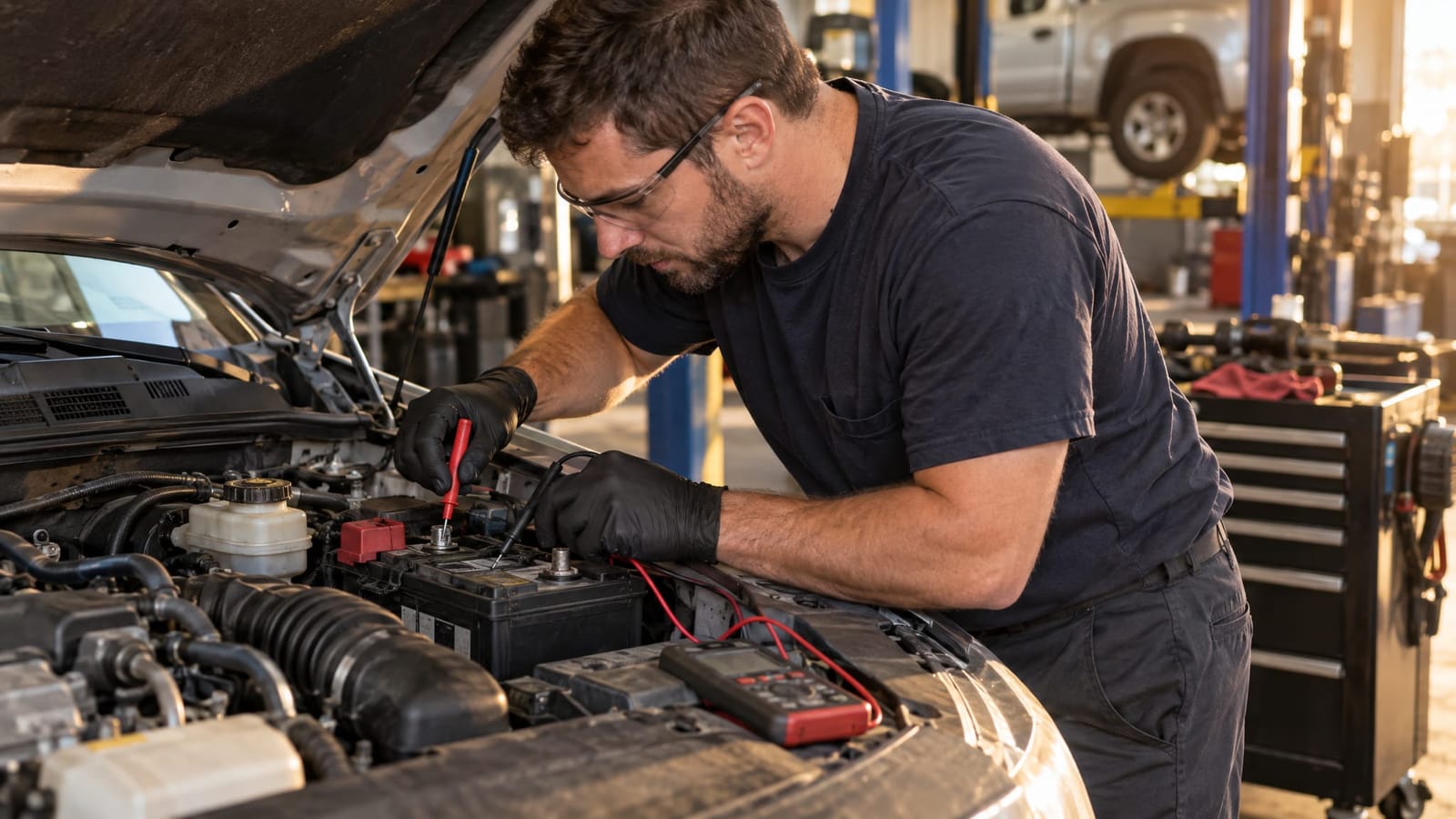
At Jordan Auto Repairs and Tires Plus LLC, we offer battery diagnostics and vehicle electrical system diagnostics in Jacksonville, with a focus on honest explanations and prompt, dependable service. Identifying the cause helps avoid replacing a battery while leaving the original problem in place.
Practical ways to reduce battery stress
No routine can eliminate Florida’s heat, but a few habits help keep other problems from adding to the strain:
- Keep track of battery age. Save the installation receipt or note the installation date. That gives useful context when starting behavior changes.
- Notice slower cranking. An engine that turns over more slowly than usual deserves attention, even if it eventually starts.
- Account for short trips. Repeated brief drives may not fully replace the energy used during starting, especially when electrical demand is high.
- Limit extended accessory use with the engine off. Radios, chargers, and other equipment draw from the battery when the charging system is not running.
- Follow the vehicle’s battery requirements. The correct battery type and fit matter, particularly in vehicles with automatic stop-start systems.
Parking in shade reduces direct sun exposure, but it does not eliminate high outdoor temperatures or engine heat.
Common questions about heat and car batteries
Can charging restore a heat-damaged battery?
Charging replenishes stored energy. It does not repair internal corrosion or restore damaged battery components. A battery that keeps losing starting power after charging needs an assessment of both its condition and the vehicle’s electrical system.
Are AGM batteries immune to Florida heat?
No. Absorbed glass mat, or AGM, batteries hold their internal fluid in absorbent material rather than as free-flowing liquid. They still experience heat-related aging. Replacement choice depends on the vehicle’s requirements, not simply a claim that one battery type handles every condition better.
Does the battery warning light mean heat killed the battery?
No. That light generally indicates a charging-system problem, not a diagnosis of battery condition. The battery, alternator, wiring, and connections may all be relevant to finding the cause.
The takeaway for Jacksonville drivers
Heat wears batteries down internally, while cold often exposes the resulting weakness. The practical response is to track battery age, notice changes in starting, and use testing to guide replacement. That supports a planned decision without treating every three-year-old battery as worn out.