Car Electrical Problems: Common Issues and Why You Need a Professional Diagnosis

A car that will not start, lights that flicker, or a window that stops working can all point to electrical trouble. But the symptom rarely identifies the failed part. A weak battery, damaged wire, loose connection, or faulty switch can produce similar complaints.
Professional electrical diagnosis means testing the affected system before choosing a repair. That approach can help avoid replacing working parts while leaving the actual fault behind. For Jacksonville drivers, noting whether trouble appears after rain, during a hot afternoon, or after several days parked can give the inspection a useful starting point.
First, separate an inconvenience from a safety concern
A single power window that stops responding presents a different concern from headlights cutting out or a vehicle losing power. Record which functions are affected and whether the problem happens with the engine running, during starting, or while parked.
Smoke, a burning electrical smell, loss of steering control, or a critical warning indicator calls for stopping safely and arranging roadside assistance rather than continuing to troubleshoot on the road. These conditions need a hands-on professional inspection, which our team can provide.
For less urgent concerns, the pattern matters. For example, lights flickering while driving may involve the charging system, a connection, or an individual lighting circuit. Flickering alone does not establish which repair is needed.
Six common causes of car electrical problems
1. Blown fuses
A fuse protects a circuit by breaking the connection when too much current flows through it. A blown fuse may explain why an accessory stopped working, but it does not explain what caused the overload.
If a fuse blows repeatedly, possible causes include damaged wiring or a component drawing excessive current. Diagnosis looks for that underlying fault rather than treating repeated fuse replacement as the repair.
2. Faulty relays
A relay is an electrically controlled switch that allows a control circuit to operate another component. Relays are used in systems such as cooling fans, horns, and starting circuits.
A relay fault can prevent a component from switching on or cause intermittent operation. However, missing power or a missing control signal can create the same symptom. Testing distinguishes a failed relay from a problem elsewhere in its circuit.
3. Parasitic battery drain
Some electrical activity continues after a vehicle is switched off. Memory functions, security systems, and other electronics normally use a small amount of power.
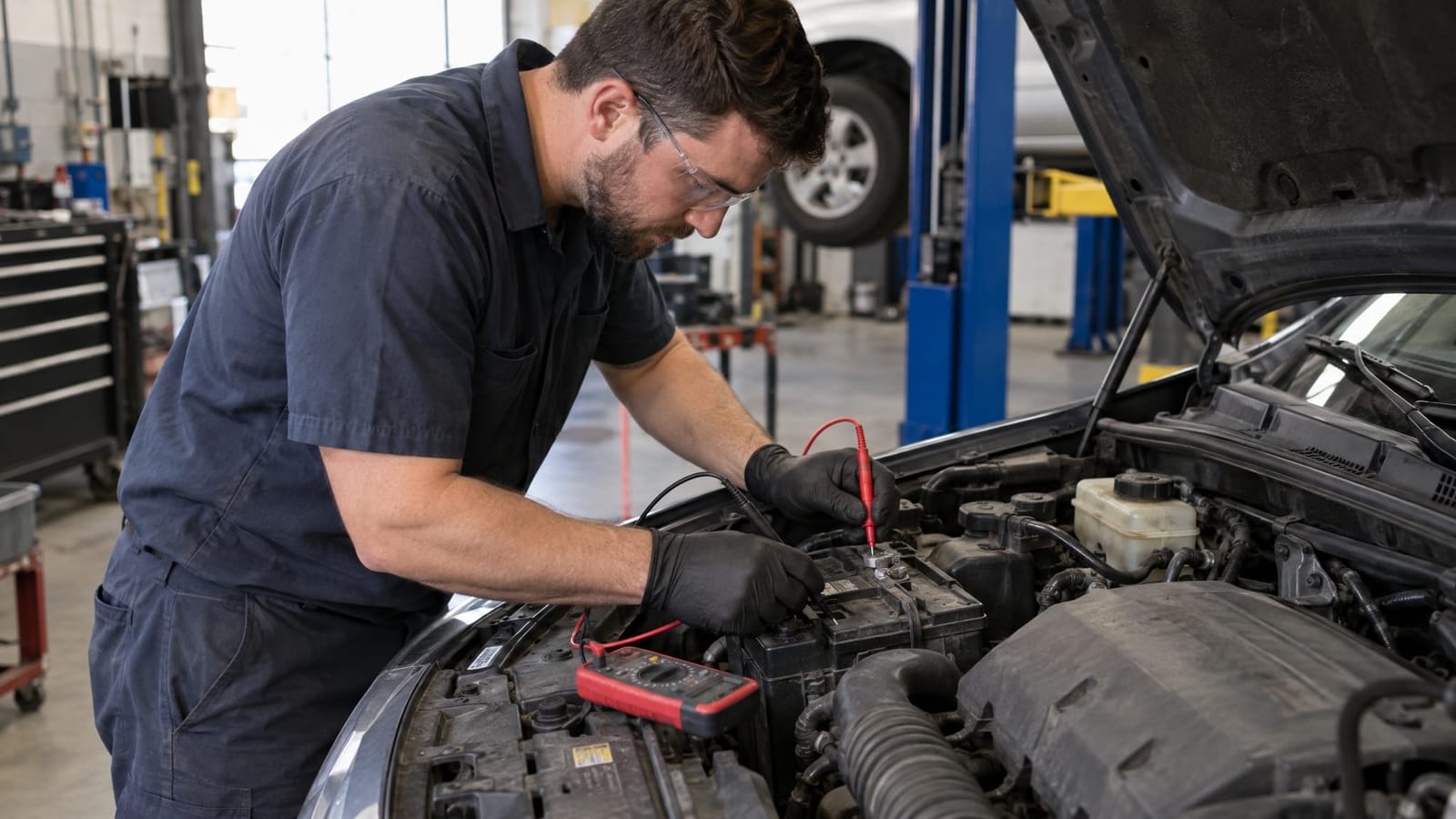
A parasitic drain occurs when excessive electrical use continues while the vehicle is parked. A light staying on, an accessory, or a control unit that does not settle into its resting state can contribute. Parasitic battery drain diagnosis involves measuring that parked electrical use and tracing it to the responsible circuit.
4. Corroded or loose grounds
Ground connections provide the return path for electrical current. Loose or corroded connections can restrict that path, causing weak, intermittent, or unusual operation.
Because several components may share a ground, one poor connection can affect more than one system. A connection can also look acceptable but perform poorly when carrying current. Testing it while the affected component operates helps reveal resistance that a visual inspection may miss.
5. Failing sensors
Sensors report conditions such as temperature, pressure, and position to the vehicle’s computers. Incorrect readings can affect performance or trigger a warning light.
However, a sensor-related trouble code does not automatically mean the sensor needs replacement. Its wiring, power supply, or connector may be responsible. The sensor may also be accurately reporting a problem with the system it monitors.
6. Wiring and connector problems
Wires can become damaged where they rub against other parts, bend repeatedly, or have been poorly repaired. Loose connectors and moisture intrusion can interrupt signals or power.
These faults may appear only with vibration, heat, or wet weather. A problem that follows heavy Jacksonville rainfall gives the inspection a clue, but it does not prove water intrusion. The affected wiring still needs to be traced and tested.
Why electrical faults are difficult to diagnose at home
Electrical problems often involve several parts working together. A starting complaint, for example, can involve the battery, cables, starter, controls, or charging system. Understanding the differences between a battery, alternator, and starter problem helps explain why replacing the most familiar part is not always the right answer.
Intermittent faults add another challenge. A connection may work while the vehicle is parked and fail when it gets hot or moves. A simple voltage reading taken while everything is switched off may miss a connection that fails under load.
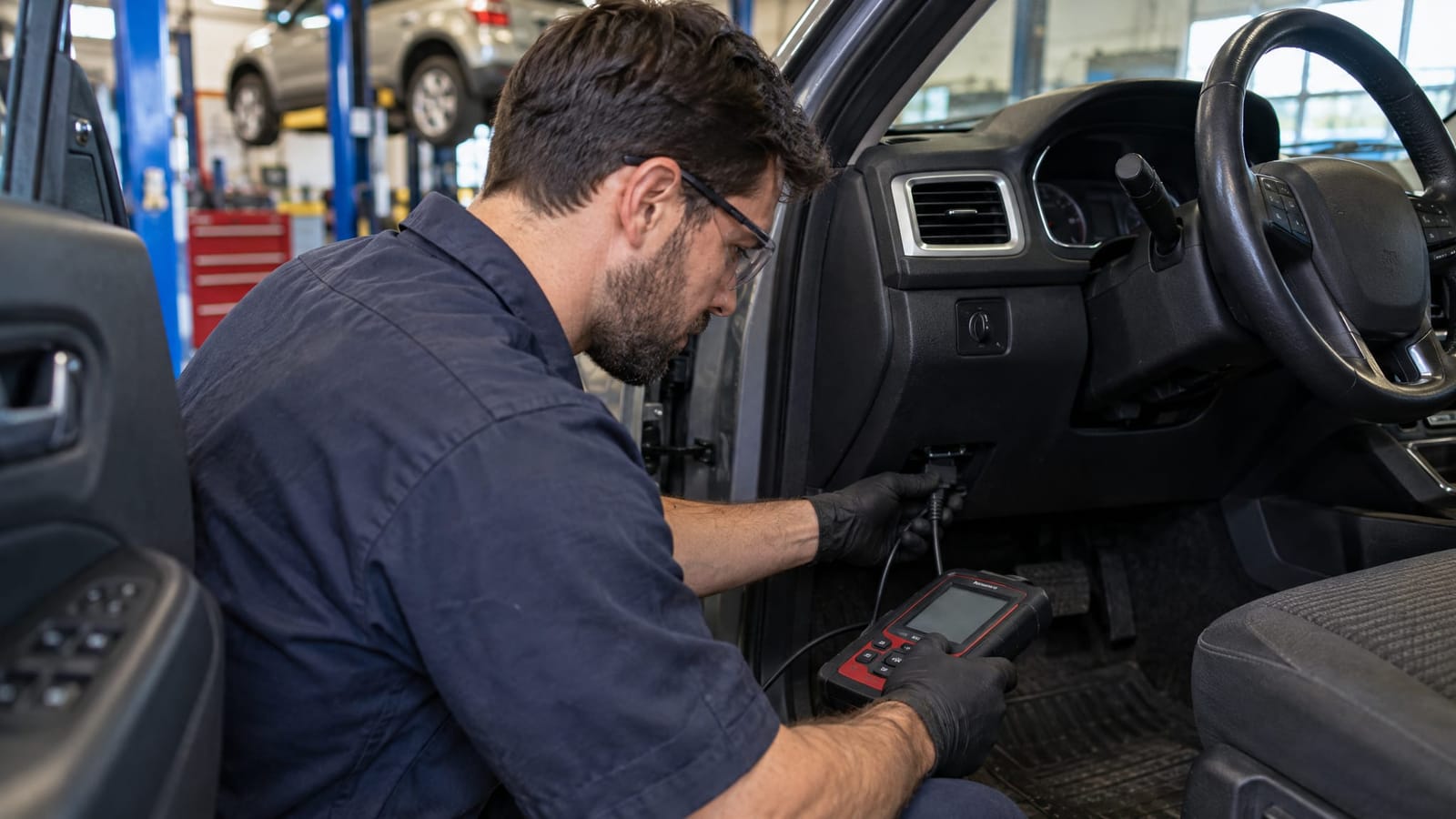
A basic code reader also has limits. It can provide useful clues, but it does not test every circuit or identify every electrical fault. Accurate diagnosis combines the symptom history, vehicle-specific wiring information, and measurements taken under the conditions that matter.
What a professional electrical diagnosis involves
The inspection depends on the vehicle’s make, model, year, equipment, and complaint. It is not one universal test. A typical diagnostic approach includes:
- Clarifying the complaint. The technician establishes what stops working, when it happens, and whether recent repairs or accessory installations might be relevant.
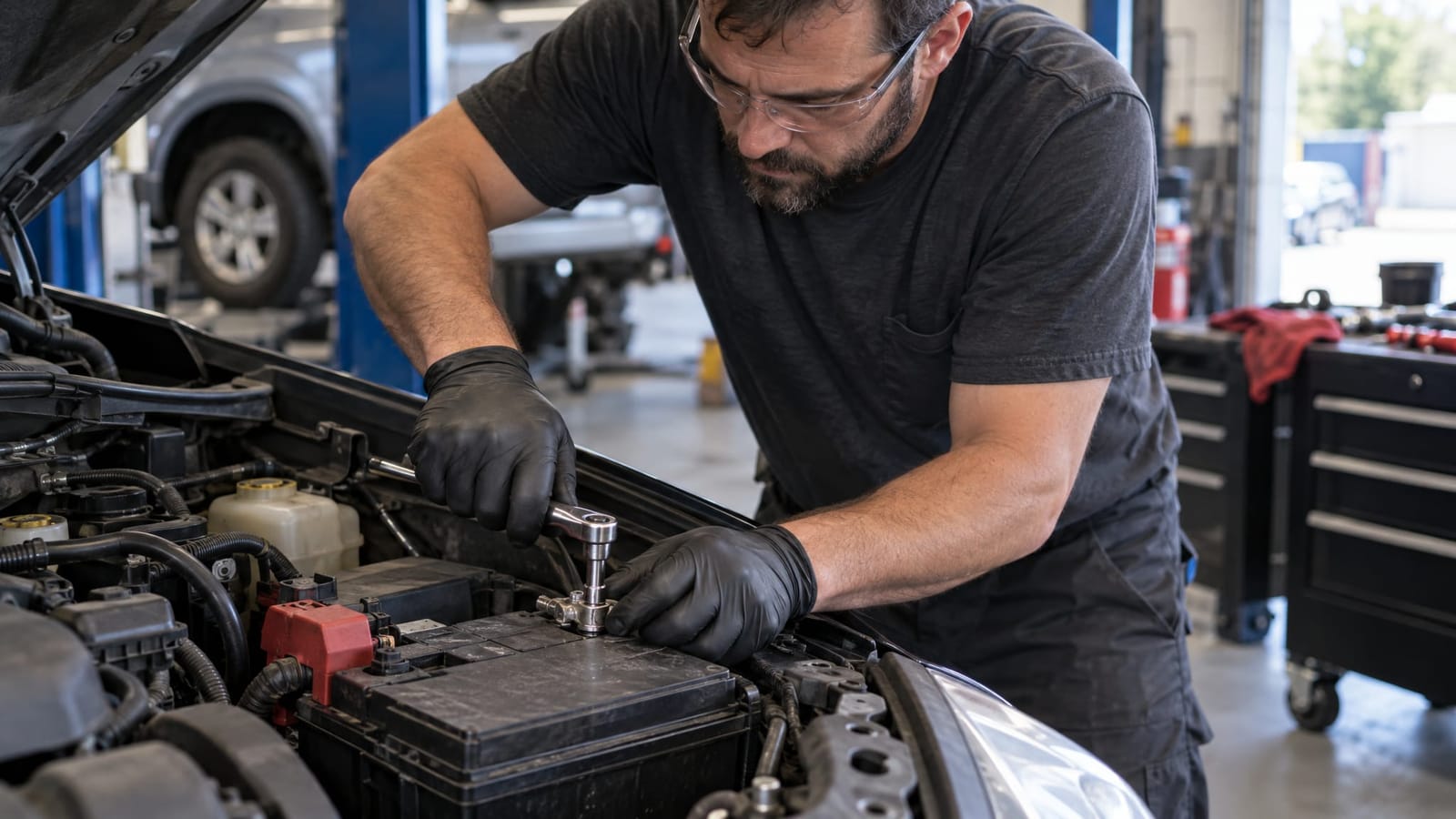
- Checking the electrical foundation. Battery condition, connections, and charging performance are evaluated as appropriate. A discharged battery is not automatically a failed battery.
- Checking relevant fault information. Stored codes and operating data help narrow the investigation. Not every electrical fault stores a code.
- Testing the affected circuit. Power, grounds, wiring, switches, and control signals are checked against the vehicle’s specifications. Testing while a component operates can reveal losses through a poor connection.
- Checking operation after the repair. The affected function is tested again. An intermittent complaint may require additional observation under the conditions that originally caused it.
For a suspected parked battery drain, testing also accounts for the time the vehicle’s electronics need to enter their resting state. Measuring too soon can make normal activity look like a fault.
How diagnosis can reduce unnecessary repair spending
Replacing parts based only on symptoms can create a cycle of spending without solving the problem. For example, a new battery may restore starting temporarily while an excessive parked electrical draw continues to discharge it.
A diagnostic charge covers the work needed to distinguish between possible causes. Useful questions when reviewing a repair estimate include:
- What test result supports the recommended repair?
- Is the battery defective, discharged, or affected by another problem?
- Does the estimate address the original complaint or only one part of it?
- Will further testing be needed if the fault is intermittent?
At Jordan Auto Repairs and Tires Plus LLC in Jacksonville, we offer battery diagnostics and vehicle electrical system diagnostics, with a focus on honest explanations and fast, dependable service. Our diagnostic is free when you approve the repair at our shop. If you choose not to have the repair completed here, we provide a printed repair statement and charge a diagnostic fee.
Turnaround depends on whether the fault can be reproduced, how accessible the affected wiring is, and what repair is needed. Finding the cause first helps keep the work focused.
What to record before an inspection
A short symptom history can be more useful than a guess about which part failed. Helpful details include:
- Starting behavior: Does the engine turn slowly, click, or not respond?
- Timing: Does the problem happen after sitting overnight, after a short stop, or only occasionally?
- Conditions: Was it raining, unusually hot, or immediately after a car wash?
- Affected functions: Does one accessory fail, or do several stop together?
- Recent changes: Was a battery, stereo, camera, or other accessory recently installed?
Photos of warning messages taken while safely parked can preserve useful details. The signs of a dying car battery in Florida’s heat can also help describe the complaint, without assuming the battery is the only possible cause.
Common questions about electrical diagnosis
Can a dash camera drain the battery?
A camera or other accessory that remains powered while parked can contribute to battery drain. Its power connection, operating settings, and the battery’s condition all matter. Mentioning installed accessories helps direct the inspection.
Will disconnecting the battery fix a warning light?
Disconnecting power may reset some information without repairing the fault. It can also erase useful diagnostic clues. Preserving warning messages and stored information helps the technician investigate what happened.
Does a battery warning light always mean the battery is bad?
No. It generally indicates a charging-system concern, not a confirmed battery failure. The exact message and the vehicle’s owner’s manual help explain what the indicator means for that model.
Does damaged wiring mean replacing the whole wiring harness?
Not necessarily. Repair options depend on the location and extent of the damage, the circuit involved, and the manufacturer’s repair procedures. An isolated damaged connection is different from widespread corrosion or extensive harness damage.
Can a new battery require an electronic reset?
Some vehicles require battery registration or a related reset after replacement so the charging-management system recognizes the new battery. The correct procedure depends on the vehicle, rather than a rule that applies to every car.
The right repair starts with identifying the cause
Electrical symptoms are clues, not parts lists. A clear description of the problem, testing under the right conditions, and an explanation of the findings provide a stronger basis for repair than guessing. That is how diagnosis helps turn an unpredictable vehicle problem into an informed repair decision.