What Is a Parasitic Battery Drain and How Is It Found?

A parasitic battery drain is an electrical draw that continues while your vehicle is turned off. Some draw is normal because features such as the clock, alarm, and computer memory still need power. The problem is excessive draw, when a light, accessory, or electronic component keeps using more power than it should after the vehicle has settled into its parked state.
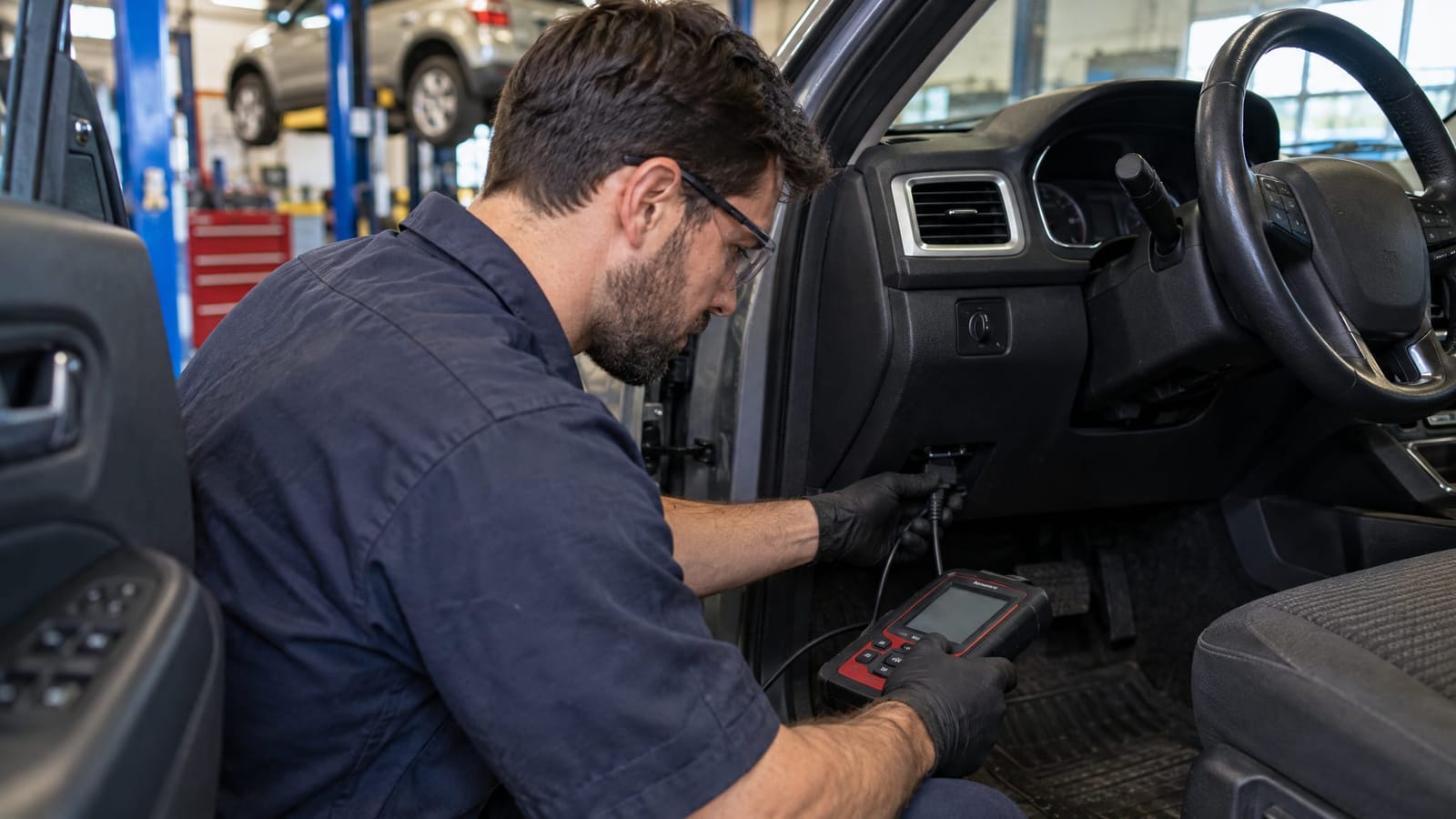
Parasitic battery drain diagnosis involves checking the battery, allowing the vehicle’s electronics to go to sleep, measuring the remaining current, and tracing excessive draw to a circuit and component. A dead battery alone does not prove there is a drain.
At Jordan Auto Repairs and Tires Plus LLC in Jacksonville, we offer battery diagnostics and vehicle electrical system diagnostics. Here is how the diagnostic process separates a battery problem from something that keeps draining it.
Step 1: Check the Battery and Charging System First
Before looking for a hidden electrical draw, a technician checks whether the battery can hold a charge and whether the charging system is working properly. Battery connections also matter. A loose or corroded connection can cause starting trouble without a parasitic drain.
A discharged battery may need charging before its condition can be evaluated accurately. Replacing parts based only on a no-start complaint can miss the underlying cause.
The pattern of the problem helps narrow the search. Useful details include:
- Whether the vehicle struggles to start after one night or only after several days parked.
- Whether the problem began after an accessory installation or electrical repair.
- Whether anything remains lit or operating after the vehicle is locked.
- Whether a jump-start restores normal operation only temporarily.
If your car lights flicker while driving, mention that symptom too. It can point toward charging or connection problems rather than a draw that happens only while parked.
Step 2: Let the Vehicle’s Electronics Go to Sleep
Turning off the ignition does not immediately shut down every electrical component. Computers and other devices may stay active briefly to finish normal tasks. Measuring too soon can make normal activity look like a fault.
The technician prepares the vehicle so doors, interior lights, accessories, and nearby key fobs do not interfere with the test. The electronics then have time to enter their low-power sleep state.
This waiting period varies by vehicle. Opening a door or operating a control can wake the system again, which means the reading needs to be evaluated in context rather than treated as an instant pass-or-fail result.
Step 3: Measure the Resting Current in Milliamps
A digital multimeter can measure how much current leaves the battery while the vehicle is off. That reading is often expressed in milliamps, abbreviated as mA. A voltage reading alone does not show how much current the parked vehicle is using.
With an in-series measurement, the electrical current passes through the meter. A suitable low-current clamp offers another way to measure draw without disconnecting the battery. Current testing requires a different setup from a voltage check; an incorrect connection can damage the meter. Our team can handle the vehicle-specific setup and testing.
What Counts as Normal or Excessive Draw?
The meaningful comparison is the manufacturer’s resting-current specification for that vehicle, not a universal milliamp cutoff.
- Normal draw: A small amount of current remains within the vehicle’s specification after its electronics go to sleep.
- Excessive draw: Current stays above that specification, or a component repeatedly wakes the vehicle and uses excessive power over time.
- Temporary activity: A brief increase may be part of normal operation. Its duration and frequency matter.
Battery condition and parking time also affect the symptoms. Even normal resting draw gradually uses stored energy, while a weakened battery has less reserve.
Step 4: Use Fuse Testing to Narrow Down the Circuit
Once excessive draw is confirmed, the technician looks for the electrical path responsible. One method involves removing individual fuses while watching the multimeter reading. If removing a fuse brings an excessive reading back toward the expected resting draw, the circuit supplied by that fuse becomes a focus of the diagnosis.
This identifies a circuit, not automatically a failed part. One fuse may supply several lights, switches, or electronic devices.
Fuse testing also needs care because removing or reinstalling a fuse can wake other electronics or reset the component causing the problem. Technicians account for those changes before deciding what a drop in current actually means.
Step 5: Trace the Circuit to the Component
After narrowing the search, the technician uses a wiring diagram and targeted checks to determine what is staying on and why.
For example, a trunk-light circuit may show excessive draw because the lamp remains on with the lid closed. The next question is whether the problem comes from the switch, latch adjustment, wiring, or another part of that circuit. Replacing the lamp would not address a switch that keeps supplying power.
Other possibilities include a relay that stays engaged or an electronic module that fails to enter sleep mode. Some drains occur only occasionally, so a single normal reading does not explain a recurring complaint. Monitoring the current over time may be needed to catch the unwanted activity.
Step 6: Repeat the Test After the Repair
Finding a suspicious component is not the end of the diagnosis. After the repair, the technician checks resting current again under the appropriate sleep conditions.
This follow-up helps establish whether the excessive draw has been corrected. The battery’s condition still matters because repairing the drain does not restore a battery that has already deteriorated.
Careful testing supports efficient, dependable repairs. It also helps avoid the delay of replacing a battery or electrical part without addressing the reason the vehicle keeps losing its charge.
Common Questions About Parasitic Battery Drain
Will a New Battery Stop a Parasitic Drain?
No. A new battery can provide more reserve, but an excessive electrical draw will continue using that energy. Battery replacement and drain repair address different problems, and a vehicle may need one or both.
Can a Dashcam or Plug-In Accessory Drain the Battery?
Yes, if it continues drawing power while parked. Some outlets remain powered with the ignition off, and some dashcams have parking modes. Whether that draw becomes a problem depends on the accessory’s power use, its shutoff settings, parking time, and battery condition.
Why Can This Diagnosis Take Longer Than a Battery Test?
A battery test evaluates the battery itself. A drain diagnosis also involves waiting for electronics to sleep, isolating circuits, and sometimes catching an intermittent fault. Accurate timing depends on when the unwanted draw appears, not just how quickly a meter can be connected.
The key is to distinguish normal parked-vehicle power use from excessive draw, then identify the component responsible. That gives a repair a clear purpose instead of treating each dead battery as a separate problem.