How Long Do Car Batteries Last in Jacksonville, FL?

A car battery generally lasts several years, but Jacksonville’s heat can shorten that service life. The battery’s age matters, but driving habits, charging problems, and time spent sitting also affect how long it keeps starting your car reliably.
The practical approach is to track the installation date, pay attention to changes in starting, and use a battery test to guide replacement. A battery that still starts the engine is not necessarily in good condition, while an older battery does not automatically need replacing.
Why Jacksonville’s Heat Shortens Battery Life
Heat speeds up the chemical reactions inside a conventional lead-acid car battery. It also accelerates corrosion of internal components and contributes to water loss. Over time, those changes reduce the battery’s ability to store energy and deliver the power needed to start the engine.
In Jacksonville, warm weather adds to the heat already produced under the hood. That makes temperature an important part of battery aging, even when the car runs normally.
Heat damage does not always show up immediately
A battery can gradually lose capacity while continuing to start the engine. The change may become noticeable after the car sits for a while, after repeated short trips, or when cooler weather makes starting more demanding.
That is why a battery problem that appears on a cool morning may reflect wear that developed during warmer months. Our explanation of how extreme heat affects car batteries looks more closely at this process.
Heat and low charge are different problems
Heat-related aging is not the same as a discharged battery. A healthy battery can run down because a light was left on. An aging battery can be fully charged yet struggle to start the engine.
Keeping a battery charged helps prevent damage associated with prolonged low charge, but charging cannot reverse internal corrosion. This distinction matters when deciding whether the next step is charging, further diagnosis, or replacement.
What Else Affects How Long Your Battery Lasts?
Two batteries installed at the same time can age differently. These everyday conditions help explain why:
- Repeated short trips: Starting the engine uses battery power. Brief drives, especially with frequent restarts and electrical accessories running, may not replenish all of that energy.
- Long periods without driving: Batteries gradually lose charge while parked. Vehicle electronics also use some power with the engine off.
- Accessories used while parked: Lights, audio equipment, and plugged-in devices can draw power without the engine running. Some outlets stay powered after the ignition is off.
- Repeated deep discharge: A starting battery is designed for short bursts of power, not frequent draining. Repeatedly running it down contributes to wear.
- Charging-system faults: Too little charging leaves the battery depleted. Excessive charging can also damage it.
- Poor connections or a loose mounting: Corroded or loose connections interfere with current flow. A battery that is not secured properly is exposed to unnecessary movement and vibration.
For example, a car used for several brief errands may need closer attention to its charge level than one regularly driven on longer trips. A car parked for extended periods presents a different problem: keeping the battery charged between uses.
When Does an Aging Battery Need Testing or Replacement?
Start with the installation date
An installation receipt or service record gives you a useful starting point. A date printed on the battery may indicate when it was manufactured rather than when it went into service, so those dates are not always interchangeable.
Age provides context for a test result. It does not measure the battery’s remaining starting ability. As the battery gets older, periodic testing during routine maintenance becomes more useful than waiting for a noticeable starting problem.
Notice changes in the way the engine starts
Slower-than-usual cranking, repeated jump-starts, or recurring loss of electrical power deserve attention. These symptoms can involve the battery, but they can also come from connections, the starter, or the charging system.
A single event also needs context. Leaving an interior light on is different from finding the battery discharged repeatedly without an obvious cause. Our guide to signs your car battery is dying in Florida’s heat explains the warning signs in more detail.
Use the test result to choose the next step
- The battery tests healthy: Age alone is not a reason to replace it. Recurring symptoms still need an explanation.
- The battery is undercharged: Charging and retesting can help distinguish a temporary discharge from a worn battery.
- The battery cannot deliver adequate starting power after proper charging: Replacement is generally appropriate.
- A replacement battery also runs down: The charging system or an electrical drain needs attention rather than another automatic battery replacement.
Everyday Habits That Help Your Battery Last
Jacksonville’s weather is outside your control, but charging habits and maintenance can reduce avoidable strain.
Give the charging system a chance to replenish the battery
Combining errands into fewer trips can reduce repeated starts and provide more running time between them. There is no single drive length that restores every battery because charge level, vehicle design, and electrical demand vary.
A short drive after a jump-start is not proof that the battery has recovered. A deeply discharged battery may need appropriate charging and testing rather than repeated jump-starts.
Manage power use when the engine is off
Check that interior and cargo lights turn off when doors close. For dash cameras, chargers, and other accessories, it helps to know whether their outlets remain powered while parked.
For a vehicle that sits for long stretches, the owner’s manual can explain storage procedures and compatible battery-maintainer use. A maintainer keeps an already serviceable battery charged; it does not repair a worn-out battery.
Include connections and mounting in routine maintenance
Terminal condition, cable connections, and the battery hold-down deserve attention alongside the battery itself. A good battery cannot compensate for a poor connection.
Shade or covered parking reduces direct sun exposure, but it does not eliminate heat from the engine compartment. Treat parking location as a helpful measure, not a substitute for keeping the battery charged and checking its condition.
Does an AGM Battery Last Longer in Florida?
An absorbent glass mat, or AGM, battery is a type of lead-acid battery that holds its electrolyte in absorbent material rather than as freely moving liquid. AGM batteries are commonly used in vehicles with stop-start systems and demanding electrical needs.
They offer advantages for repeated cycling and vibration resistance, but they are not immune to heat or charging problems. Choosing AGM does not automatically guarantee a longer battery life in Jacksonville.
The useful comparison starts with the vehicle’s requirements:
- The specified battery technology, such as conventional flooded, enhanced flooded, or AGM.
- The correct physical size, terminal position, and secure fit.
- The starting-power and reserve-capacity requirements listed for the vehicle.
- Any battery registration or reset procedure required after replacement.
If a vehicle requires AGM, a conventional battery is not an equivalent substitute simply because it fits. For other vehicles, compatibility and the way the car is used matter more than a general “better for hot weather” claim.
What a Battery Diagnostic Can Tell You
A voltage reading alone does not show the full condition of a battery. Diagnosis needs to distinguish between how much charge it has and how well it can deliver power when the engine starts.
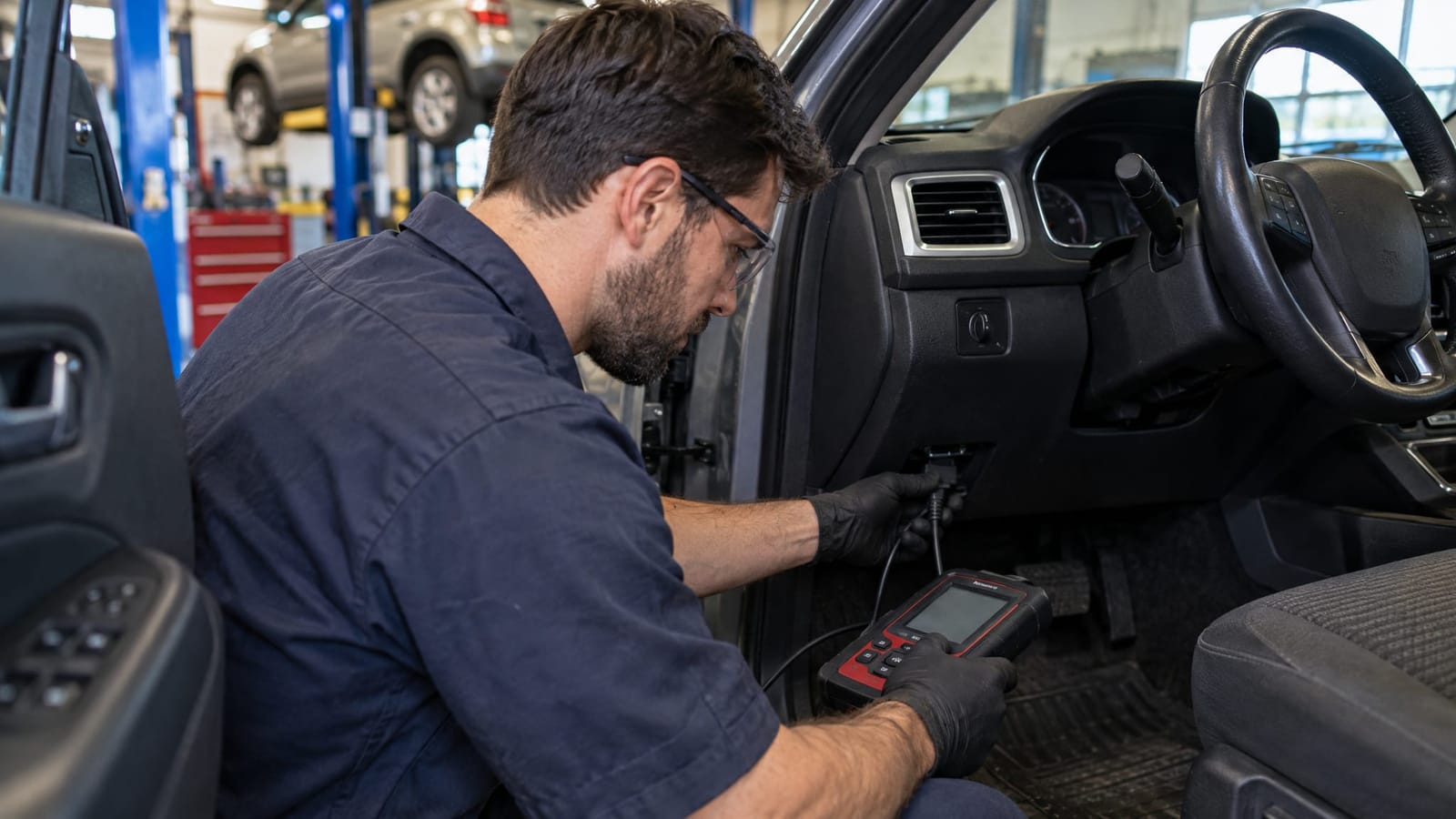
Depending on the symptoms, the evaluation can include battery performance, terminal and cable condition, charging-system operation, and electrical draw while the vehicle is parked. These checks help separate a worn battery from another problem that only looks like battery failure.
For example, a battery-shaped dashboard warning light generally points to a charging-system problem, not simply an old battery. A no-start condition can also involve the starter or its connections. Understanding the differences between battery, alternator, and starter problems helps explain why replacing the battery is not always the answer.
At Jordan Auto Repairs and Tires Plus LLC, we offer battery diagnostics and vehicle electrical system diagnostics here in Jacksonville. We focus on honest explanations, quick turnaround, and dependable service so drivers can make informed repair decisions.
A Practical Way to Plan for Battery Replacement
Keep the battery’s installation date and test results with your maintenance records. Note any repeated starting trouble, recent jump-starts, or long periods when the vehicle was parked. Those details make the next diagnostic check more useful.
Jacksonville heat makes battery condition worth watching, but it does not create a fixed replacement deadline. The soundest decision combines age, symptoms, and testing rather than relying on age alone.